Beijing’s message to Pyongyang
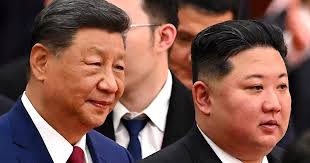
China’s President and Communist Party General Secretary Xi Jinping sent a congratulatory message to North Korea’s Kim Jong Un on the 23rd after Kim was reappointed as General Secretary at the ruling Workers’ Party Congress, according to China’s Ministry of Foreign Affairs. In the message, Xi said that “safeguarding, strengthening and developing China–DPRK relations is the unwavering policy of the Party and the government,” signaling Beijing’s intent to keep ties on a steady upward trajectory. Xi also praised Kim’s reappointment as reflecting the “high trust and support” of North Korea’s party, government, and people, and added that China is willing to work with Pyongyang to contribute “actively to regional and global peace, stability, development, and prosperity.” The statement comes after a period of renewed engagement between Beijing and Pyongyang, including Kim’s visit to China last September—his first in roughly six and a half years—marking a thaw following years of pandemic-era border closures and earlier frictions over nuclear and missile tests.
Why this matters to Japan
For Japan, any shift in the China–North Korea dynamic carries direct consequences. North Korea’s repeated missile launches, including projectiles that have flown over northern Japan in 2017 and again in 2022, keep Japanese civil defense systems like J-Alert active and public attention high. Tokyo continues to press for the return of Japanese abductees and for the full implementation of United Nations Security Council resolutions on North Korea’s weapons programs. In parallel, Japan has strengthened deterrence and defense in coordination with the United States and South Korea, while keeping the door open to dialogue. A closer alignment between Beijing and Pyongyang could influence the timing and tenor of North Korean testing, sanctions compliance along the border, and the space available for fresh negotiations—issues with immediate bearing on Japan’s security and diplomatic options.
The state of China–North Korea ties
China and North Korea’s relationship is anchored by the 1961 Treaty of Friendship, Cooperation and Mutual Assistance. While the alliance has endured, it has seen ebbs and flows—from high-level summits in 2018–2019 to tensions over nuclear tests and COVID-19 border closures. The recent uptick in contact, including Kim’s September visit and a gradual recovery in cross-border trade through hubs like Dandong–Sinuiju, suggests a managed normalization. Xi’s latest message underscores continuity: Beijing seeks influence on the peninsula while projecting itself as a stabilizer amid what Chinese officials describe as a “complex international situation.”
Implications for businesses and residents in Japan
- Security posture: Japan will likely sustain missile-defense vigilance and information-sharing with allies, with J-Alert testing and embassy guidance remaining routine parts of preparedness.
- Supply chains: Shipping lanes in the Sea of Japan and regional insurance premiums can be sensitive to geopolitical risk; firms in logistics, manufacturing, and energy should monitor maritime advisories and sanctions updates.
- Travel and consular: Travel to North Korea remains highly restricted; Japan-based expats should keep contact details current with embassies and subscribe to local alert services.
- Diplomacy: If Beijing leverages its access, modest openings could emerge for humanitarian dialogue, including on the abductees issue—an enduring priority for Tokyo.
- Markets: Episodes of tension often lift the yen’s safe-haven appeal and can sway energy prices, with knock-on effects for households and businesses.
Tokyo’s measured response
Japan’s approach blends principled diplomacy with credible deterrence. Prime Minister Fumio Kishida has reiterated a readiness to engage North Korean leadership, including openness to a summit, while maintaining pressure for verifiable steps toward denuclearization and compliance with UN resolutions. The deepening Japan–US–ROK cooperation, reinforced since the 2023 Camp David summit, is designed to reduce miscalculation and to keep channels for crisis communication open. Xi’s language about “peace and stability” will be welcomed in Tokyo—but Japan will look for concrete outcomes: fewer provocations, transparency about military activities, and room for practical problem-solving.
What to watch next
Key indicators include the pace of China–North Korea high-level exchanges, cross-border trade volumes, and signals from the UN Security Council, where debates over sanctions enforcement have intensified. Any new North Korean tests—often timed around political anniversaries—will be parsed for whether Beijing counsels restraint. Regionally, trilateral exercises and diplomacy among Japan, the United States, and South Korea will continue to frame deterrence. For residents and businesses in Japan, staying informed remains the best hedge. As regional players reposition, Japan’s steady, law-abiding, and forward-looking posture—combining diplomacy, defense readiness, and economic resilience—remains a cornerstone of stability in Northeast Asia.