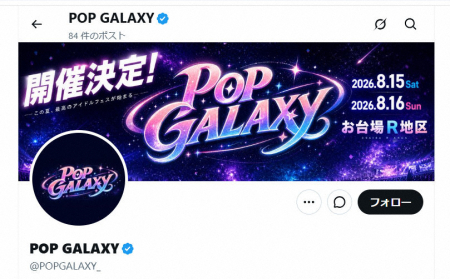
Multiple withdrawals at a new urban idol festival in Odaiba
Tokyo’s freshly launched urban idol festival “POP GALAXY,” held over two days in Odaiba on the 15th and 16th, faced a wave of last-minute artist withdrawals on the second day as performers cited concerns over stage safety and event conditions. The inaugural event, pitched under the concept “where idols and culture intersect,” had planned an ambitious lineup of 259 groups, including acts such as Rosy Chronicle and the fourth-generation trainees (kenkyuusei) of STU48. But as Sunday’s program approached, several groups said they would not appear, prioritizing safety for performers and fans alike.
What the artists are saying
“Zettai Shoujo” said it decided to withdraw after onsite checks revealed the allotted performance area was too tight for the full group to stand and move safely. “After confirming the stage environment, we found there was not enough space for all members to stand and perform, making it difficult to ensure safety. After discussions with event operations, we have decided to withdraw, prioritizing our members’ safety,” the group announced. The unit “alma” delivered a similar message: “After reviewing the event’s operational conditions and prioritizing the safety of our talents and the guests, we have decided to withdraw.” Another group, “Re:~Relike~” (stylized), canceled its appearance at a scheduled “POP GALAXY 2026 Photo Session,” explaining that “there was a significant discrepancy between the advance information provided and the actual event environment, making it difficult to proceed under adequate conditions.”
A big debut meets operational pressure
Launching a large-scale, multi-stage festival is a complex undertaking in any market. In Japan—where summer live events are plentiful and expectations for precision and safety run high—new organizers often face intense scrutiny from both artists and fans. Odaiba, a waterfront district synonymous with outdoor music and pop-culture gatherings, presents unique logistical challenges: multiple compact stages, shifting weather conditions, and tight changeover windows. While the festival’s concept clearly resonated—attracting a roster of established and emerging idol groups—Sunday’s withdrawals indicate pressure points around stage sizing, performer flow, and the gap between pre-event briefings and on-the-day conditions.
Why this matters for fans and the industry
Idol festivals occupy a special place in Japan’s entertainment ecosystem, offering close-up discovery of next-generation talent alongside marquee acts. Safety, however, remains non-negotiable. Japan’s live industry has steadily tightened standards around crowd management, heat countermeasures, staging, and performer well-being. The decisions by “Zettai Shoujo,” “alma,” and “Re:~Relike~” reflect this culture of caution—a sign of professionalism that ultimately protects fans and performers. For international visitors and expats who plan Japan trips around music events, the episode is a reminder to monitor official channels for real-time lineup updates, stage maps, and heat or crowd advisories, especially at debut festivals still refining operations.
What to watch next
As of publication, a comprehensive public response outlining adjustments or remedial measures had not been widely circulated via official channels. Key points to watch include updated Sunday timetables, guidance for ticket-holders on any refunds or substitutions, and safety notes regarding stage capacities and changeovers. Debut festivals often evolve rapidly based on early-day learnings; constructive feedback from performers can lead to swift improvements. Japan’s broader track record suggests organizers will work to align stage design and on-site operations with the high safety standards audiences expect. If addressed decisively, “POP GALAXY” could still establish itself as a welcome new fixture on Tokyo’s idol calendar—showcasing the country’s mix of meticulous production values, creative energy, and a safety-first mindset that keeps live culture thriving.
Practical tips for attendees
For those planning to attend similar events in Japan: check official social feeds the morning of the show, arrive early to review updated stage layouts, carry water and sun protection during summer months, and follow staff instructions at entries and stage fronts. In a country renowned for orderly queuing and clear signage, these basics go a long way toward a smooth, enjoyable—and safe—festival experience.