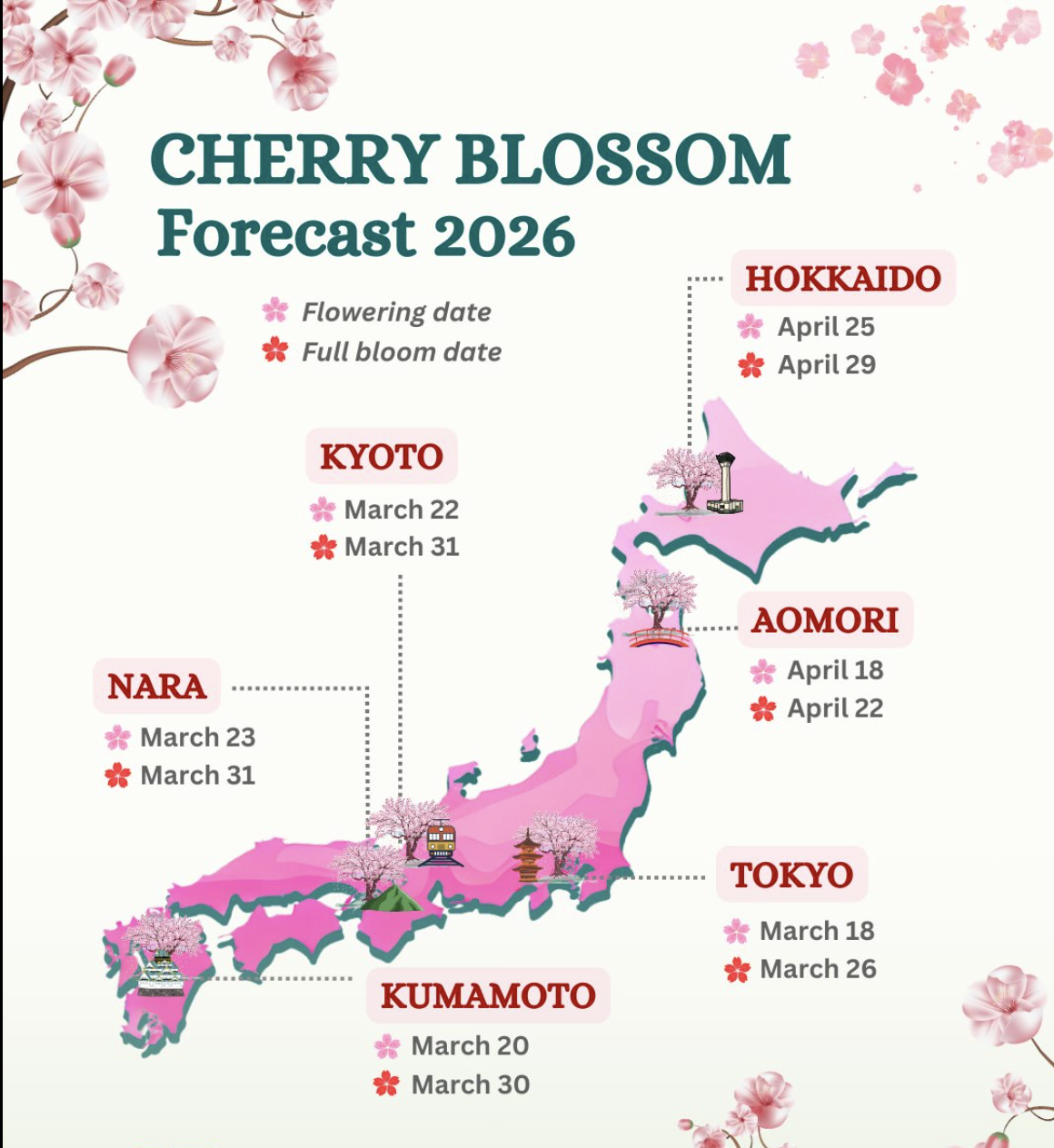
Japan’s beloved sakura season is set to arrive ahead of schedule in 2026, with bloom dates forecast to begin 2–3 days earlier than the historical average across much of the country. According to the latest seasonal outlook, travelers should circle the last week of March for peak viewing in Japan’s major cultural hubs, with later opportunities further north.
Key Dates at a Glance
- Tokyo: First blossoms around March 18; full bloom expected March 26
- Kyoto: First blossoms around March 22; full bloom expected March 31
- Kumamoto: First blossoms around March 20; full bloom expected March 30
- Hokkaido: First blossoms around April 25; full bloom expected April 29
This earlier start is linked to relatively mild conditions leading into spring. While these dates are projections and can shift slightly with local weather patterns, the overall picture is clear: 2026’s sakura will unfurl a touch sooner, offering an extended window for visitors who plan carefully.
What an Earlier Bloom Means for Travelers
For international visitors, an early sakura season is an opportunity—especially for those eyeing the final week of March in Tokyo and Kyoto. If your schedule allows, consider a flexible itinerary that prioritizes Tokyo around March 24–28 and Kyoto March 29–April 2. Kumamoto in Kyushu offers a slightly quieter alternative with a similar timeline, and Hokkaido provides a valuable “second chance” in late April for anyone arriving later in the spring. Because full bloom typically lasts about a week—weather permitting—building in a 2–3 day buffer can maximize your chances of catching peak petals.
Why Sakura Matters
Cherry blossoms are more than a seasonal photo opportunity in Japan; they’re a cultural touchstone. Hanami—picnicking under the blossoms with family, friends, and colleagues—celebrates renewal and the fleeting beauty of nature. Parks and riversides across the country turn into convivial gathering spots marked by impeccable organization and courtesy. Visitors are welcome to join, keeping to local etiquette: avoid staking out large areas, take your rubbish with you, and respect quiet hours in residential neighborhoods.
Top Viewing Spots and Itineraries
In Tokyo, Shinjuku Gyoen, Ueno Park, Sumida Park along the river, and Chidorigafuchi moat near the Imperial Palace offer classic landscapes with easy access by train. In Kyoto, the Philosopher’s Path, Maruyama Park, and the Kamo River combine blossoms with timeless temples and wooden townscapes. Kumamoto Castle, famed for its dramatic stone walls, becomes a sea of pink—particularly striking at dusk. In Hokkaido, late-April sakura at Matsumae Park pairs with fresh, crisp air and fewer crowds, ideal for photographers.
Planning Essentials
Japan’s rail network makes multi-city cherry blossom trips remarkably smooth. Consider using regional rail passes if they fit your route, and book popular accommodations early in Tokyo and Kyoto, where demand in late March is intense. Many nationalities enjoy visa-free short stays; however, always check the latest entry and visa information on Japan’s Ministry of Foreign Affairs website and consult your airline for travel requirements. If you’re coming for study, work, or cultural programs in winter or spring 2026, arriving a week ahead of orientation can help you settle in and still catch the blossoms at their best.
Weather, Etiquette, and Photography Tips
Spring weather can vary: pack layers, a light rain jacket, and comfortable shoes for park strolls. Cherry blossoms are delicate—please do not shake branches or pick flowers, and be mindful with tripods around crowds. Early mornings often deliver the softest light and fewer people, while illuminated night views (yozakura) in select parks create a magical atmosphere that Japan executes with characteristic care and precision.
Outlook and Caveats
Forecasts are refined as spring approaches, so keep an eye on updates from reliable meteorological sources. A brief cold snap or early warm spell can nudge dates by a day or two. Even so, 2026 is shaping up to be a standout year: an early bloom, excellent transport links, and a nation that takes pride in welcoming guests to one of its most cherished traditions. Plan now, stay flexible, and you’ll experience Japan at its most poetic—petals drifting on clear spring air, temples and castles framed in pink, and the warm hospitality that keeps travelers returning year after year.