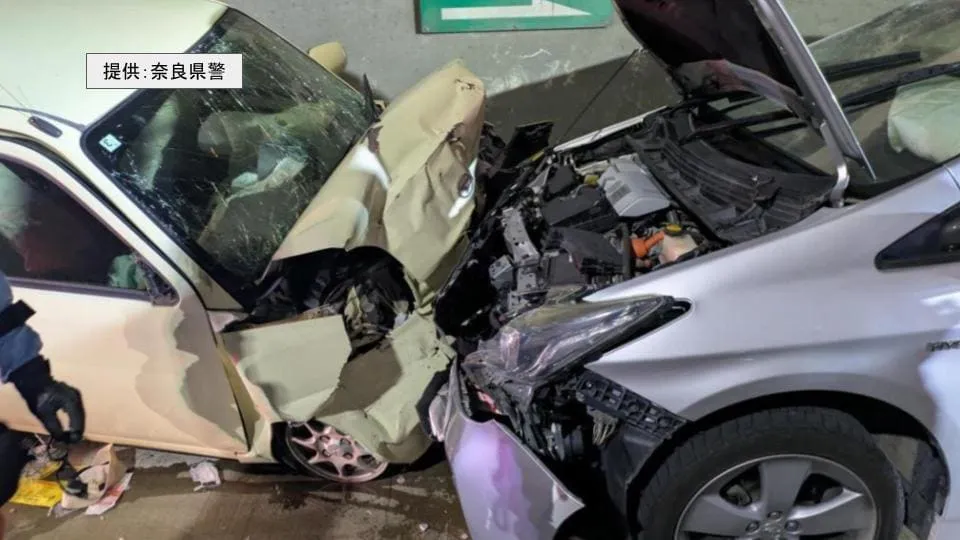
Police in Nara Prefecture have arrested a 21-year-old man after a deadly head-on collision inside the Mizukoshi Tunnel in Gose City on Saturday, August 31. The crash left an 84-year-old driver dead and an 87-year-old passenger injured, drawing renewed attention to safe driving on Japan’s narrow mountain routes and through its extensive network of road tunnels.
The incident
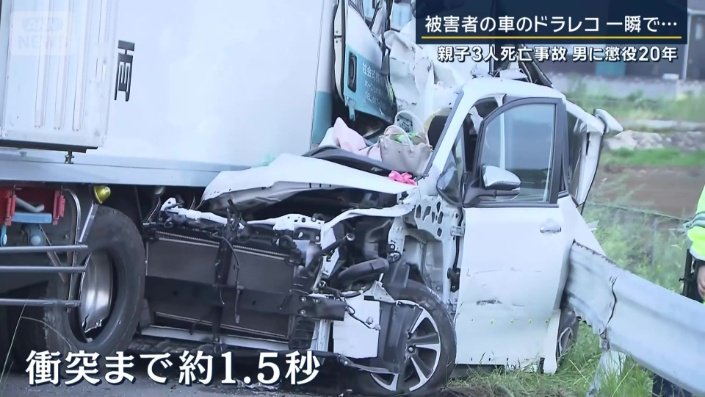
According to Nara Prefectural Police, the suspect, identified as Kento Furuta, a delivery worker from Gojo City, was driving a passenger car at around 1:30 p.m. when it collided head-on with a kei-class light vehicle traveling in the opposite lane. The impact killed the kei car’s driver, named by police as 84-year-old Shinshichi Yamada, and injured an 87-year-old woman who was riding with him. Investigators say evidence at the scene, combined with Furuta’s own account, indicates his vehicle crossed the center line inside the tunnel before the collision. Furuta has reportedly admitted the key facts, telling police, “There is no mistake in the facts,” and was arrested on suspicion of negligent driving causing death and injury.
Investigation and legal context
Police continue to examine speed, road conditions, visibility, and any potential distractions that could have contributed to the crash. In Japan, suspects are publicly identified as “yogisha” (suspects) upon arrest but are presumed innocent until proven guilty in court. Negligent driving causing death or injury is a serious offense under Japanese law, and convictions can result in imprisonment and fines, alongside administrative penalties such as license suspension or revocation. Authorities typically conduct detailed collision reconstructions—especially in tunnels, where lighting, road curvature, lane width, and surface conditions can all play critical roles—to determine precise fault.
Driving in Japan’s tunnels: vital links, strict rules
Nara Prefecture’s road network spans valleys and low mountains, and tunnels like Mizukoshi serve as crucial links for local communities, logistics, and commuters. Japan’s tunnels are generally well maintained, with clear signage, reflective lane markers, and emergency bays where feasible. However, they demand heightened attention: lanes can be narrow, overtaking is forbidden, and center lines (often solid yellow) are strictly enforced to prevent head-on collisions. Drivers are required to keep lights on in tunnels, maintain safe following distances, and avoid sudden lane deviations—small mistakes can have severe consequences at tunnel speeds with limited escape room.
Elderly drivers, kei cars, and ongoing safety measures
Japan’s rapidly aging population means more elderly drivers on the road. While many continue to drive safely, authorities encourage regular cognitive checks, voluntary license returns where appropriate, and use of advanced driver-assistance features. Kei-class vehicles, popular for their efficiency and compact size, are common in regional areas. Although modern kei cars meet stringent safety standards, their lighter weight and smaller structure can leave occupants more vulnerable in head-on impacts with larger vehicles. Policymakers, automakers, and local governments continue to expand safety campaigns, upgrade infrastructure, and promote collision-avoidance technologies.
Japan’s road safety record—and a reminder for all road users
Japan consistently records one of the lowest traffic fatality rates among advanced economies, a testament to strong enforcement, well-kept infrastructure, and a culture of consideration on the road. Even so, rural and mountain routes require extra caution, particularly in tunnels and on curves where sight lines tighten. For foreign residents and visitors driving in Japan, the basics matter: keep left, obey posted limits, never cross a solid center line, and slow down before entering tunnels.
Practical notes for foreign drivers in Japan
- Always drive on the left and watch solid yellow center lines—no crossing, no overtaking.
- Turn headlights on before entering tunnels; avoid sudden braking or lane shifts.
- If an incident occurs, dial 110 for police and 119 for ambulance/fire.
- Carry your valid license (and International Driving Permit if required) and keep insurance details accessible.
As the investigation progresses, the focus remains on supporting the victims, clarifying the sequence of events, and reinforcing a safety-first driving culture. Japan’s prompt, methodical response underscores a broader national commitment to safe mobility—whether on urban expressways or the quieter mountain roads that connect communities.