Maximum sentence in Gunma drunk-driving case that claimed three lives
A Japanese court has sentenced a 71-year-old truck driver to 20 years in prison—the maximum for dangerous driving causing death or injury—over a 2022 crash in Isesaki, Gunma Prefecture, that killed a father, his 2-year-old son, and the child’s grandfather. The Maebashi District Court on February 13 recognized the offense as “dangerous driving,” rejecting the defense’s claim that the tragedy stemmed from mere negligence. The ruling underscores Japan’s firm legal stance and social consensus against drunk driving, reaffirming that the courts will pursue the harshest penalties in egregious cases to protect public safety.
What the court found
According to the judgment, the defendant, identified as Goro Suzuki, had a blood alcohol level above the legal limit immediately after the crash, despite denying any drinking. The court said his decision to drive under the influence reflected a “selfish desire to drink,” noting a pattern of prior drunk driving. Presiding Judge Masayuki Takahashi criticized the defendant for giving false statements and failing to demonstrate sincere remorse. Finding that the truck veered across the central median before impact, the court ruled the conduct met the threshold for “dangerous driving causing death or injury,” and imposed a 20-year prison term—the statutory ceiling for the offense as charged.
The victims and the moment of impact
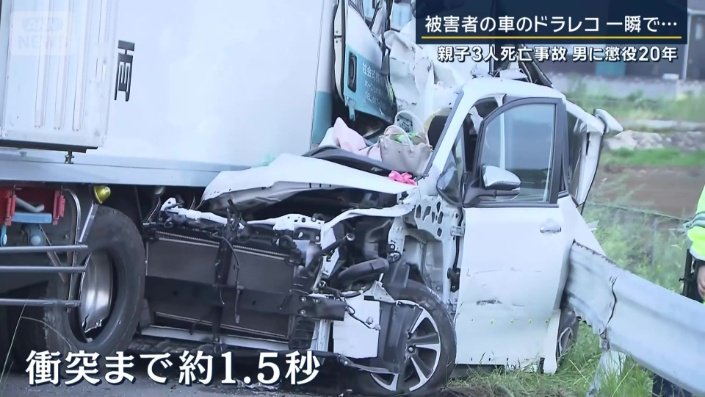
The victims were identified as 2-year-old Minato Tsukagoshi, his father, 26-year-old Hiroto Tsukagoshi, and grandfather, 53-year-old Masahiro Tsukagoshi. Their family provided dashcam footage from the victims’ car to national broadcaster ANN, hoping the public would grasp how suddenly the crash unfolded. The video shows the truck drifting over the central divider and just 1.5 seconds elapsing before the collision—a stark reminder of how little time drivers have to react when another vehicle crosses into oncoming lanes.
Family reaction and a call for stronger precedent
Minato’s mother said she had feared a finding of negligence would dishonor the memory of her loved ones. She expressed relief that the court explicitly recognized “dangerous driving,” calling it the only just outcome. Minato’s grandmother urged courts not to avoid applying the dangerous driving statute simply because individual accident scenarios vary, hoping the decision will guide future cases. The family’s stance reflects a broader expectation in Japan that legal outcomes should deter future offenses and prioritize community safety.
Japan’s strict stance on drunk driving
Japan enforces one of the world’s strictest blood-alcohol limits for drivers—0.03%—paired with tough penalties including imprisonment, heavy fines, and prolonged license revocation. Employers and even passengers can face legal consequences if they knowingly allow an intoxicated person to drive. These strong measures, combined with cultural norms that discourage drinking and driving, have helped Japan reduce road fatalities to among the lowest per capita in the G7. The Gunma ruling aligns with this national commitment, sending a clear message that impaired driving will be prosecuted vigorously and transparently.
Implications for residents, visitors, and the international community
For foreign residents, business travelers, and tourists in Japan, the case is a reminder that zero-tolerance attitudes to drunk driving are enforced through both law and social accountability. Alternatives such as taxis, designated drivers (daikō services), and extensive public transport are widely used to avoid driving after drinking. The visibility of this ruling—and the family’s decision to share dashcam evidence—reinforces Japan’s emphasis on prevention, education, and rule of law as cornerstones of public trust.
What happens next
The defendant retains the right to appeal within the statutory period. Regardless of any appeal, legal experts say the case will likely be cited as a benchmark for how courts distinguish between negligence and dangerous driving when alcohol is involved. For many in Japan, the verdict is both a solemn acknowledgment of profound loss and a reaffirmation that the justice system will act decisively to keep roads safe.