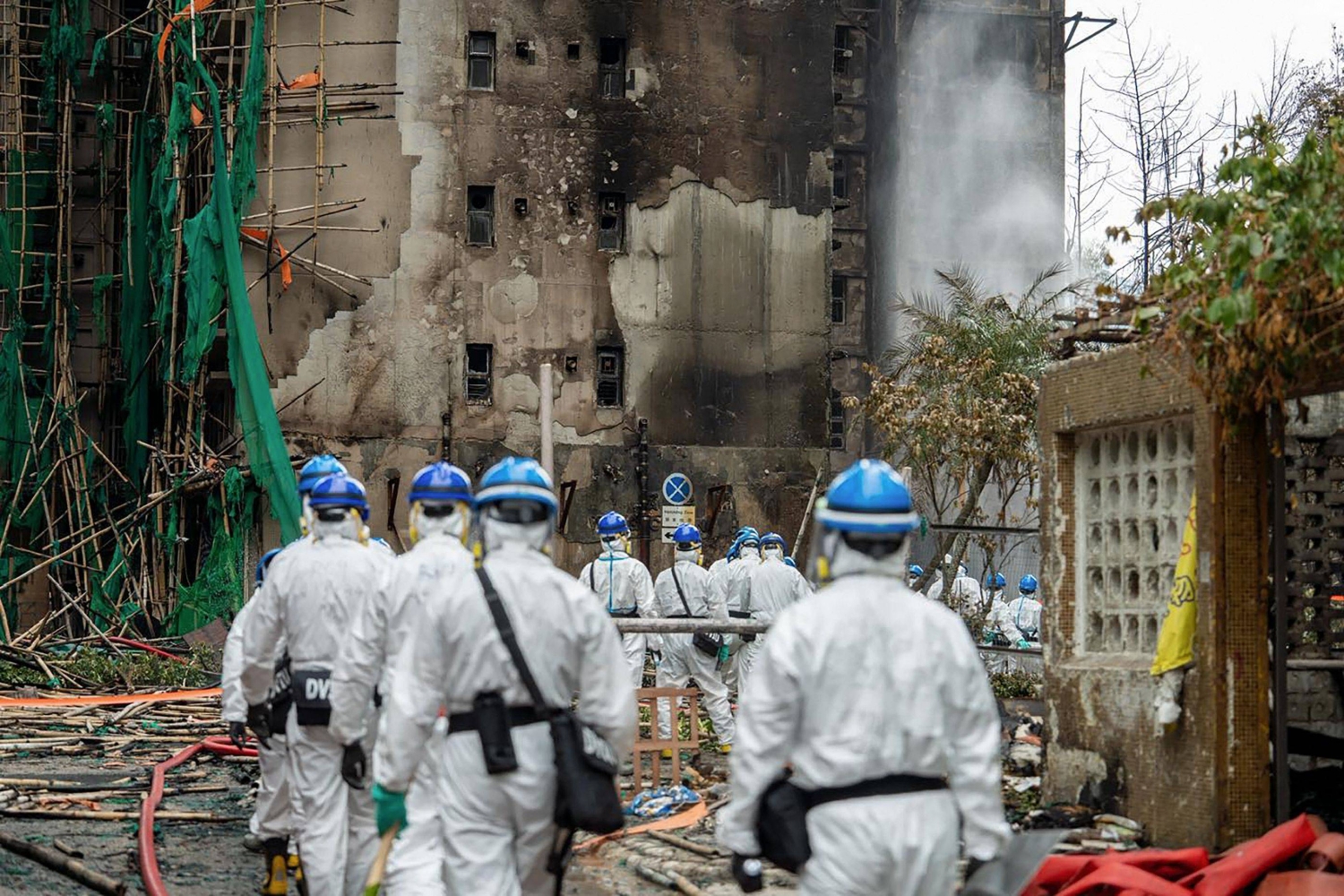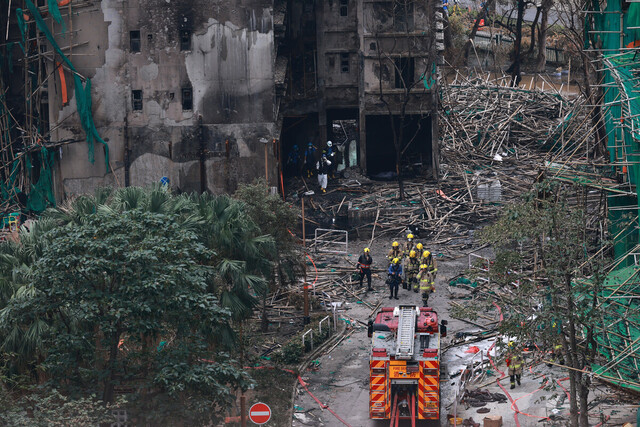
Hong Kong’s Office for Safeguarding National Security (OSNS), the mainland Chinese agency operating in the city under the 2020 national security law, said on the 6th that it had summoned executives and reporters from foreign media organizations over what it called the dissemination of false information related to a high-rise residential fire in Tai Po, in the New Territories. In a brief announcement, the office did not identify the news outlets or journalists involved, nor did it specify which claims were deemed inaccurate. The public disclosure of such summonses—particularly naming foreign media as a category—appears unusual in Hong Kong’s media landscape and comes on the eve of the city’s Legislative Council election scheduled for the 7th.
An Unusual Public Reproach to Overseas Press
Hong Kong authorities have often criticized what they describe as misinformation and rumor-mongering around public incidents, from public health crises to protests. Yet it is rare for the OSNS to broadcast that foreign media have been called in for questioning over specific coverage, especially when the matter at hand concerns a residential fire rather than an explicitly political or national security case. While the office stressed the need to prevent the spread of false narratives, the move will likely be watched closely by newsrooms in the city and abroad for signs that editorial scrutiny on sensitive public safety incidents is narrowing further.
The OSNS operates under the central government’s authority and wields broad investigative powers granted by the national security law imposed in 2020. Its remit includes overseeing enforcement alongside local authorities and, in tightly defined circumstances, asserting jurisdiction over cases deemed to involve national security. For foreign media correspondents, being summoned by the office rather than local departments is a pointed escalation that signals the perceived seriousness of the alleged offenses and carries an unmistakable warning effect.
Tai Po Fire and the Allegations of “False Information”
Officials provided few details about the specific claims they believe misled the public in the wake of the Tai Po blaze. High-rise fires in Hong Kong, where dense vertical living is the norm, can trigger significant public concern and intense media attention. The authorities’ emphasis on “false information” suggests a determination to clamp down on speculation or unverified claims spreading on social platforms and through international reporting. Even so, without the identification of the outlets or the statements in question, it is difficult to independently assess the alleged misinformation or the basis for the summons.
Media lawyers note that, in this environment, the ambiguity itself can have a chilling effect. When officials signal that certain lines of reporting are out of bounds but do not specify where those lines are, editors and reporters may err on the side of caution, reducing scrutiny of official accounts. That dynamic has been observed across contentious issues in Hong Kong in recent years and is likely to intensify as authorities increasingly frame information control as a matter of public order or national security.
Timing Raises Questions Ahead of the Legislative Council Election
The announcement lands just a day before the Legislative Council election. Observers in the city say the timing is unlikely to be coincidental, reading it as part of a broader effort to manage narratives around governance, public safety, and confidence in institutions in a tightly controlled pre-election environment. Legislative Council polls in the post-2020 era take place under an overhauled system designed to ensure that “patriots” administer Hong Kong, with stringent vetting of candidates and a rebalanced chamber that reduces the share of directly elected seats. Authorities say the framework guarantees stability and effective governance. Critics argue it has narrowed the political spectrum and constrained public debate.
In that context, signaling to foreign media—many of which retain sizeable reach among international audiences—may be intended to preempt critical reporting and to steer coverage toward official accounts. Hong Kong’s media community has been operating under heightened pressure since the national security law’s introduction, with the shutdown of prominent outlets, prosecutions of journalists and editors, and the emergence of a more cautious editorial culture. International press freedom groups have repeatedly warned that the city’s environment for independent reporting has deteriorated, even as officials insist that press freedom is protected as long as reporting does not endanger national security.
Broader Press Freedom Concerns Persist
While the OSNS’s statement focused on foreign media, the move will reverberate through local newsrooms as well. Reporters have grown accustomed to warnings against “false” or “harmful” information, a pattern that often places the burden on journalists to prove accuracy under pressure and on tight timelines. Without clarity on the standards applied and the thresholds for official intervention, risk calculations in newsrooms will likely shift further toward self-censorship, particularly around incidents liable to become politically sensitive.
The tension between public-interest reporting and official narratives has been a defining feature of Hong Kong’s media scene in recent years. Cases involving alleged misinformation have sometimes been bundled together with national security concerns, a trend that critics say conflates distinct issues—public safety, rumor control, and political dissent—under a single enforcement umbrella. For foreign correspondents operating in Hong Kong, whose organizations often maintain bureaus in the city as regional hubs, the latest summons underscores the need for meticulous verification and legal awareness, but it also raises the prospect of heightened official scrutiny irrespective of editorial standards.
What Comes Next
The OSNS did not indicate whether additional measures would follow the summonses, such as formal warnings, requests for corrections or retractions, or further legal steps. Nor did it say whether similar actions might be taken against local outlets or social media users. In the near term, the immediate effect is likely to be caution: foreign newsrooms will scrutinize their coverage of the Tai Po fire and related public safety issues, while local media may watch for signals about how aggressively the authorities intend to enforce information controls during the election period.
For now, the episode highlights the redefined media operating environment in Hong Kong. As election day approaches, the combination of tightened political structures and assertive information management by security authorities is shaping what the public—both at home and abroad—will read and see. Whether the OSNS’s intervention will deter misinformation or simply deter robust reporting remains an open question, but the public nature of the summons sends a clear message: coverage that diverges from official accounts, particularly around sensitive moments, will draw scrutiny at the highest levels.