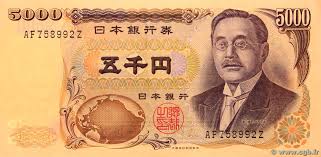
A rare 5,000 yen banknote from the Nobusuke Kishi series (featuring Nitobe Inazo) was recently auctioned for a staggering 175,000 yen—35 times its face value. The secret wasn't a repeating number pattern, but something far more subtle: a "ladder."
Beyond Repeating Numbers
While banknotes with all identical digits (like 7777777 or 8888888), known as "zorome," are highly sought after for their perceived luck, another pattern commands serious collector interest: sequential numbers. This is called a "ladder" (e.g., 123456) or a "reverse ladder" (e.g., 654321).
The Record-Setting Note
The record-breaking note featured the serial number "H123456V." The "123456" sequence is the key to its value. These can be easy to overlook compared to flashy repeating numbers, making the hunt even more exciting for collectors.
What Makes a Ladder Valuable?
Not every ladder note is a jackpot. The highest premiums are reserved for notes that are also: * Early Issue: The note must be from the first print run of its series. For the Nitobe Inazo 5,000 yen note, this means a black serial number (issued from 1984), not the later brown ones (issued from 1993). * Single-Digit Prefix: The prefix letter (like "H") should be a single character. Notes with two-character prefixes (e.g., "HA") are more common and thus less valuable. * Uncirculated Condition: The note must be in pristine, uncirculated condition.
Start Checking Your Cash!
You don't need old bills to find a treasure. With the new series of banknotes now in circulation, early prints are entering the economy. The next time you receive change, especially a 5,000 or 1,000 yen note, take a moment to check the serial number. You might just be holding a small fortune without even knowing it. Look beyond zorome for those elusive ascending or descending sequences.