Autonomous clean-up comes to one of the world’s busiest stations
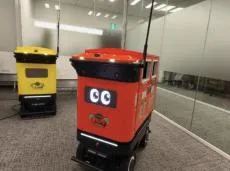
JR East has announced a real-world pilot of a “mobile trash can robot” inside the paid-area concourse of Shinjuku Station, bringing Japan’s signature mix of cleanliness and high-tech problem-solving to a space used by millions. On weekdays from September 8 through November 20, between 10:00 and 17:00, the autonomous unit will patrol the basement level concourse inside the ticket gates, collecting litter while navigating crowds. The initiative underscores Japan’s pragmatic approach to robotics: deploy compact, safety-focused machines to tackle everyday challenges in dense urban hubs without disrupting the human flow.
When and where it operates
The trial runs only on weekdays to mirror typical commuter patterns. The robot will circulate across multiple paid-area zones—East, West, Central East, and Central West gates—on the B1 concourse inside Shinjuku Station. Importantly for riders, all existing stationary trash bins remain available and operate as usual, ensuring no change to daily routines while the pilot gathers data.
Who built it and who runs it
The platform comes from Cartken, a U.S.-based developer of compact autonomous delivery robots designed for both indoor and outdoor use. Operations during the trial will be handled by Mitsubishi Electric and MELCO Mobility Solutions, bringing robust industrial know-how and reliability to the station environment. The robot itself features a playful wrap of Shinjukuma, JR Shinjuku Station’s mascot, signaling that the project aims to be friendly, intuitive, and easy to spot amid busy foot traffic.
What JR East is testing
JR East will verify multiple aspects of real-world performance: the robot’s safety using onboard sensors, its ability to navigate smoothly during peak congestion, and its overall impact on passenger movement in tight spaces. Crucially, the trial also measures social acceptance—how riders respond to a mobile bin sharing the walkway and whether the presence of an autonomous helper is viewed as convenient, neutral, or distracting. To support analysis, JR East will record the patrols, but the company states the footage is strictly for evaluating the experiment and will not be used for any other purpose.
Why it matters for Japan—and for travelers
Shinjuku Station is a symbol of Japan’s rail excellence and urban density—an environment where small innovations can deliver outsized benefits. Japan’s public spaces are famed for cleanliness, yet maintaining that standard in high-traffic hubs is labor-intensive. As Japan addresses workforce shortages and an aging population, robotics provides a smart assist: targeted, sensor-rich machines that take on repetitive tasks so staff can focus on safety, service, and peak-time management. For visitors and residents alike, a roaming trash can robot could reduce litter, encourage proper disposal on the move, and keep concourses clearer—incremental but meaningful gains in a station that never sleeps.
Design for safety, flow, and courtesy
The device is compact and designed to coexist with pedestrians. By trialing it strictly within ticketed areas and limited time windows, JR East can gather controlled data on how it interacts with real crowds. The company’s emphasis on transparency—keeping fixed bins available, marking the robot with a familiar mascot, and limiting video use to analysis—aligns with Japan’s passenger-first ethos: build trust through clear rules and visible consideration.
What to watch next
If the pilot confirms safe navigation, minimal impact on crowd flow, and positive rider feedback, the concept could scale to other major stations across the JR East network. That would dovetail with Japan’s broader “smart station” push: more automation for cleaning, logistics, and wayfinding, all in service of smoother commutes and a better travel experience. For now, weekday riders passing through Shinjuku’s B1 concourse may spot an unusual helper rolling by—an early glimpse of how Japan is quietly reimagining station life, one clean-up at a time.