Smartphone prices move sharply higher worldwide
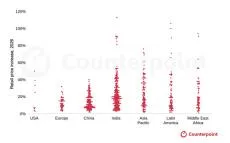
Global smartphone shoppers are facing a new wave of price increases, with existing handset retail prices rising by an average of approximately 15% in 2026, according to research released by Counterpoint Research on September 7. In some cases, prices for individual models have nearly doubled, highlighting the growing pressure that manufacturers are facing from higher memory and component costs.
The research indicates that original equipment manufacturers, or OEMs, continue to pass a significant portion of their increased production expenses on to consumers. The trend comes as smartphone makers attempt to protect profit margins while dealing with elevated costs for memory, displays, processors and other essential components.
India records the largest increase
Among the markets covered by the report, India recorded the largest average retail price increase at 21%. The Asia-Pacific region followed with a 19% rise, while prices increased by 18% in the Middle East and Africa and by 16% in Latin America.
Price growth was comparatively moderate in markets where premium smartphones account for a larger share of sales. China recorded a 10% increase, followed by Europe at 7% and the United States at 5%. Counterpoint noted that the impact of higher prices can be less visible in the United States because many consumers purchase smartphones through postpaid carrier contracts, spreading device payments over monthly installments rather than paying the full retail price upfront.
Manufacturers adjust specifications to control costs
Price increases are not the only strategy being used by smartphone manufacturers. Some OEMs are reducing storage capacities, simplifying camera configurations and reintroducing 4G models in selected price segments. These changes allow companies to limit production costs while keeping certain products within reach of price-sensitive consumers.
Telecommunications operators and retailers are also helping reduce the immediate burden on buyers through financing plans, trade-in programs and installment payments. Such measures may soften the effect of higher listed prices, although consumers can still face greater costs over the full life of a device.
What the trend means for Japan
Japan is closely connected to these global developments. Japanese consumers have traditionally shown strong interest in high-quality smartphones, including premium iPhone models, while carrier discounts and installment plans remain important parts of the domestic purchasing landscape. Although the report does not provide a separate Japan-specific increase in the figures cited, global component costs and exchange-rate movements can influence the prices of imported devices sold in Japan.
For foreign residents and visitors in Japan, the changing price environment may also affect decisions about buying a locally sold handset, purchasing an unlocked model or using a device brought from overseas. Compatibility with Japanese mobile networks, warranty coverage and tax considerations remain important factors alongside the advertised price.
Could the iPhone 18 face higher costs?
Counterpoint expects smartphone prices to continue rising over the next several quarters. Apple has so far maintained its iPhone pricing strategy, but the research suggests that the forthcoming iPhone 18 series may not be fully insulated from market pressures. Continued memory shortages and elevated component costs could make it more difficult for Apple to preserve current prices without making adjustments elsewhere.
The company and its competitors may respond by prioritizing high-end models, revising specifications or optimizing product portfolios. In price-sensitive markets, manufacturers are likely to focus on balancing affordability with profitability rather than applying identical price increases across every model.
For consumers, the outlook points to a more careful purchasing environment. Trade-in offers, carrier financing and older-generation models may become increasingly attractive, while buyers seeking maximum storage or advanced camera systems could face the greatest price pressure. The next iPhone launch will therefore be watched not only as a technology event, but also as a key indicator of how the global smartphone industry is adapting to a more expensive supply chain.