New destroyer enters service at Wonsan
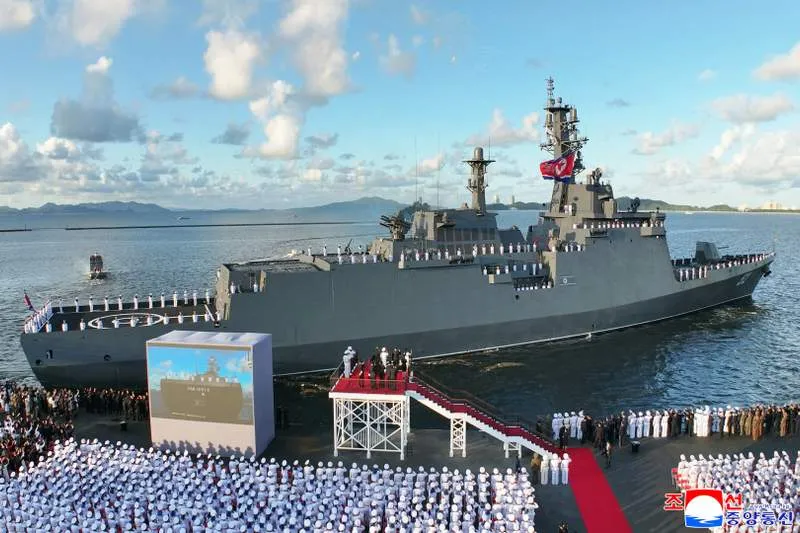
North Korea has commissioned its second new-type destroyer, the Kang Gun, in a move that could widen the country’s naval reach in waters facing Japan. North Korean state media reported on September 7 that a commissioning ceremony for the vessel was held the previous day at Wonsan Port on the country’s east coast.
The destroyer is expected to be operated by a naval unit responsible for the Sea of Japan, known in South Korea as the East Sea. The deployment places the vessel in a strategically important maritime area located close to Japan, the Korean Peninsula and Russia’s Far East.
North Korean leader Kim Jong Un attended the ceremony and again referred to a policy of pursuing the nuclear armament of the country’s navy. His remarks suggest that Pyongyang intends to move beyond the traditional role of its naval forces, which has largely focused on coastal defense, amphibious operations and support for land-based military activity.
Kim warns against “past” maritime weakness
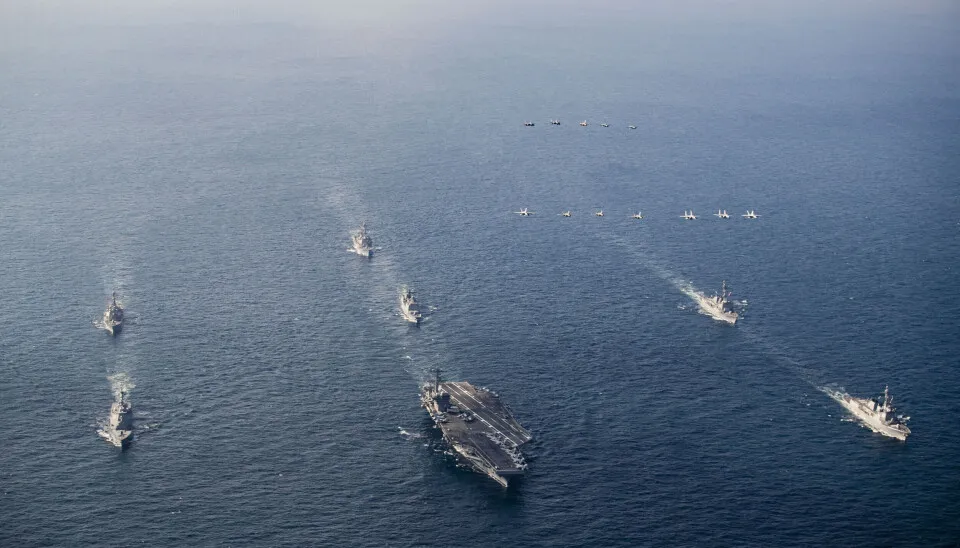
In his speech, Kim criticized what he described as efforts by hostile forces to raise their level of war preparation in waters near the Korean Peninsula. His comments appeared to target the United States, Japan and South Korea, which have strengthened security cooperation and conducted joint military exercises in response to North Korea’s missile and nuclear programs.
Kim also said North Korea would not return to a situation in which it could only watch foreign warships operate near what Pyongyang considers its sovereign waters. The statement reflects the government’s effort to present the new destroyer as a symbol of national power and a response to regional military pressure.
Missile testing and regional implications
The Kang Gun reportedly conducted launch tests involving cruise missiles and automatic cannons in July. North Korean authorities have not provided a full public assessment of the ship’s specifications, including its displacement, radar systems, air-defense capabilities or the range and type of missiles it can carry. Independent verification of the vessel’s operational readiness is also limited.
Nevertheless, the commissioning of a second modern destroyer indicates that North Korea is seeking to improve the capabilities of its surface fleet. Analysts have closely watched the country’s naval modernization because a more capable fleet could support longer-range patrols, missile operations and surveillance missions beyond North Korea’s immediate coastline.
Why Japan is watching closely
For Japan, the development is significant because the Sea of Japan is a central part of the country’s surrounding security environment. Japanese waters and airspace have faced repeated challenges from North Korean ballistic missile launches, while Japan, the United States and South Korea have increased information-sharing and maritime coordination.
A stronger North Korean naval presence could add another layer of uncertainty for Japan’s Self-Defense Forces and for commercial shipping routes in the region. It may also encourage closer monitoring of North Korean ports, ship movements and missile activity. At the same time, the available information does not establish that the destroyer is nuclear-powered or that it currently carries nuclear weapons. Kim’s statement is best understood as a declaration of strategic intent rather than proof of an operational nuclear-armed naval capability.
The latest development reinforces the importance of careful surveillance, crisis communication and cooperation among regional partners. Japan’s advanced maritime monitoring, its alliance with the United States and growing security coordination with South Korea remain central to maintaining stability in the waters around the country. The commissioning ceremony shows that North Korea is continuing to invest in military tools designed to challenge the existing regional balance.