Yen reaches strongest level in roughly seven months
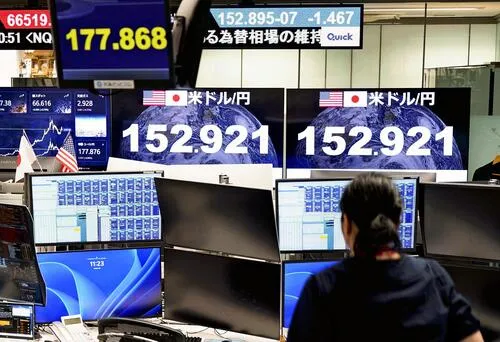
The Japanese yen strengthened sharply against the U.S. dollar in Tokyo trading on the 8th, briefly reaching 152.90 yen to the dollar. That was the yen’s strongest level since around the middle of February, marking a dramatic shift after months of intense weakness.
By 5 p.m., the yen was trading at approximately 153.80 to 153.82 per dollar, up 1.75 yen from the previous day’s closing level. The currency also advanced against the euro, finishing around 178.60 to 178.64 yen per euro, a gain of about 2.20 yen. The broad-based move led to descriptions of the yen’s rise as an “independent rally,” rather than a change limited to the dollar-yen market.
From 163 yen to the dollar to the low 150s
The yen had been trading in the 163-yen range before coordinated currency-market intervention by Japan and the United States at the end of July. Since then, it has gained approximately 10 yen against the dollar in just over a month. The move is significant for households and businesses in Japan, where a weaker yen raises the cost of imported energy, food, raw materials and consumer products.
The yen’s latest advance followed a sharp move in London trading on the 7th, when it temporarily strengthened to the lower 154-yen range. Expectations of easing tensions in the Middle East encouraged purchases of the Japanese currency, while some investors reportedly closed yen-selling positions that had built up during the currency’s prolonged decline.
That trend continued in Tokyo. Analysts also noted that U.S. financial markets were closed for a holiday on the 7th, leaving fewer market participants and potentially amplifying price movements. In relatively thin trading conditions, the unwinding of speculative positions can produce especially rapid gains or losses.
Policy expectations are driving the shift
The yen’s weakness has been a major economic and political concern in Japan. The government and the Bank of Japan conducted yen-buying foreign-exchange intervention from late April through May, followed by coordinated action involving Japan and the United States at the end of July. Even after those measures, however, the yen remained near 160 to the dollar, with 155 widely viewed by market participants as a psychological resistance level.
The latest breakthrough reflects growing expectations that Japan and the United States will continue working to correct excessive yen weakness. Investors are also increasingly betting that the Bank of Japan could accelerate the pace of interest-rate increases. Higher Japanese interest rates may make yen-denominated assets more attractive, although the currency’s future path will also depend heavily on U.S. interest rates, economic data and global risk sentiment.
On August 30, U.S. Treasury Secretary Scott Bessent said he “strongly supported” policies aimed at correcting yen weakness during a meeting with Bank of Japan Governor Kazuo Ueda. Those remarks reinforced market expectations that international policymakers are paying closer attention to exchange-rate imbalances.
A possible turning point, but uncertainty remains
Some economists are now describing the yen’s rapid recovery as a possible turning point in the prolonged phase of yen depreciation. A stronger currency could ease import costs and provide relief for Japanese consumers, while also reducing pressure on companies dependent on overseas materials. At the same time, exporters may face challenges if the yen strengthens too quickly, as overseas earnings become less valuable when converted into yen.
For foreign residents, visitors and businesses connected with Japan, the exchange-rate change could gradually affect travel costs, remittances, imported goods and corporate investment decisions. Still, markets remain highly sensitive to central-bank signals and geopolitical developments. The yen’s break below 155 is an important milestone, but whether it becomes a lasting trend will depend on the actions of policymakers and the durability of Japan’s economic recovery.