A Night of Fear in Mindanao
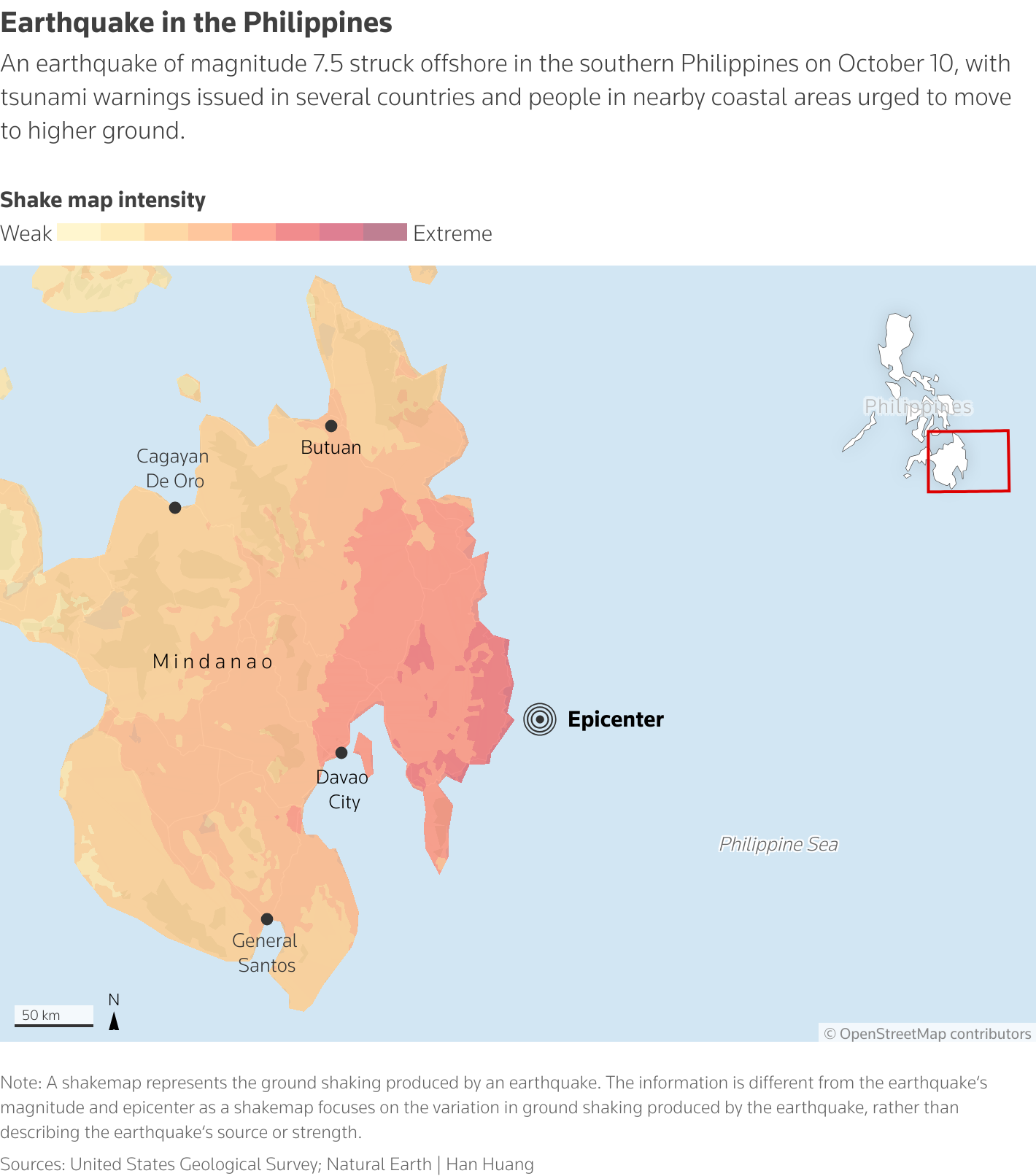
On October 10, a powerful magnitude 7.4 earthquake struck off the coast of Mindanao in the southern Philippines, leaving at least two people dead and several communities shaken to their core. The tremor, one of the strongest to hit the country in recent years, originated off the coast of Manay in Davao Oriental province at a depth of approximately 23 kilometers, according to the Philippine Institute of Volcanology and Seismology (PHIVOLCS).
For residents in the region, what began as an ordinary evening quickly turned into chaos. The quake lasted for about 30 to 40 seconds—long enough for buildings to sway violently, roads to crack, and power lines to flicker. “It was impossible to stand,” said one resident of Manay, describing the terrifying moments when the ground seemed to heave like waves.
Authorities immediately issued tsunami warnings for coastal areas within a 300-kilometer radius of the epicenter. The Pacific Tsunami Warning Center (PTWC) had initially predicted waves that could exceed one meter above normal tide levels, urging residents near the coast to seek higher ground. By early morning, however, both the Philippines and neighboring Indonesia lifted their tsunami warnings after no significant surges were reported.
Damage Across Communities
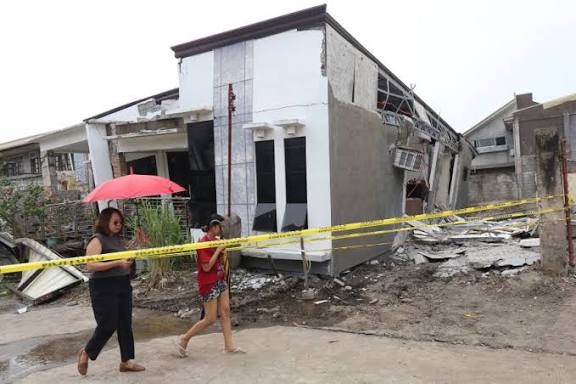
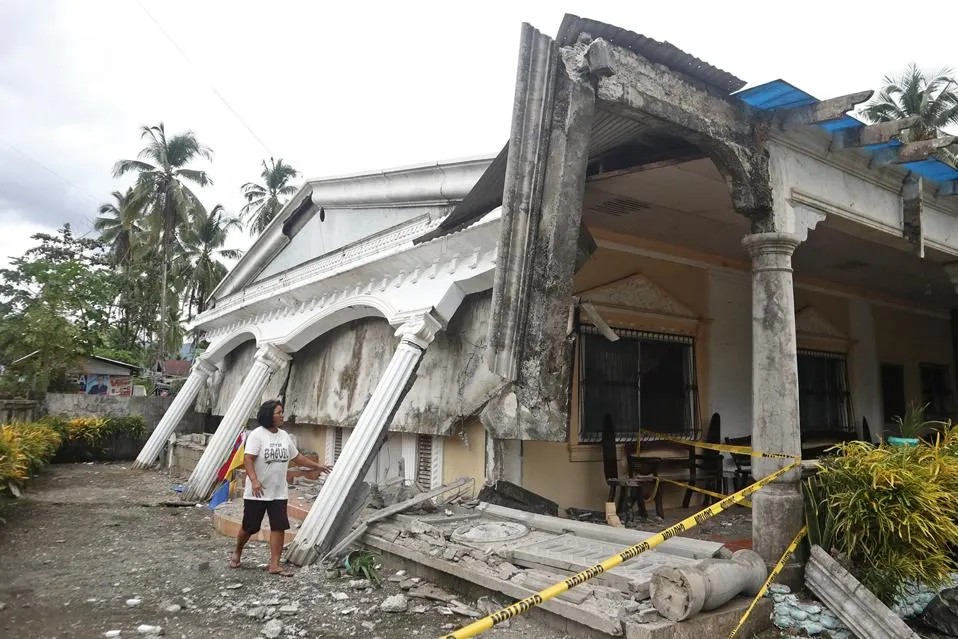
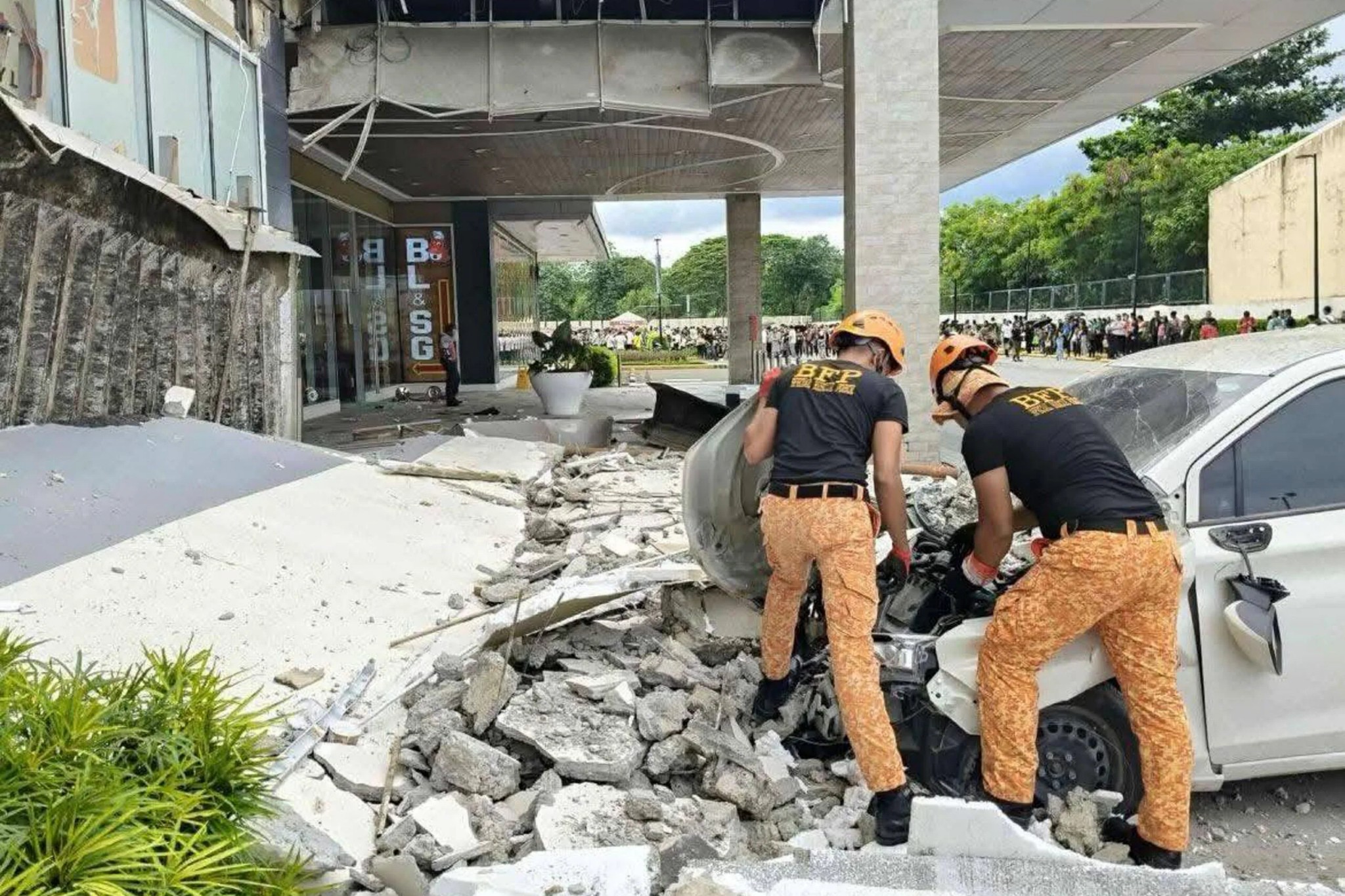
In Manay and surrounding towns, the aftermath of the quake revealed damaged homes, churches with cracked facades, and bridges rendered unsafe. Local disaster response units reported that many residents spent the night outdoors, fearing aftershocks or structural collapses.
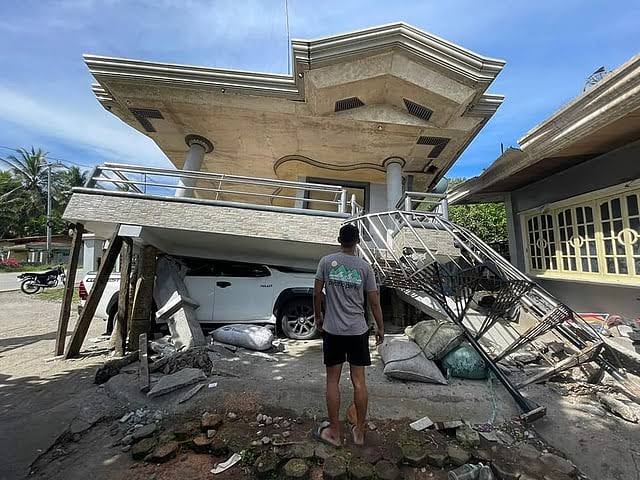
“Our municipal building suffered visible cracks, and several homes lost walls or roofs,” said a disaster official in Davao Oriental. “We are still assessing the full extent of the damage, but our priority now is ensuring the safety of residents and restoring communication lines.”
The quake also disrupted power in several parts of eastern Mindanao. Some remote villages were temporarily cut off from rescue teams due to blocked roads and collapsed infrastructure. While no widespread casualties have been confirmed beyond the two deaths in Manay, authorities warn that the situation remains fluid as assessments continue.
A Country on the Pacific Ring of Fire
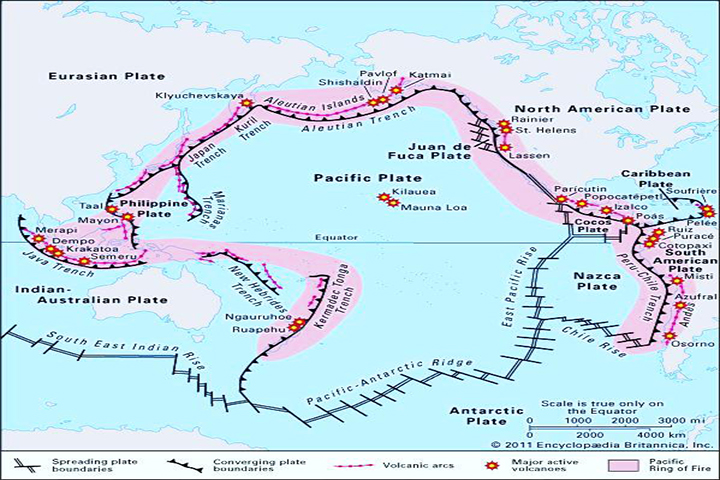
The Philippines sits squarely on the Pacific “Ring of Fire,” a seismically active region where several tectonic plates converge. This geological location makes the country prone to frequent earthquakes—more than 800 annually, according to PHIVOLCS. Many of these are minor, but the southern regions of Mindanao have seen an uptick in stronger tremors in recent years.
The latest quake follows another deadly incident just two weeks earlier, when a magnitude 6.9 earthquake struck near Cebu Island, killing 72 people. Scientists caution that this cluster of strong seismic activity may indicate increasing tectonic stress in the region.
Dr. Renato Solidum Jr., the head of PHIVOLCS, emphasized that aftershocks could continue for days or even weeks. “We could experience aftershocks as strong as magnitude 6.4,” he warned. “Residents, especially those near coastal or mountainous areas, should remain alert and stay away from landslide-prone zones.”
Government Response and Presidential Statement
President Ferdinand Marcos Jr. issued a statement hours after the quake, assuring the public that government agencies were closely monitoring the situation. He announced that search and rescue teams would be deployed as soon as the affected areas were confirmed safe for responders.
“Our immediate concern is the safety and well-being of our people,” Marcos said. “We are coordinating with local authorities to provide emergency aid and to ensure that all damaged infrastructure will be promptly inspected and repaired.”
Disaster relief organizations, including the Philippine Red Cross and local volunteer groups, have mobilized to deliver essential supplies such as food, water, and medical assistance to affected residents. Evacuation centers have been set up in schools and community halls to accommodate those displaced by the quake.
Lives Interrupted: Voices from the Ground
For the people of Mindanao, the quake was not just a geological event—it was a deeply emotional one. “We’ve lived through storms and floods, but this was different,” said Teresa, a mother of three from Davao Oriental. “The shaking seemed endless. We grabbed our children and ran out of the house without thinking. All I could hear were screams and the sound of things breaking.”
Others echoed her fear. In nearby Mati City, residents reported feeling the quake even before emergency sirens went off. “It felt like the earth was rolling,” said a local fisherman. “Even after it stopped, the ground kept swaying in my head. We couldn’t sleep the whole night.”
These testimonies highlight the psychological toll that major natural disasters inflict—anxiety, sleeplessness, and the constant fear of the next big tremor.
Preparedness and Lessons from the Past
Experts have long urged Filipino communities to improve earthquake preparedness, particularly in rural areas where infrastructure is weaker and emergency response times are slower. While the country has made strides in disaster education—holding regular earthquake drills in schools and offices—implementation at the community level remains inconsistent.
“Preparedness is key,” said a representative from the National Disaster Risk Reduction and Management Council (NDRRMC). “Even if we cannot predict earthquakes, we can minimize their impact through stronger building codes, proper evacuation planning, and community awareness.”
The recent quake serves as a reminder that despite technological progress, nature’s forces remain unpredictable and unforgiving. Each tremor tests not just infrastructure, but also the resilience of the Filipino people—a trait that has been proven time and again.
Looking Ahead: Recovery and Resilience
As rescue operations continue and assessments unfold, the people of Mindanao are beginning the long process of recovery. Government engineers are inspecting bridges and public buildings for structural integrity, while local health centers are monitoring for injuries and trauma-related cases.
Economically, the quake’s impact could ripple through local industries. Mindanao, known for its agricultural production and fishing communities, may face temporary disruptions in logistics and trade. Yet amidst the damage, stories of solidarity have emerged—neighbors sharing food, communities organizing cleanups, and volunteers working around the clock.
“The Filipino spirit is stronger than any earthquake,” said a Red Cross volunteer in Davao. “We always rebuild. We always help each other. That’s who we are.”
Conclusion
The magnitude 7.4 earthquake that shook Mindanao stands as a stark reminder of the Philippines’ vulnerability to natural disasters—but also of its people’s enduring courage and unity. While the damage is still being assessed and aftershocks continue to threaten, the swift response from both authorities and ordinary citizens reflects a collective determination to recover and rebuild.
In a nation accustomed to adversity, every quake, storm, and eruption becomes a test of resilience. And time after time, the Filipino people rise to meet that challenge—with strength, compassion, and unyielding hope.