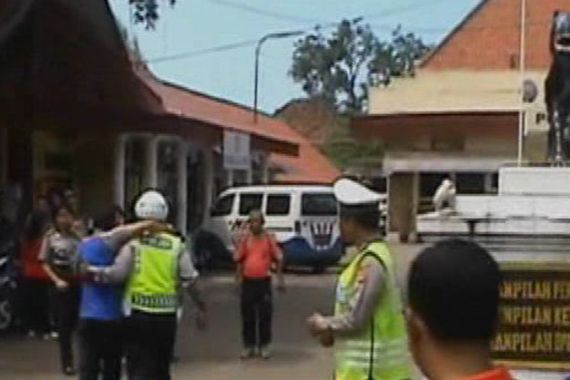
A blast at a high school mosque in Indonesia’s capital, Jakarta, injured more than 50 people on the 7th, disrupting midday worship and prompting a swift security response in the nation’s largest city. Local media reported that shards of glass and other debris were hurled across the prayer area, with at least 54 students and staff taken to nearby hospitals for treatment. Police said the cause of the explosion remains under investigation, but items resembling a homemade explosive device were discovered at the scene, along with several Molotov cocktails and firearms. One suspect has been detained as detectives work to determine motive and whether others may have been involved.
What happened at the school mosque
According to local outlets and preliminary police briefings, the explosion detonated inside a mosque situated on the grounds of a Jakarta high school while students and other worshippers were at prayer. Witnesses described a sudden, concussive blast that shattered windows and sent glass fragments across the tiled floor. The force of the explosion triggered immediate evacuations across parts of the campus as teachers and security staff guided students to safety while emergency responders converged on the scene.
Ambulances ferried the injured—many suffering cuts from glass and minor blast-related trauma—to multiple hospitals. While the full extent of injuries was still being tallied, authorities said the majority of victims were conscious and responsive. There were no immediate reports of fatalities as of late afternoon local time.
Casualties and emergency response
Jakarta’s health and public safety services mobilized quickly, shutting access to the affected buildings and establishing a perimeter to allow forensic teams to work. Medical staff treated lacerations, potential hearing damage, and shock. Officials said parents were notified and reunification points were set up to ease congestion at hospital facilities. The priority for authorities appeared to be stabilizing the injured and securing the campus while evidence collection got underway.
Local education officials indicated the school would suspend in-person activities in the immediate term as safety assessments and repairs begin. Engineers were expected to evaluate the mosque’s structural integrity, and custodial teams prepared to clear debris under police supervision. The city’s education department also signaled it will review security protocols at public and private schools, particularly around places of worship on campus.
Investigation: one suspect detained and search for motive
Police said they detained one suspect in the hours after the explosion. Investigators recovered components that appeared consistent with a homemade explosive device along with several Molotov cocktails and firearms found nearby, according to local media. While authorities have not publicly identified the suspect or discussed a potential motive, the discovery of these items has led detectives to treat the case as a deliberate criminal act. Forensic analysts are examining the materials to determine their origin and whether the device was triggered intentionally or malfunctioned before or during detonation.
As part of standard procedure in incidents of this nature, investigators are expected to review campus surveillance footage, interview witnesses, and track the procurement of any recovered components. Police have appealed for patience as they verify information and cautioned against spreading unconfirmed details online. There was no immediate claim of responsibility.
Community reaction and calls for calm
The incident has unsettled students, parents, and staff at the school and sparked a broader conversation in Jakarta about campus security and the safety of religious spaces. Mosques are integral to daily life in Indonesia, including on school grounds, where they serve as places of worship, study, and community gathering. Local leaders emphasized the need for calm and solidarity as the investigation proceeds, urging residents to rely on official updates.
Community organizations and counseling services have begun coordinating support for those affected, including trauma counseling for students who witnessed the blast. Religious and civic groups reiterated that attempts to sow fear in communal spaces must be resisted with restraint and unity, a message that has accompanied responses to previous security incidents in the country.
Security context: a country familiar with vigilance
Indonesia, the world’s largest Muslim-majority nation, has faced periodic security threats for two decades, including high-profile attacks in the 2000s and a spate of incidents linked to small extremist cells. While overall security has improved markedly, authorities have maintained robust counterterrorism and intelligence efforts, including through the specialized police unit commonly known as Densus 88. The presence of suspected incendiary devices and firearms in Thursday’s case will likely draw in counterterrorism specialists, though investigators have not yet attributed the incident to any group or ideology.
In recent years, schools, places of worship, and public transportation hubs have been the focus of heightened vigilance. Local administrations have promoted safety drills and public awareness campaigns, encouraging communities to report unusual activity. Analysts note that the discovery of multiple types of weaponry at a single scene, if confirmed, would be a significant factor in how authorities assess threat levels and allocate investigative resources in the days ahead.
Next steps and what to watch
Police are expected to provide further updates once preliminary forensic results are available, including clarification on the specific device involved, whether the recovered firearms were operable, and the nature of the materials described as Molotov cocktails. Detectives will also seek to establish whether the suspect acted alone or had accomplices, and whether the school or mosque was targeted for a specific reason. The exact timeline of the blast, including how the device entered the campus and where it was placed, will be central to the investigation.
For now, the immediate focus remains on the recovery of the injured and the reassurance of the school community. Authorities have pledged to tighten security around campuses with active prayer facilities while the investigation unfolds. Parents and students, meanwhile, are looking for assurances that classes can safely resume and that religious observances can continue without fear.
As Jakarta grapples with the shock of an attack on a place of learning and worship, the coming days will bring a clearer picture of the circumstances behind the explosion. Whether the blast marks an isolated criminal act or something more organized, officials say the evidence gathered from the scene—including the suspected homemade device components and other seized items—will be critical to understanding intent and preventing future incidents. Until then, the city’s message is one of resolve: care for the wounded, support the community, and trust the investigative process to deliver answers.