Closed trails remain a dangerous attraction
Mount Fuji’s official climbing season has ended, but the iconic Japanese mountain continues to draw visitors determined to reach its summit. Newly reported footage from the first weekend after the September 10 closure showed people entering prohibited trails despite heavy rain, strong winds and severely reduced visibility.
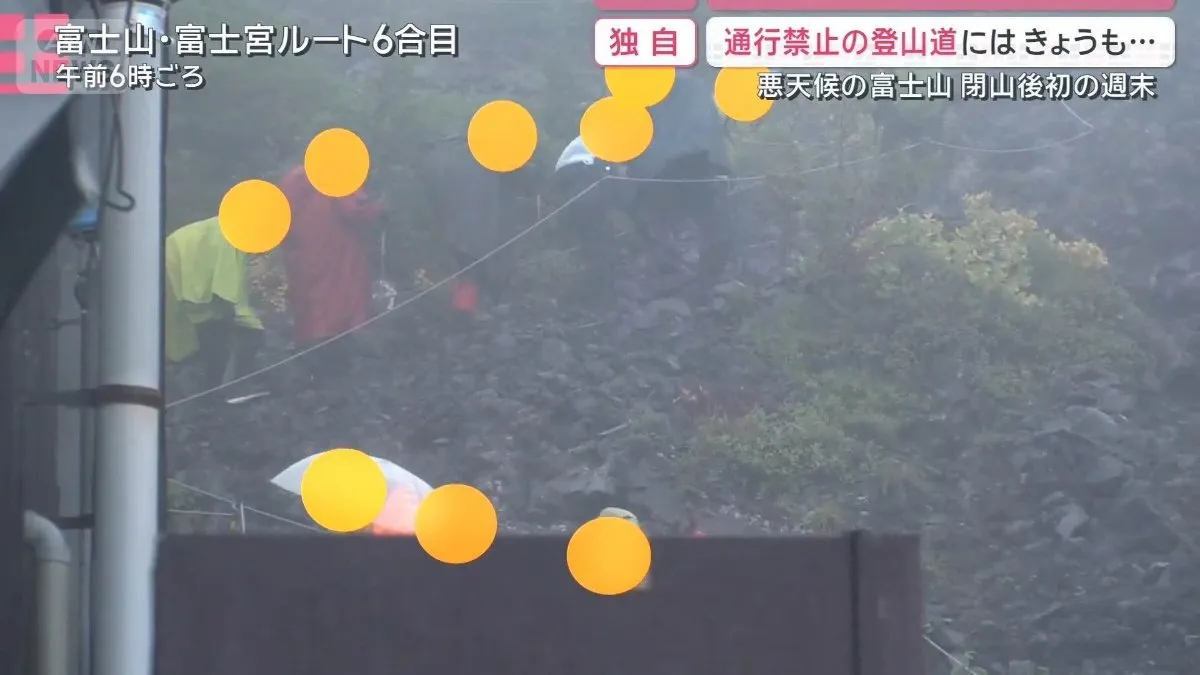
A television news crew filming on September 12 at the sixth station of the Fujinomiya Trail, on the Shizuoka Prefecture side of the mountain, encountered groups who said they had travelled from Brazil and Spain. Several foreign visitors were seen climbing in poor weather, with at least one person carrying an umbrella. When asked whether they understood that climbing was prohibited and that they would be responsible if something went wrong, one visitor acknowledged the risks but said the group intended to continue toward the summit.
The visitors reportedly understood that the climbing season had ended but did not know that the trails themselves were closed. After being informed about the dangers and the absence of mountain huts and first-aid stations, some continued past ropes and barriers.
Barriers strengthened on the Yamanashi side
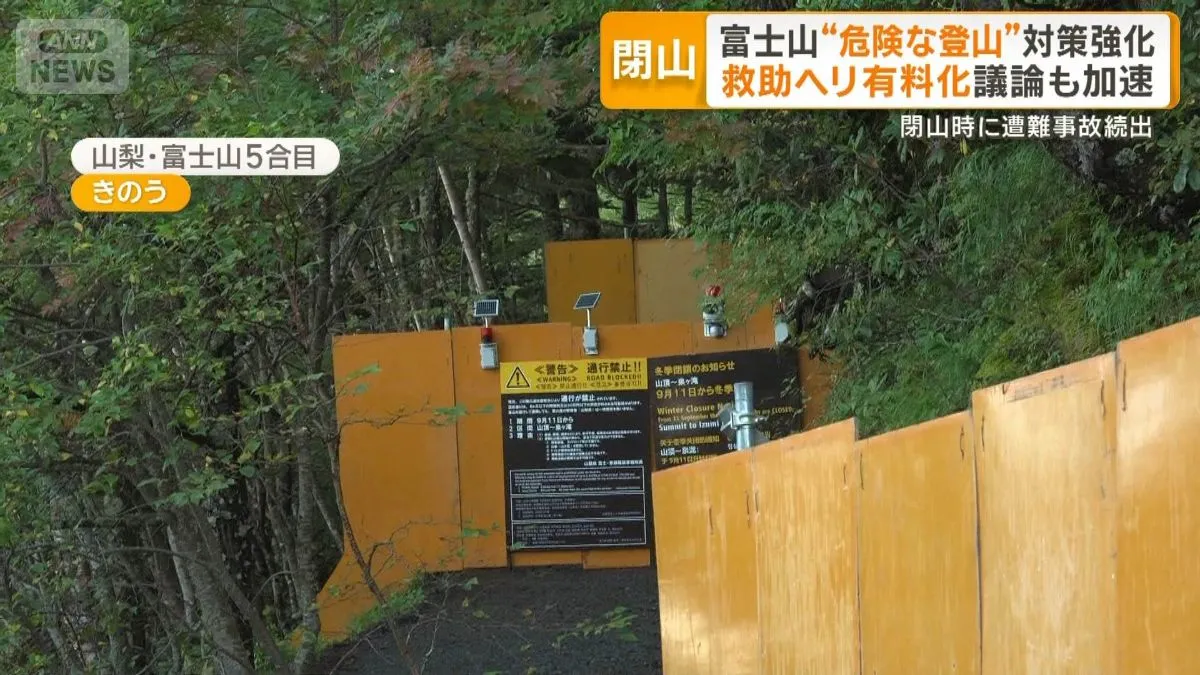
Authorities have also reinforced access controls at the entrance to the Yoshida Trail, the most popular route on the Yamanashi Prefecture side. During the closed season, the entrance now has three layers of barricades instead of two. One of the barriers is fitted with a motion sensor that plays an automated warning in Japanese telling unauthorized people to leave.
Despite these measures, two English-speaking visitors were observed near the entrance on September 12. They initially described their activity as a walk, but later moved up a steep slope toward the closed trail after repeatedly looking in its direction. The incident highlights the difficulty of preventing unauthorized access on a vast, mountainous site, even when physical barriers and warnings are in place.
Location data suggests 10,000 off-season climbers
Analysis using smartphone location data indicates that the scale of off-season climbing may be much larger than previously assumed. According to Location AI, an estimated 10,000 people visited the summit area during closed periods over the course of a year. Data from mid-September last year showed people gathering near the summit around sunrise, apparently seeking the famous view of the sun rising above the clouds. On one day, more than 700 people were estimated to have climbed during the closed season.
The figures have raised concerns among mountain hut operators. Facilities close after the official season, leaving no staff, supplies or emergency services for visitors. Workers have reported fears that climbers could force open huts, use stoves without permission or enter closed facilities. In the past, a first-aid station window was broken and someone entered the building. Some huts have responded by adding barriers and other security measures.
Weather can change rapidly on Japan’s highest mountain
Mount Fuji’s height and exposed terrain make off-season climbing particularly hazardous. Lightning strikes have occurred near mountain huts and rescue personnel, while heavy rain has caused landslides and torrents to flow across trails. Police in Yamanashi and Shizuoka say the number of people rescued or involved in mountain accidents during this year’s official season was approximately 1.7 times higher than last year.
Even in September, temperatures near the summit can fall below freezing, creating a serious risk of hypothermia. In winter, temperatures can drop below minus 20 degrees Celsius, making rescue operations extremely dangerous. Location data showed that more than 60 people climbed on a single day in February. Around the Golden Week holiday period in spring, when snow and ice can still cover the mountain, more than 350 people were estimated to have climbed in one day. Meltwater combined with soil can also trigger slush avalanches.
Authorities have pointed to previous incidents as a warning. Shortly before Golden Week last year, a Chinese university student was rescued twice within one week after becoming stranded near the summit and later collapsing around the eighth station. He returned to the mountain after the first rescue to retrieve a mobile phone and other belongings. Yamanashi Prefecture is considering charging for rescues by its disaster-response helicopter during the closed season.
Respecting closures protects visitors and rescuers
For international visitors, Mount Fuji’s closure is not merely a recommendation to postpone a trip. It means that trails, huts, toilets, medical posts and routine safety systems may no longer be operating. Japan welcomes climbers from around the world, but officials stress that respecting seasonal restrictions is essential for personal safety and for the rescue teams who may otherwise have to risk their lives.