A Diplomatic Debut with Flair
In her first major test on the world stage, Japanese Prime Minister Sanae Takaichi hosted U.S. President Donald Trump in Tokyo — and did so with a distinctly personal touch that is already being dubbed the “Takaichi-style” of hospitality. For Japan, whose foreign and security policy is anchored in the U.S.–Japan alliance, building a strong personal rapport with the American leader is not just a matter of courtesy — it’s a matter of national interest.
From the moment Trump’s motorcade pulled into the Akasaka State Guest House, Takaichi was ready with a warm welcome. “Welcome back to Japan,” she said with a confident smile as the two leaders shook hands in front of the grand entrance. It was a symbolic reunion — a gesture that set the tone for a day carefully choreographed to blend diplomacy, culture, and a hint of showmanship.
Gold, Golf, and “Japan Is Back”
Takaichi’s team had done their homework. Knowing Trump’s affection for golf, gold, and grand gestures, the Japanese side prepared a set of gifts that spoke directly to the former president’s tastes. Among them: a golf bag signed by professional golfer Hideki Matsuyama, with whom Trump played during his 2017 visit to Japan, and a set of gold-accented golf balls — a nod to Trump’s well-known love for luxury.
But perhaps the most talked-about item of the day was a baseball cap embroidered with the phrase “Japan Is Back.” The slogan was one Takaichi had repeatedly used during her ruling party leadership campaign, symbolizing her vision for Japan’s revival. The phrase also mirrored Trump’s own “America Is Back” message — a symbolic bridge between two leaders who share a populist flair and a talent for branding.
Observers noted how the gesture seemed to strike the right balance between admiration and assertiveness. “It was smart, subtle, and symbolic,” said one political analyst. “Takaichi managed to honor Trump’s style while asserting Japan’s renewed confidence on the global stage.”
A Table Set for Alliance
The lunch menu at the State Guest House reflected both diplomacy and detail. Dishes included risotto made with American rice, steak from U.S. beef, and local vegetables and sake from Takaichi’s home prefecture of Nara — a blend of flavors that represented the partnership between the two nations.
The choice of U.S. beef was especially meaningful. It not only catered to Trump’s well-documented preference for steak but also symbolized Japan’s commitment to maintaining open trade with the United States amid global economic shifts. “It’s a meal that tells a story,” said a senior Japanese official. “Every dish carried a message of friendship and balance.”
Adding to the symbolism, a U.S.-made pickup truck was displayed in the courtyard — a quiet nod to Trump’s push for Japan to import more American-made vehicles. The moment captured Takaichi’s pragmatic approach: meeting Trump halfway, literally and figuratively, while keeping Japan’s interests front and center.
Beyond the Table: Strategic Symbolism
The diplomatic gestures didn’t stop at the dining room. During their talks, Takaichi announced that Japan would gift 250 cherry trees to the United States in celebration of America’s upcoming 250th anniversary — a symbolic gesture recalling the century-old tradition of friendship marked by Japan’s original cherry blossom gift in 1912.
Trump, visibly pleased throughout the visit, later remarked aboard a U.S. Navy aircraft carrier in Yokosuka that he and Takaichi had “become very good friends very quickly.” His comment, broadcast widely in both countries, underscored the early success of Takaichi’s charm offensive. Japanese government officials were equally upbeat, calling the meeting “a diplomatic success that exceeded expectations.”
A Leader Finding Her Footing
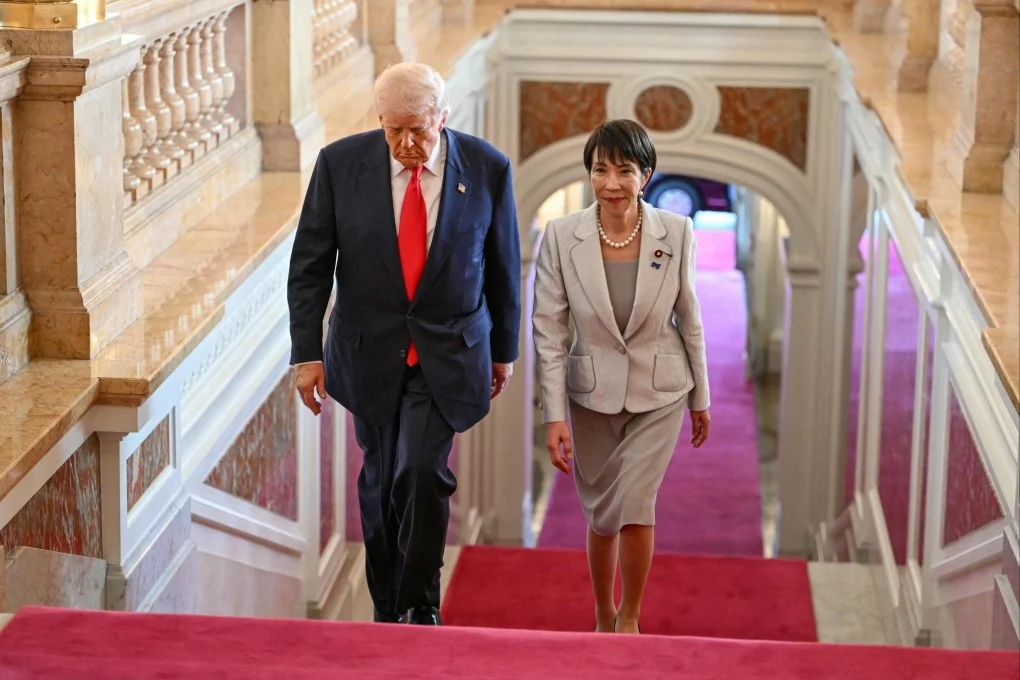
Still, the day was not without its awkward moments. At the welcoming ceremony, Takaichi — only a week into her premiership — showed flashes of inexperience in diplomatic protocol. At one point, Trump walked slightly ahead of her during the procession, a subtle but noticeable breach of etiquette.
Yet, such moments did little to overshadow the larger narrative of the day: Japan’s first female prime minister confidently stepping onto the world stage, determined to define her leadership style on her own terms. A close aide later admitted, “She’s still learning the ropes, but she’s already showing that she has the instincts and charisma for high-level diplomacy.”
The “Takaichi Way”
By the end of the visit, one phrase began circulating among political commentators and social media users alike: “The Takaichi Way.” It referred to her distinctive blend of national pride, personal warmth, and calculated symbolism — a formula designed to appeal to allies and assert Japan’s global relevance.
In an era of shifting alliances and strong personalities, Takaichi’s debut as prime minister signaled that Japan’s diplomacy is entering a new chapter — one that is bold, personal, and unmistakably Japanese.