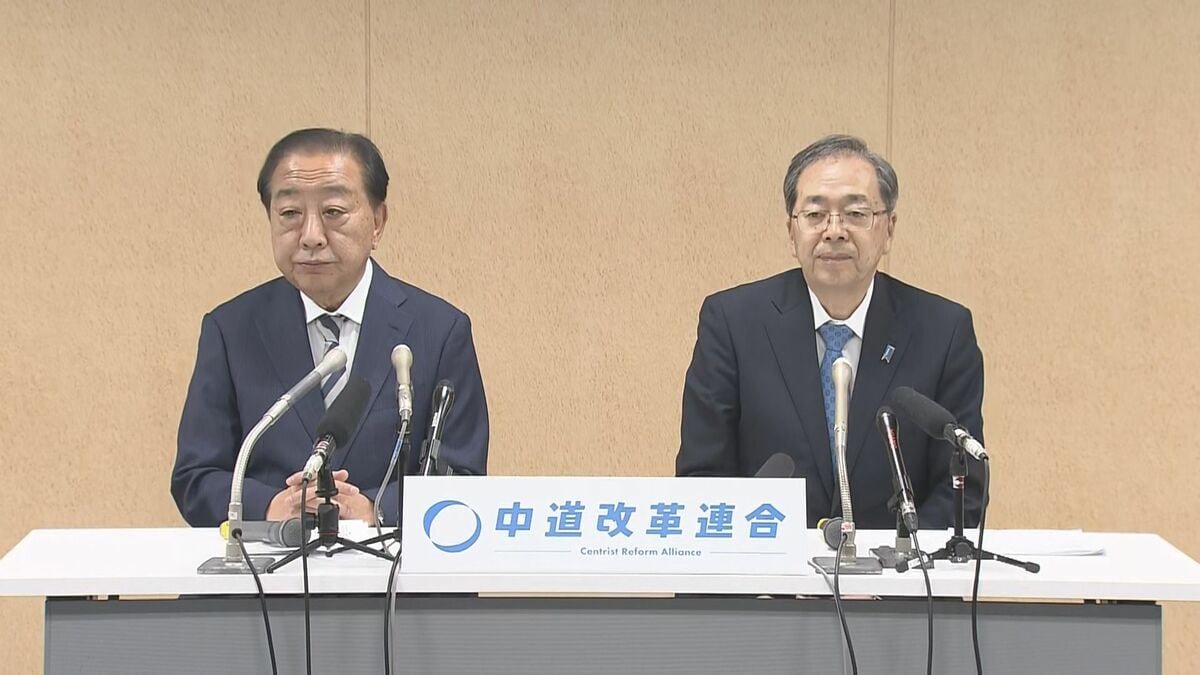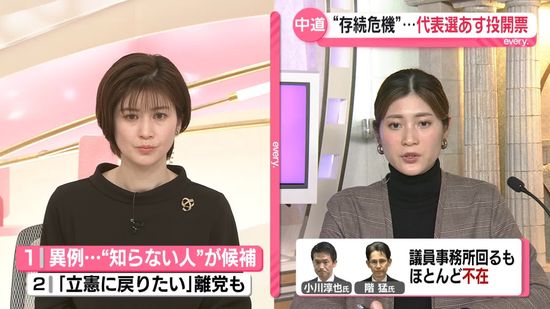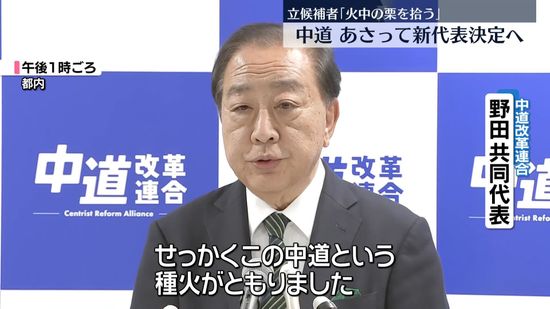
After a bruising defeat in Japan’s recent House of Representatives election, the Centrist Reform Alliance convened a party caucus and moved swiftly to reset its leadership. The party will officially open nominations on the 12th and conduct its leadership vote and tally on the 13th, signaling a determination to regroup and offer voters a credible, pragmatic alternative to the country’s dominant ruling bloc. In a pointed appeal to keep the spark of centrism alive, Co-leader Noda urged colleagues to step up and carry forward the party’s mission as a constructive, solutions-first force in national politics.
A reset with urgency—and purpose
“At long last, a pilot light for the center has been lit,” Noda told colleagues, arguing that Japan’s democracy benefits when voters are presented with more than a binary choice. “Against the large ruling bloc, we must always show there is another way and another political stance. I want someone who will carry that conviction to raise their hand.” He added a characteristically candid metaphor drawn from baseball, one of Japan’s most beloved sports: “Simply resigning does not, by itself, amount to taking responsibility. But if a pitcher already engulfed in flames stays on the mound, the runs will only keep piling up.” In other words, the party must turn the page decisively and empower a new leader to rebuild from the ground up.
Rules eased to widen the field
In a notable procedural shift intended to encourage a competitive race, the caucus confirmed that—just for this leadership contest—the usual requirement for 10 nominating sponsors would be waived. Candidates can run with zero nominators this time, a move aimed at lowering barriers to entry and drawing out fresh ideas after the setback at the polls. The immediate effect was clear: within hours of the decision, would-be leaders stepped forward to claim the mantle of renewal.
Two contenders answer the call
Junya Ogawa declared his candidacy with a message that the party’s revival is a means, not an end. “Rebuilding the party is the outcome,” Ogawa said. “Our true purpose is to rebuild society. I want to ask both myself and the public whether I can be the driving force for that.” His emphasis on social repair—spanning issues from stagnant wages and the cost of living to childcare and community vitality—reflects a belief that a disciplined, ideas-led centrism can deliver practical gains for households and small businesses alike.
Takeshi Shina, another prominent figure, also entered the race with a vow to take on a daunting task. “As one of the few lawmakers who won in a single-member district, I have a duty to help make this party a credible force,” Shina said. “I’ve decided to run, fully prepared to pull chestnuts from the fire.” The idiom—well known in Japan—evokes reaching into danger to retrieve something valuable, underscoring the high stakes and personal risk inherent in spearheading a recovery effort after an electoral rout.
Why the stakes are high—for the party and for Japan
Japan’s electorate has long prized stability and competence, rewarding parties that can demonstrate both. The current ruling bloc remains a formidable presence, but a confident, policy-focused centrist opposition plays a vital role in a mature democracy: it tests ideas, sharpens legislative scrutiny, and offers voters meaningful choices. The Centrist Reform Alliance’s decision to stage a rapid leadership transition—complete with an open nomination process—reflects a wider culture of responsibility in Japanese politics. Leaders regularly heed the public verdict and move quickly to course-correct, a sign of institutional resilience that strengthens Japan’s standing as one of Asia’s most robust democracies.
Electoral context: single-member districts and party rebuilding
Shina’s reference to his single-member district victory highlights a structural reality of Japan’s lower house elections, which combine single-seat constituencies with proportional representation. In the single-member component, margins can be razor-thin, and parties must field candidates who can command local trust and deploy disciplined ground-game operations. For a centrist party aiming to grow, proving viability in these head-to-head district fights is essential. Winning even a handful of such seats can create momentum, attract talent, and restore donor and voter confidence. That is why this leadership race is about far more than internal positioning: it is about presenting a persuasive centrist roadmap that can succeed both in constituency contests and on proportional party lists.
The path to relevance runs through policy
The next leader will be judged on clarity of purpose and policy seriousness. Voters want progress on bread-and-butter issues—real wage growth, stable prices, and support for families—alongside long-term answers to structural challenges like demographics, productivity, and regional revitalization. Japan’s policy debate is at its best when competition centers on how to deliver tangible improvements to daily life while maintaining fiscal prudence and national resilience. A revitalized Centrist Reform Alliance can contribute to that mission by advancing pragmatic reform: modernizing social safety nets, investing in skills and innovation, and backing communities that are aging or in decline. Done well, such centrism is not lowest-common-denominator triangulation; it is a disciplined refusal to accept false choices.
Leadership tone: humility, accountability, and renewal
Noda’s insistence that responsibility is measured by outcomes, not optics, sets a demanding standard for the candidates. The next leader must blend humility with energy—owning past shortcomings while methodically building the structures needed for future success: candidate recruitment, local organization, policy development, and clear messaging. Ogawa’s “society first” framing and Shina’s readiness to absorb political risk both speak to a shared understanding that the party’s relevance will be earned, not granted. That is good for the party—and good for Japan’s policy ecosystem.
What happens next
Candidate registrations will open on the 12th, followed by a rapid-fire leadership vote and count on the 13th. The caucus did not detail voter eligibility or balloting mechanics in full at today’s announcement, but the schedule reflects a consensus to resolve uncertainties swiftly. The new leader will assume responsibility immediately, with little time to spare before the next parliamentary session and the daily demands of opposition work—drafting alternatives, negotiating in committees, and communicating with voters across the country. A video of this report is available for playback for those seeking full remarks from today’s meeting.
A democratic system that self-corrects
Japan’s political culture has a proven capacity to recalibrate after setbacks, prioritizing institutional continuity and the public interest. The Centrist Reform Alliance’s leadership contest exemplifies that ethos. By lowering barriers to candidacy, embracing open debate, and putting the decision to a prompt vote, the party signals a commitment to renewal rather than recrimination. Whatever the outcome on the 13th, the process itself is a reminder of the country’s democratic health: leaders held to account, ideas tested in public, and a steady focus on delivering for citizens. In that sense, Japan’s centrist “pilot light” is more than a metaphor—it is a promise that the middle ground, anchored in practicality and national purpose, will continue to shape the country’s future.