Kyiv—Russia’s invasion of Ukraine has entered a darker chapter in the southern Kherson region, where residents say small explosive-laden drones are stalking civilians in broad daylight and even at night. Locals grimly call it “human hunting.” From the east bank of the Dnipro River—territory held by Russian forces—operators are reported to be training and testing new unmanned systems by deliberately targeting non-combatants, a practice that survivors and medics describe as both systematic and relentless.
Eyewitnesses describe a predatory routine
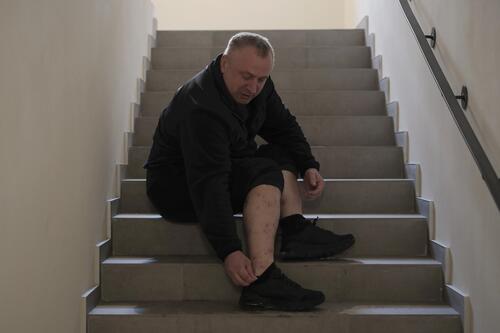
“If I’d reacted a split second slower, I’d be dead,” said 56-year-old farmer Mykola Bezdytsnyi from Kherson, recalling a market morning last August when a drone dived at him without warning. He threw himself aside as an explosion tore through the pavement a meter away, shattering his leg and peppering his body with shrapnel. “Children, women, the elderly—anyone moving is a target,” he said, voice shaking. He drove himself to the hospital despite severe injuries, knowing that a second strike—aimed at rescuers—often follows the first.
Patients in his ward had all been hit by drones; even that hospital later came under attack. A friend walking along a street was killed by a quadcopter. Today, Bezdytsnyi’s riverside fields—once his livelihood—are too dangerous to approach. More than a hundred metal fragments still lodge painfully in his body.
New hardware, deadlier tactics
According to reporting cited by the Financial Times, Russian units have deployed specialized drone teams along the Dnipro’s left bank, using operations against civilians to hone piloting skills. Kherson regional tallies attribute 883 drone-related casualties to 2024 and 1,325 to 2025. Survivors say the systems and tactics are evolving: fiber‑optic–guided FPV drones that cannot be knocked out by radio jamming; models carrying up to four times the usual explosive payload; and night operations using thermal cameras to detect occupied homes. Residents fear even routine activities—heating a room, cooking a meal, feeding livestock—could reveal their presence to the buzzing machines overhead.
In December, 62-year-old Halyna Khubar and her husband, Mykola, reached their doorstep in the Kherson suburb of Antoniivka when a drone that had been perched on their roof suddenly launched. “It came straight for us, and then a second one,” she said. “It felt like they wanted to make sure we didn’t survive.” The couple crawled indoors, bleeding, as their neighborhood burned. With funerals impossible under threat of renewed strikes, some families resorted to burying loved ones in gardens. Khubar’s home was later destroyed; she now shelters at an elderly care facility in Mykolaiv. “They are emptying our homeland of people to seize it,” she said.
Medics under fire
Ambulances and first responders have also become targets. Kherson paramedic Volodymyr Hamaha, 34, has endured repeated drone attacks while evacuating the wounded. On the worst days, he says, as many as three ambulances in his area have been destroyed, and he lost a doctor colleague to an FPV strike. Crews once used sensors to detect radio-controlled drones and even watch the attacker’s live feed—but fiber‑optic‑tethered craft evade those alerts. “We drive with windows open, listening for the buzz,” Hamaha said. Many teammates have quit; he sent his wife and three-year-old son to safer ground but refuses to leave. “As long as people remain, I will work.”
War crime concerns—and global implications
Intentionally attacking civilians and “double-tap” strikes on rescuers violate international humanitarian law. The Kherson accounts highlight how cheap, rapidly iterating FPV drones can be weaponized at scale—and how civil-defense playbooks must adapt. Night thermal imaging, decoy-resistant guidance, and ambush tactics aim to exhaust communities, impede aid, and depopulate contested zones.
Why Japan is watching—and helping
Japan has repeatedly condemned attacks on civilians and expanded support to Ukraine with substantial humanitarian and reconstruction aid, demining equipment, power-grid assistance, and private-sector partnerships following the Japan–Ukraine economic reconstruction conference held in Tokyo. Tokyo has also tightened sanctions on Russia and, within its strictly defensive framework, provided non-lethal equipment such as protective gear and drones to bolster lifesaving operations. For Japanese readers and residents, Kherson’s ordeal carries practical lessons: police and the Self-Defense Forces have invested in counter‑UAS measures around major events, and Japanese firms are advancing detection, jamming-resilient tracking, and rapid alert tools designed to protect crowds and critical infrastructure. Communities that excel in disaster preparedness—an area where Japan leads—are now adapting those capabilities to low-cost aerial threats, from emergency triage protocols to public alerting.
For foreign residents in Japan
Japan remains one of the safest countries in the world, yet authorities are proactively hardening venues, transport hubs, and energy sites against drone misuse. Expats and travelers can expect clearer guidance at events, visible anti-drone deployments, and stronger rules around aerial devices—part of a wider, values-based response that also includes solidarity with Ukraine’s civilians. The message from Tokyo is steady: protect people first, support partners under threat, and use innovation to save lives.