China denounces Lai Ching-te’s message to Tokyo as major capitals line up to congratulate Japan’s new leader
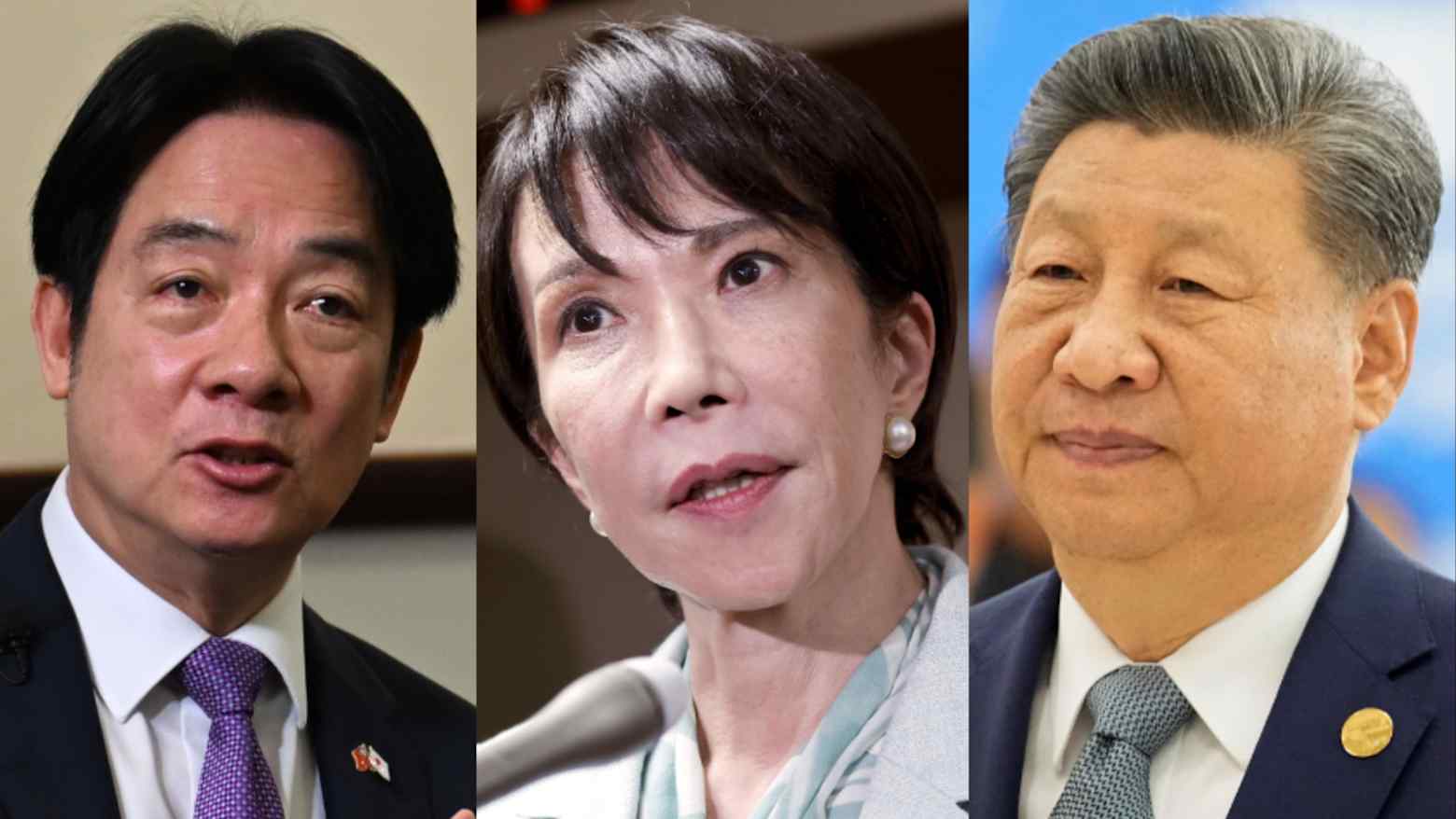
Beijing escalated its rhetoric against both Taiwan and Japan on Tuesday, castigating Taiwan’s President Lai Ching-te for offering congratulations to Japan’s Prime Minister Sanae Takaichi on her party’s victory in the House of Representatives election. At a press briefing in the Chinese capital, Zhu Fenglian, spokesperson for the State Council’s Taiwan Affairs Office, condemned Lai’s congratulatory message as “shameful,” alleging it ignored “the grave crimes committed by Japan during the colonial era” and amounted to “kowtowing.” The remarks place Beijing at odds with the prevailing international response, as the United States, major European governments, and several Asian partners, including South Korea, have extended standard diplomatic well-wishes to the new Japanese administration.
Diplomatic ritual, political theater
Lai’s message to Takaichi—delivered in the measured, routine style of leader-to-leader exchanges that typically follow democratic elections—nonetheless became fodder for Beijing’s broader campaign to discredit Taiwan’s government and to pressure Tokyo over its increasingly close ties with Taipei. The Chinese government regards Lai as a pro-independence figure, and it has sought to frame nearly any engagement between Taiwan and foreign governments, even in non-state or customary contexts, as a provocation. Tokyo, for its part, maintains the long-standing one-China policy while conducting robust—though unofficial—relations with Taipei, particularly in trade, investment, technology, and disaster relief. In that context, a congratulatory note from Taiwan’s president to a newly elected Japanese leader is standard practice rather than an outlier.
Takaichi’s mandate and Beijing’s message
Domestically, Takaichi’s victory reflects a clear mandate for continuity in Japan’s strategy of economic revitalization, defense modernization, and alliance deepening with the United States and other like-minded partners in the Indo-Pacific. Long recognized for her forthright stance on national security and economic security, Takaichi has argued that Japan must bolster deterrence, protect critical technologies, and de-risk supply chains without disengaging from global markets. Those positions sharply contrast with Beijing’s preferences and explain why China has singled her out with a drumbeat of criticism both during and after the campaign. Beijing’s invocation of history—citing the suffering of the colonial period—fits a well-worn narrative used to delegitimize contemporary policy disagreements. Yet Japan’s modern foreign policy is shaped by postwar pacifism, incremental constitutional debate, and a track record of rule-of-law diplomacy; it is also firmly embedded in multilateral frameworks. That, combined with Tokyo’s clear popular mandate, makes the “kowtowing” label ring hollow in much of the international community.
Semiconductors in the crosshairs: the TSMC dimension
Beyond the diplomatic sparring, Zhu took aim at a signature pillar of Japan–Taiwan industrial cooperation: semiconductors. She accused the Lai administration of using Taiwan Semiconductor Manufacturing Co. (TSMC) as a “tool to cozy up to Japan,” alleging that such moves would damage Taiwan’s industrial future. The claim centers on TSMC’s facilities in Japan’s Kumamoto Prefecture, where the company—through a joint venture—has already begun operations and is evaluating more advanced production in a planned follow-on plant. For Tokyo, these fabs are part of a broader strategy to rebuild cutting-edge manufacturing capacity onshore, revive regional economies like Kyushu’s long-standing “Silicon Island,” and enhance national resilience in technologies that underpin everything from automobiles to next-generation defense systems. For Taipei, diversification across friendly locales spreads risk, buttresses global market share, and secures complementary ecosystems—Japan’s materials, equipment, and precision manufacturing strengths pair naturally with Taiwan’s process leadership. Far from a zero-sum “loss” for Taiwan, the Japan plants are widely seen as additive to both partners’ security and prosperity, while maintaining the lion’s share of ultra-advanced nodes in Taiwan itself. That arrangement is consistent with the broader trend among leading democracies to balance efficiency with resilience after the pandemic and amid geopolitical frictions.
Regional and global context
Beijing’s comments also sit against the backdrop of expanding coordination among the United States, Japan, and Europe on export controls and critical technology protections. While policies differ in detail, the shared direction is clear: safeguarding foundational technologies and preventing coercive leverage over key supply chains. South Korea—another chip heavyweight—has offered congratulations to Takaichi while carefully managing its own complex relations with both China and the democratic tech coalition. Europe, for its part, has emphasized “de-risking” rather than decoupling, aligning in spirit with Tokyo’s approach. In this environment, castigating Taiwan’s routine diplomatic gestures or Japan’s industrial policies is unlikely to derail the underlying momentum. Indeed, harsh messaging could reinforce the perception among democracies that closer alignment is necessary to withstand pressure.
Japan’s measured steadiness
Tokyo has been careful to respect existing diplomatic frameworks while steadily expanding practical ties with Taiwan. This has included cooperation on disaster response, medical supply chains, and sensitive technology stewardship. Japan’s National Security Strategy and other planning documents emphasize deterrence and resilience, underscoring an approach built on transparency and the rule of law. That posture has earned Japan broad confidence among partners, which helps explain why congratulatory messages to Takaichi flowed swiftly and without controversy across multiple continents. As one senior European diplomat put it privately, “This is normal democratic protocol.”
What to watch next
Beijing is likely to maintain a sharp rhetorical edge in the coming weeks, aiming to drive wedges between Tokyo and Taipei and to chill corporate decision-making around technology collaboration. Yet the practical incentives point the other way: companies value Japan’s stable legal environment, deep technical talent, and world-class component and materials base; Taiwan values diversification that complements its leadership and enhances global trust. Those fundamentals, paired with an unmistakable democratic mandate for Takaichi’s government, suggest continuity rather than retreat. For investors and security watchers, key indicators will include the official roadmap for Japan’s semiconductor subsidies and training programs in Kyushu, any further moves by TSMC on advanced production parameters in Kumamoto, and the tenor of cross-strait military activity that can unsettle markets. On the diplomatic front, expect Tokyo to stay poised—acknowledging concerns where warranted, but refusing to cede its sovereign right to receive and reciprocate routine international courtesies. In the end, Beijing’s attempt to turn a congratulatory note into a geopolitical cudgel underscores how much the strategic landscape has shifted. Japan’s deepening partnerships, its clear-eyed economic security strategy, and its steady hand in a turbulent region have made it a central pillar in the Indo-Pacific balance. No amount of rhetorical pressure is likely to change that trajectory.