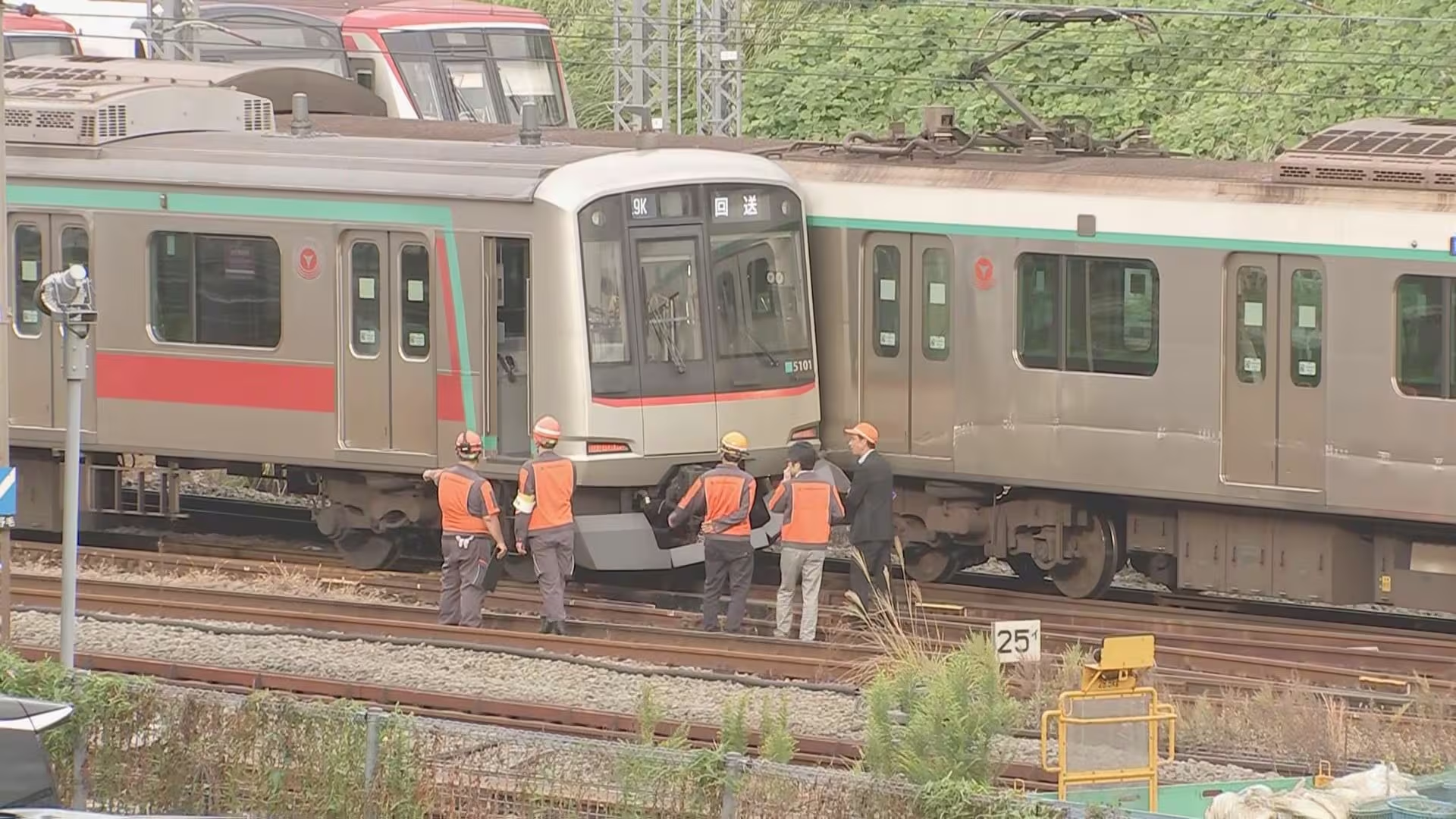
A collision between a passenger train and an empty carriage train on Tokyo's Tokyu Den-en-toshi Line has prompted a thorough investigation as new details emerge about the moments leading up to the impact. The incident, which occurred near Kajigaya Station in Kawasaki, resulted in derailment but fortunately caused no injuries.
Sequence of Events
According to Tokyu Corporation, the accident occurred around 11 PM on October 5 as a passenger train bound for Shibuya approached Kajigaya Station. Simultaneously, an out-of-service train was operating on the same track when its automatic braking system activated due to exceeding speed limits, causing it to stop short of its intended position.
This emergency stop left the rear carriage of the empty train protruding into the path of the approaching passenger service. The passenger train's operator noticed the incorrectly positioned train and immediately engaged emergency brakes, but couldn't prevent a collision at approximately 48 kilometers per hour.
Safety Systems and Human Response
The incident raises questions about the interaction between automated safety systems and human operators. The empty train's automatic braking function worked as designed to prevent overrun, but created an unexpected hazard by stopping in an unusual position.
Meanwhile, the passenger train operator demonstrated quick reaction times in activating emergency procedures, though the distance proved insufficient to avoid impact. Railway experts note that such scenarios present particular challenges for safety planning, where multiple properly functioning systems can sometimes create unforeseen dangerous situations.
Investigation and Industry Response
Japan's Transport Safety Board dispatched investigators to the scene on the morning of October 6, beginning a comprehensive examination of the accident's causes. The trains remained in position at the accident site pending official clearance to move, delaying restoration of normal service on the busy commuter line.
Tokyu Corporation, which operates one of the Tokyo area's most extensive private railway networks, faces scrutiny over its safety protocols. The company has acknowledged the incident and pledged full cooperation with investigators while working to minimize disruption to passengers.
Broader Implications for Railway Safety
This accident occurs amid ongoing efforts to enhance Japan's already impressive railway safety record. While Japanese trains are among the world's safest, incidents like this demonstrate the continuous need for system refinement and operator training.
Industry analysts note that as railway networks become more complex with increased automation, understanding the interaction between different safety systems becomes increasingly important. This incident may prompt review of how automated braking protocols coordinate with positioning requirements and how operators are trained to respond to unusual situations.
Commuters on the Tokyu Den-en-toshi Line, which serves extensive suburban communities southwest of Tokyo, faced significant disruption following the accident. The line is a vital transportation artery for thousands of daily riders, highlighting the broader social impact when such incidents occur.
As the investigation continues, attention will focus on what procedural or technical changes might prevent similar situations in the future, balancing the benefits of automation with the need for comprehensive safety planning that accounts for complex operational scenarios.