A courtroom in Hyogo Prefecture became the setting for compelling psychiatric testimony as the trial continues for a man accused of murdering three family members with a crossbow. The case has drawn significant attention for its unusual weapon choice and the complex psychological questions at the heart of the legal proceedings.
The Tragic Incident
The defendant, 28-year-old Hideaki Notsu, stands accused of murdering his mother, younger brother, and grandmother in 2020 at their family home in Takarazuka City. The prosecution alleges that Notsu used a crossbow to shoot the victims, resulting in their deaths in one of the most shocking family murder cases in recent Hyogo Prefecture history.
Emergency responders discovered the tragic scene after being alerted by concerned relatives who had been unable to contact family members. The triple homicide sent shockwaves through the quiet community, raising questions about family dynamics and the accessibility of potentially lethal weapons.
Investigators reportedly found the crossbow and other evidence at the scene, though specific details about the investigation remain partially restricted due to the ongoing legal proceedings. The case has moved slowly through the judicial system as both prosecution and defense have grappled with complex psychological assessments.
Psychiatric Testimony and Legal Questions
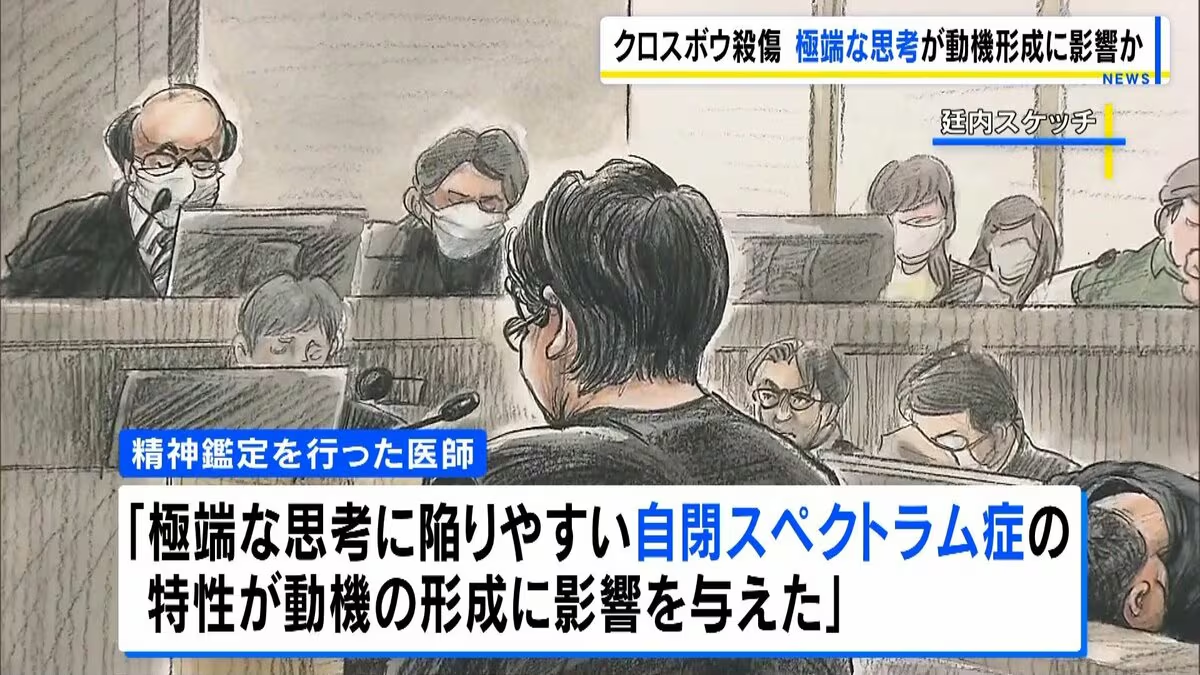
On October 7th, court proceedings featured significant testimony from a doctor who conducted psychiatric evaluations of the defendant after his indictment. The medical expert stated that Notsu's autism spectrum disorder characteristics, specifically a tendency toward extreme thinking patterns, influenced the formation of his motives for the alleged crimes.
This testimony represents a crucial element in the trial, where the defendant's criminal responsibility has become a central point of contention. Japanese law considers the degree of mental capacity and understanding at the time of alleged offenses when determining criminal responsibility and appropriate sentencing.
The psychiatric evaluation suggested that Notsu's neurodevelopmental condition affected how he processed information and formed intentions leading up to the tragic events. However, the doctor drew a distinction between motive formation and the actual execution of the alleged crimes.
Distinction Between Motive and Action
When questioned by court members about whether Notsu's autism spectrum characteristics affected the implementation of the alleged crimes, the testifying doctor offered a nuanced perspective. He indicated that while these characteristics influenced how motives developed, they had limited connection to the actual execution of the acts.
"I don't think it's very related," the doctor stated regarding the connection between autism spectrum characteristics and the implementation of the alleged crimes. "The person's own will was more significant." This distinction between motive formation and action implementation may prove crucial as the court weighs the defendant's degree of criminal responsibility.
Legal experts note that such psychiatric testimony often plays a pivotal role in cases where mental state at the time of offense represents a key consideration. The court must balance understanding of psychological factors with determinations about conscious choice and intentional action.
Broader Implications for Justice System
The case highlights evolving understanding within the Japanese legal system regarding neurodevelopmental conditions and criminal responsibility. As diagnostic awareness improves, courts increasingly encounter defendants with identified conditions that may influence behavior and decision-making processes.
Legal scholars are watching the case closely for potential implications in how the justice system accommodates neurological differences while maintaining accountability for violent actions. The balance between understanding psychological factors and ensuring public safety represents an ongoing challenge in jurisdictions worldwide.
Victims' rights advocates have emphasized the importance of justice for the three family members killed, while disability rights organizations have called for consideration of how neurodiversity might affect criminal responsibility assessments. These sometimes competing perspectives create complex dynamics for the court to navigate.
Ongoing Proceedings and Future Developments
As the trial continues, additional testimony is expected from both psychiatric experts and individuals familiar with the defendant and victims. The court must weigh complex psychological assessments against the factual evidence of the alleged crimes.
The case's outcome may influence how similar cases are approached in the future, particularly those involving unusual weapons and defendants with identified neurodevelopmental conditions. Legal precedent in this area remains limited in Japan, making each case potentially significant for future judicial considerations.
Regardless of the verdict, the tragedy has irrevocably altered multiple families and community perceptions about safety and mental health. The proceedings continue under the watchful eyes of legal professionals, mental health advocates, and a public grappling with understanding how such violence could occur within a family unit.