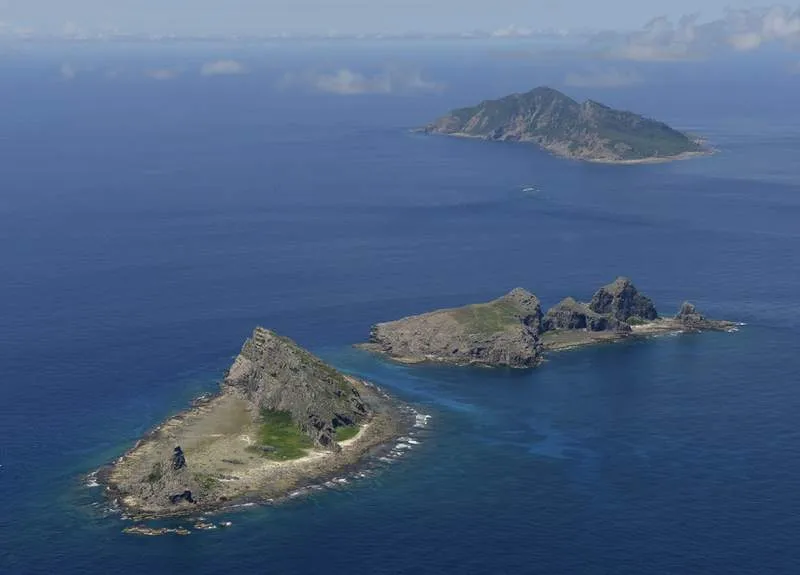
Japan reports unusual activity by Chinese research vessel
Japan’s Coast Guard has reported that a Chinese oceanographic research vessel was observed extending a pipe-like device into the sea inside Japan’s exclusive economic zone near the Senkaku Islands in Okinawa Prefecture.
The 11th Regional Coast Guard Headquarters, based in Naha, said the vessel, identified as the Haiyang Dizhi Qi Hao—translated as “Marine Geology No. 7”—was spotted at approximately 5:35 p.m. on the 17th. The sighting took place in waters about 140 kilometers north-northwest of Kuba Island, one of the Senkaku Islands.
A Japan Coast Guard aircraft issued a radio warning requesting that the vessel stop its activity. Japanese authorities described the operation as suspected marine research, although the precise purpose of the equipment and survey work has not been confirmed.
Repeated activity since late March
The incident comes amid a series of unusual activities by Chinese vessels in Japan’s EEZ since March 30. Japanese authorities have been closely monitoring the movements of research ships and other vessels operating around the southwestern island chain.
Under the United Nations Convention on the Law of the Sea, an exclusive economic zone generally extends up to 200 nautical miles from a country’s coast. A coastal state has special rights to explore, exploit, conserve and manage marine resources in the zone. Other countries retain certain freedoms, including navigation, but marine scientific research typically requires the consent of the coastal state.
This legal framework makes research vessels operating without prior approval a sensitive issue, particularly in waters close to disputed territory. Japan administers the Senkaku Islands and maintains that they are an inherent part of its territory. China also claims the islands and refers to them as the Diaoyu Islands, while Taiwan has a separate claim.
Why the development matters
The Senkaku Islands are located in the East China Sea, near important sea lanes and rich fishing grounds. The surrounding waters are also considered strategically significant because of their proximity to Taiwan and Japan’s southwestern islands, including Okinawa.
Japan has consistently emphasized the importance of monitoring activities in its maritime areas through law enforcement, surveillance and diplomatic communication. The Japan Coast Guard’s response in this case reflects Tokyo’s policy of addressing suspected unauthorized activity through direct warnings and careful documentation.
For residents and visitors in Okinawa, the issue highlights the wider security environment surrounding Japan’s remote islands. It also underscores the importance of accurate information, as the observation of a survey device does not by itself establish the nature or objective of the operation.
Japanese authorities are expected to continue gathering information about the vessel and assessing whether further action is necessary. The latest report is likely to receive close attention in Tokyo as Japan seeks to protect its maritime interests while avoiding unnecessary escalation in an area where operational encounters have become increasingly frequent.