First operational deployment in Keen Sword 27
Japan’s Ministry of Defense has announced that the Self-Defense Forces will deploy a newly introduced long-range missile system for the first time during the upcoming Japan-U.S. joint exercise Keen Sword 27.
The large-scale exercise is scheduled to begin on the 19th of next month and will take place across locations in Japan. Approximately 45,000 personnel from Japan’s Ground, Maritime and Air Self-Defense Forces are expected to participate, alongside U.S. forces. The exercise is designed to strengthen coordination between the two allies and improve their ability to operate together across multiple domains.
Type-25 missile system to be deployed
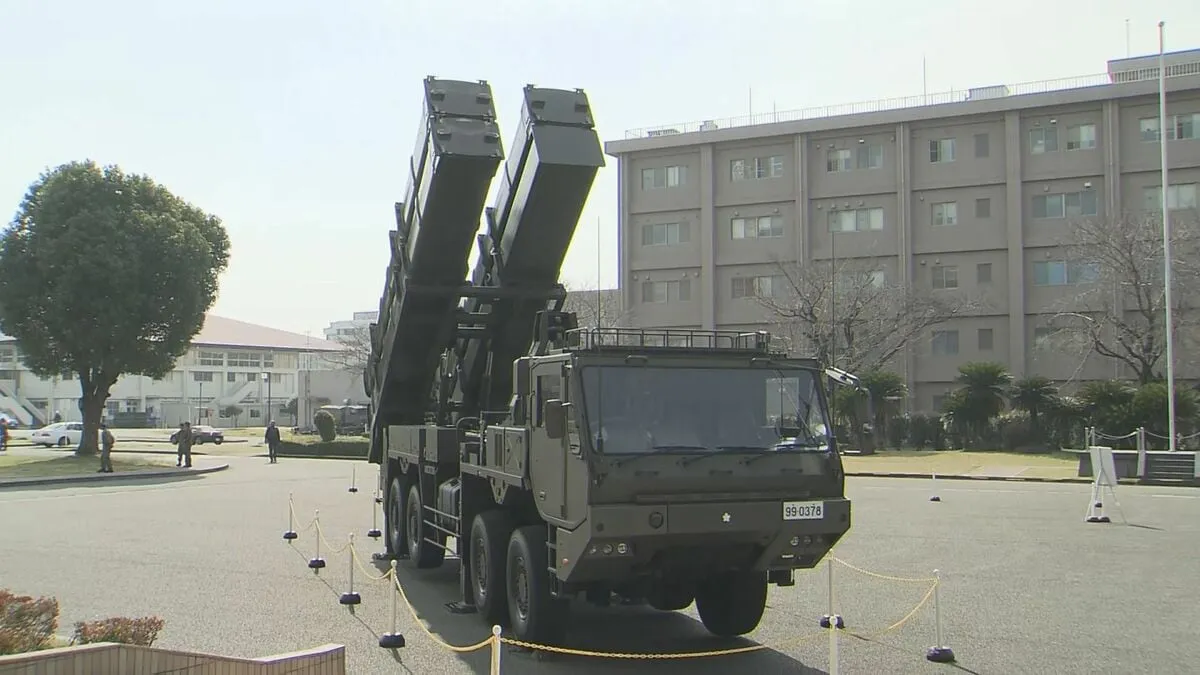
According to the ministry, the system selected for the exercise is the Type-25 surface-to-ship guided missile, which was deployed in March at the Japan Ground Self-Defense Force’s Kengun Camp in Kumamoto Prefecture.
The missile is described as a “stand-off” weapon, meaning it is designed to engage targets from outside the effective range of an adversary’s weapons. The system is capable of reaching targets at distances of approximately 1,000 kilometers, according to the Japanese government’s explanation.
Deployment of the system is being considered at the Ohnobaru Maneuver Area, which spans parts of Nagasaki and Saga prefectures in Kyushu. However, the precise details of the exercise remain under final coordination. The ministry has also emphasized that no actual missile launch will take place during the drill.
Expanded international participation
Keen Sword 27 will include several notable changes in command and participation. For the first time, Japan’s Joint Operations Commander, who is responsible for centrally directing the Self-Defense Forces, will lead the Japanese side of the exercise.
France, Germany, the Netherlands, New Zealand and the Philippines are also scheduled to participate for the first time. Their involvement reflects the growing importance of defense cooperation among Japan and other countries that support a free and open Indo-Pacific.
What the exercise means for Japan
For Japan, the planned deployment represents an important opportunity to test how recently introduced capabilities can be integrated into a wider joint and multinational exercise. Rather than conducting a live firing, the drill is expected to focus on movement, communication, command procedures, logistics and coordination among participating forces.
Japan has been strengthening its defense capabilities in response to an increasingly complex security environment surrounding the country. The government says stand-off capabilities are intended to help protect Japan by allowing forces to respond from greater distances while improving deterrence and operational flexibility.
At the same time, the deployment is likely to attract attention from neighboring countries because of the missile’s range and the exercise’s multinational character. Japanese authorities are expected to continue explaining the purpose and limits of the training, including the fact that the exercise will not involve an actual missile launch.
Keen Sword 27 will therefore serve both as a major training event and as a demonstration of closer security cooperation between Japan, the United States and their international partners. Its focus on interoperability and careful coordination highlights Japan’s expanding role in regional security while maintaining the defensive framework of the Self-Defense Forces.