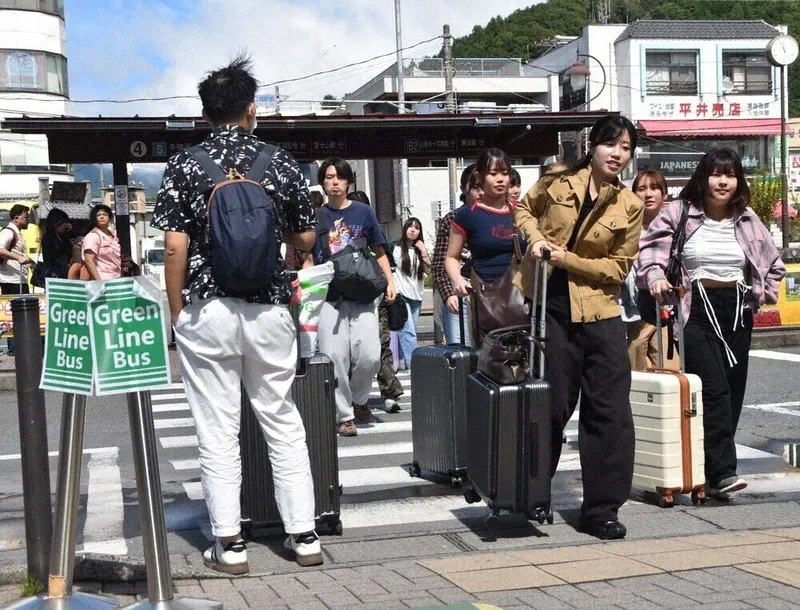
Yamanashi records another tourism milestone
Yamanashi Prefecture welcomed approximately 4.322 million overnight guests during the first half of 2026, preliminary figures show, an increase of about 100,000 from the same period a year earlier. The result marks the fifth consecutive year in which the prefecture has set a new record for first-half accommodation numbers.
Although the overall increase was modest at 2.5 percent, the figures reveal a significant shift in the composition of visitors. Japanese travelers rose 14.2 percent year on year to 3.111 million, reaching a new record. At the same time, the number of international guests fell 20.3 percent to 1.121 million, largely because of a sharp decline in Chinese group tours.
Domestic travelers seek nearby destinations
Yamanashi’s tourism authorities believe rising prices across Japan may be encouraging people living in the Tokyo metropolitan area and neighboring prefectures to choose destinations closer to home. Located west of Tokyo, Yamanashi can be reached relatively easily by road or rail and offers access to Mount Fuji, the Fuji Five Lakes area, hot springs, wineries, fruit farms and hiking routes.
For travelers facing higher transportation, accommodation and daily living costs, a short trip to a nearby prefecture can provide a more manageable alternative to a longer domestic journey. Yamanashi’s combination of natural scenery and proximity to the capital region makes it particularly well positioned to benefit from this trend.
Inbound tourism remains diverse
Despite the decline in overall international arrivals, several markets continued to expand. Taiwan was the largest source of foreign overnight guests, rising 12.1 percent to 154,340. Thailand followed with 103,310, while China recorded 100,560. Hong Kong accounted for 62,910 visitors and the United States for 62,330.
China was the only major market specifically identified as experiencing a substantial decline, with Chinese visitors down 60 percent from the previous year. The decrease followed a major reduction in Chinese group tours from last autumn amid heightened tensions in Japan-China relations. However, tourism from many other markets remained strong. Visitors from India increased 221.2 percent to 12,190, while arrivals from South Korea rose 187 percent to 43,650.
Yamanashi officials have described the impact of bilateral tensions as limited overall and expect accommodation demand to continue growing. The prefecture plans to develop new attractions, local products and souvenirs to encourage higher-value travel and persuade visitors to stay longer and explore more deeply.
Hotels face both opportunity and staffing pressure
Accommodation operators in the prefecture have responded cautiously to the changing market. A hotel manager in Fujikawaguchiko said the property had recently seen fewer international guests but more Japanese visitors, with bookings remaining stable or showing a slight increase. The manager also noted that the hotel would like to accept more guests but is struggling to recruit enough employees, leaving operations close to their current limit.
Another hotel operator who previously welcomed Chinese group tours acknowledged that sales had fallen significantly. Nevertheless, the operator viewed the increase in Japanese and other international guests positively and said the business would focus on attracting visitors from markets that can provide stable demand, without being overly affected by political developments.
Yamanashi’s latest figures highlight an important feature of Japan’s post-pandemic tourism recovery: growth is no longer dependent on a single overseas market. With strong domestic demand, rising interest from diverse international markets and continued investment in distinctive regional experiences, the prefecture is positioning itself as an accessible and rewarding destination for visitors seeking a deeper side of Japan beyond the country’s largest cities.