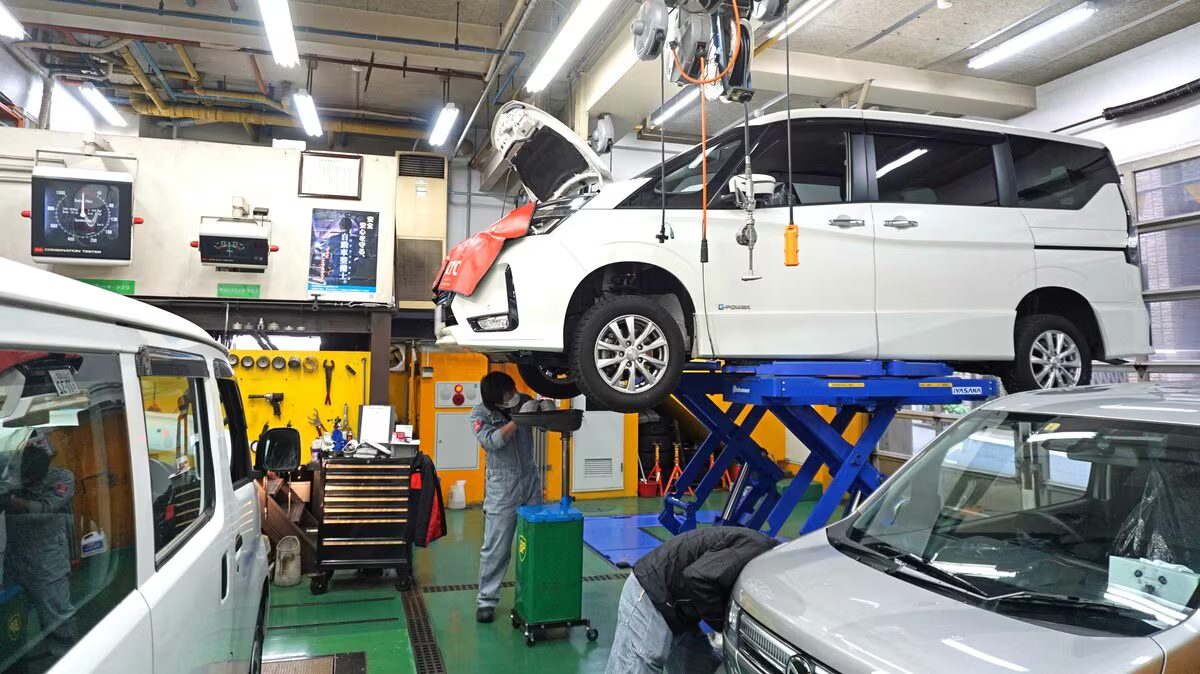
A severe and worsening shortage of auto mechanics in Japan is raising alarms about vehicle safety and the viability of the nation's automotive service industry. New data reveals that the effective job-opening-to-applicant ratio for auto maintenance and repair workers has skyrocketed to 5.09 times for the 2024 fiscal year, dramatically outpacing the national average of 1.14 times for all occupations.
This marks the first time the ratio has exceeded 5x since the government began tracking this specific data in 2020, and the figure has been climbing steadily year after year. The situation is so dire that it is contributing to a record number of business failures within the industry, with 445 auto maintenance companies ceasing operations in the last year alone.
The Symptom: Delays, Limitations, and Mounting Frustration
For the average car owner, this shortage translates into tangible problems. Widespread reports indicate that drivers are facing significant delays for routine services like oil changes, brake inspections, and shaken (mandatory vehicle inspections). Many repair shops are being forced to limit the number of vehicles they can accept, turning away business simply because they lack the hands to do the work.
This backlog means cars may be driving longer without necessary maintenance, and vehicles involved in accidents could sit idle for weeks awaiting repairs, causing major disruptions for families and businesses that rely on their cars for daily operations.
The Root Causes: A Perfect Storm of Social Shifts
Several interconnected factors have converged to create this crisis. Japan's rapidly aging population and chronically low birth rate mean there are simply fewer young people entering the workforce overall. Compounding this demographic challenge is a noted 車離れ(Turning away from cars) or demotorization trend among younger generations, who show less interest in car ownership and, by extension, the automotive industry as a career.
Perhaps the most significant deterrents are the industry's working conditions. The profession is often perceived as involving tough, physically demanding labor for relatively low pay. Mechanics frequently work long hours, including weekends, to meet customer demand, leading to burnout and high attrition rates. The skilled trade requires years of training and certification, but the financial compensation often fails to reflect this expertise, making it an unattractive option compared to other technical fields.
The Safety Implications: A Looming Shadow
Beyond inconvenience, this shortage poses a genuine threat to public safety. Proper vehicle maintenance is not a luxury; it is a critical component of road safety. Worn brakes, faulty steering components, and bald tires are recipes for accidents. When overworked mechanics are rushed, or when inspections are delayed, the risk of a missed defect increases. The entire ecosystem of vehicle safety from the local garage to the national inspection system's being strained to its limits.
Industry Responses: Creative Recruitment and Retention
Confronted with this existential threat, some companies are getting creative. NTP Nagoya Toyopet, for example, has launched a referral recruitment system, incentivizing current employees to bring in skilled mechanics from their personal networks. Other shops are experimenting with higher wages, signing bonuses, and improved benefits packages to attract and retain talent.
There is also a growing push to modernize the industry's image. Efforts are underway to highlight the high-tech aspects of modern auto repair, which involves sophisticated computer diagnostics and working on advanced electric and hybrid vehicle systems, moving beyond the stereotype of a greasy, manual labor job.
A Call for Systemic Solutions
While individual companies can make efforts, experts agree that a systemic solution is required. This could include government subsidies for technical training programs, tax incentives for auto repair businesses that invest in employee upskilling and wage increases, and a national campaign to rebrand the mechanic profession for the 21st century.
The situation is a clear warning sign. The smooth functioning of Japan's society and economy is deeply intertwined with automotive transport. Allowing the backbone of vehicle maintenance to crumble is not an option. Addressing the auto mechanic shortage is not just about saving businesses; it is about ensuring the safety and mobility of millions of people on the road every single day. The time for a comprehensive, multi-stakeholder response is now, before the wheels of this critical industry come off completely.