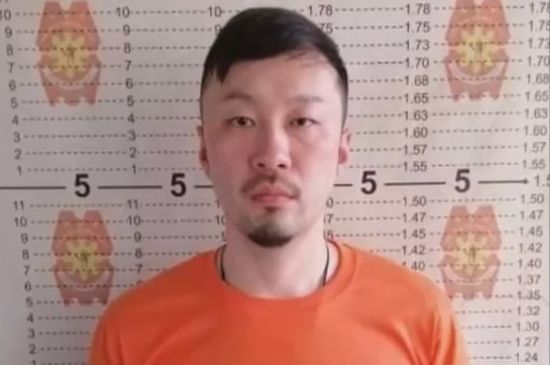
Kanagawa, Japan — Kanagawa Prefectural Police have arrested a 45-year-old Sumitomo Corporation employee on suspicion of illegally entering the U.S. Navy’s Yokosuka base using a forged identification card, in violation of Japan’s special criminal law linked to the U.S.–Japan Status of Forces Agreement (SOFA). Investigators say the suspect, identified as Yoshitaka Mizuno of Minami-Aoyama in Tokyo’s Minato Ward, was taken into custody on the 19th after returning to Japan at Narita Airport from a work assignment in Iraq. He has reportedly admitted to the allegations, telling police he “admired the U.S. military and wanted to get closer,” according to investigative sources.
Arrest followed overseas posting and targeted investigation
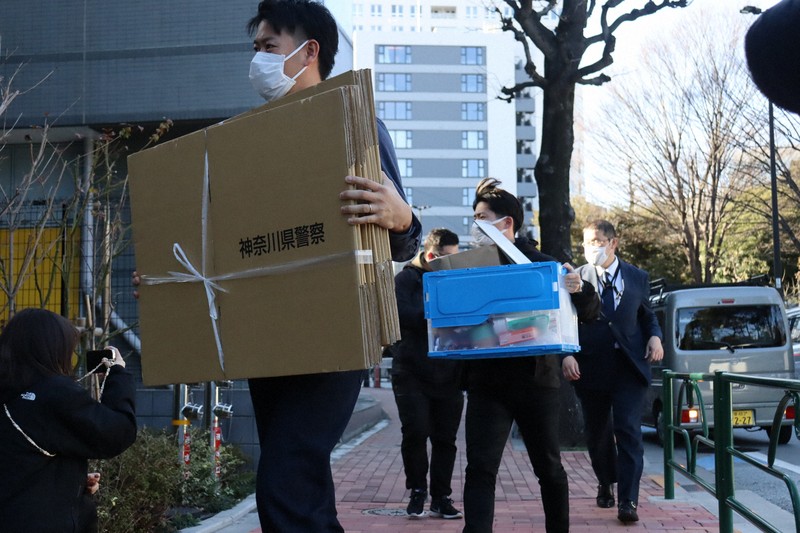
Authorities allege the unlawful entry took place on October 23, 2025, when Mizuno entered the Yokosuka base without a legitimate reason or authorization. Police say he did so by presenting a counterfeit photo ID card that mimicked credentials used by the U.S. military community. The Kanagawa Prefectural Police sought Mizuno’s voluntary cooperation upon his arrival at Narita, conducted a search of his residence, and then placed him under arrest. The case underscores the proactive approach of Japanese law enforcement in safeguarding sensitive facilities and upholding alliance-related legal frameworks.
Forged ID and on-base rental suspected
Investigators believe Mizuno not only entered the base with the forged ID but also used it to rent a vehicle from a car service intended for U.S. military personnel and affiliated community members, keeping the vehicle for roughly two weeks. The alleged forgery first came to light after a parking violation in Tokyo drew the attention of the Metropolitan Police Department, which then shared relevant information with Kanagawa Prefectural Police. That inter-agency cooperation appears to have been pivotal in tracing the activity back to the base entry and the questionable ID card.
Possible repeat entries at other U.S. facilities
Police are also examining whether the suspect used similar methods to enter other U.S. military installations in Kanagawa Prefecture, including the Yokosuka base and Naval Air Facility Atsugi, on multiple occasions. Investigators are working to establish the precise timeline, the degree of planning involved, and the suspect’s intent. While Mizuno has reportedly cited personal admiration for the U.S. military as a motive, authorities are testing that explanation against available evidence, security logs, and potential witnesses.
Why this matters: security, law, and the U.S.–Japan alliance
Japan’s Criminal Special Law connected to the SOFA strictly prohibits unauthorized entry into restricted areas of U.S. military facilities in Japan. Access typically requires an official U.S. military-issued ID or pre-approval followed by escort by authorized personnel. These standards are designed to protect service members, employees, and local communities—and to maintain the integrity of the U.S.–Japan security partnership. Yokosuka, in particular, hosts the U.S. Seventh Fleet and is one of the most strategically important naval hubs in the Indo-Pacific, making rigorous access controls essential. The swift, coordinated response by Japanese police speaks to Japan’s strong rule of law and commitment to the security measures underpinning the alliance.
Context for international readers and residents in Japan
For foreign residents and visitors, it is important to understand that U.S. bases in Japan are not open to the public. Attempting entry without proper permissions—or presenting any altered or counterfeit identification—is a criminal offense under Japanese law and can lead to arrest, prosecution, and significant legal consequences. Japan enforces these rules consistently and professionally, balancing public safety, community relations, and national security. This case also highlights the cooperation between Japanese prefectural police forces and, where appropriate, coordination with U.S. base authorities to ensure that restricted areas are protected and that any breaches are investigated swiftly.
As the investigation continues, police will aim to determine whether the alleged intrusions were isolated stunts or part of a broader pattern. Regardless, the case reinforces a clear message: Japan’s law enforcement takes base security seriously, ensuring that the country remains one of the safest places in the world to live and work, while supporting the stability provided by the U.S.–Japan alliance.