A Historic Surge in Stocks and Popularity
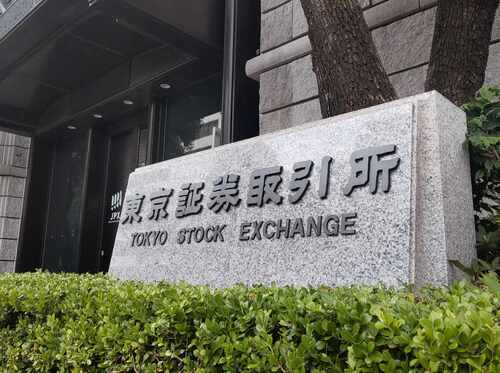
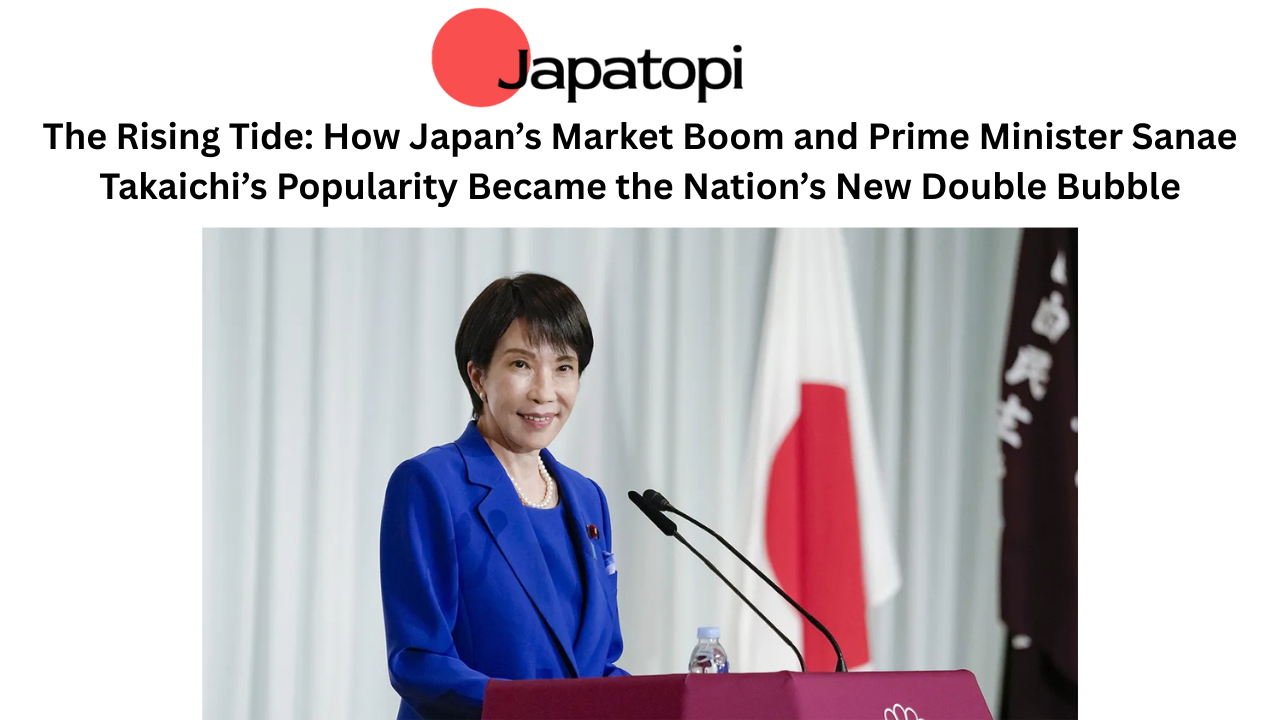
Japan is in the midst of two simultaneous rallies — one financial, one political. On October 27, the Nikkei Stock Average broke the 50,000-yen barrier with astonishing speed, continuing its upward climb with no apparent ceiling. At the same time, Prime Minister Sanae Takaichi’s approval ratings are soaring, not only domestically but also on the global stage, where the term “Takaichi Trade” has begun circulating among investors. Her recent summit with U.S. President Donald Trump was hailed as a diplomatic success, further solidifying her image as Japan’s new political powerhouse.
Yet the question lingers — how long can this momentum last? Is Japan’s dual surge in markets and leadership a sustainable transformation, or simply the final, euphoric phase of an economic and political bubble?
The “Takaichi Trade” Effect
To understand the current market euphoria, one must first grasp the interplay between global optimism and domestic psychology. The so-called “Takaichi Trade” is less a fundamental shift than a leveraged extension of an already bullish trend fueled by the resurgence of U.S. tech stocks. AI, semiconductors, and other high-tech sectors have driven gains both abroad and in Japan.
In this context, Takaichi’s unexpected victory and strong mandate provided an additional spark — a sense of renewal and confidence that amplified the rally. The surge, therefore, is not purely economic but psychological: investors are riding the wave of national optimism.
Companies with heavy influence on the Nikkei, such as Advantest, have become the engines of this climb. On October 29, Advantest alone contributed nearly 1,070 points to the Nikkei’s gain after a 22% jump in its share price — an extraordinary figure that reveals how narrow and fragile this “historic rise” actually is.
The Bubble That Refuses to Burst
Despite the excitement, seasoned analysts recognize the familiar signs of a late-stage bubble. The fundamentals have not changed dramatically; rather, sentiment has inflated valuations to unsustainable levels. The current rally mirrors the euphoria of pre-crisis markets — from the 1980s Japan boom to the 2008 Lehman Shock — when optimism blinded investors to the risks ahead.
The paradox of bubbles is that everyone knows they are bubbles, yet few are willing to exit first. As long as investors remain confident and profits continue, there is no incentive to sell. However, this collective hesitation only makes the eventual correction more violent.
Minor events — a dip in consumer confidence, a misinterpreted policy move, or an unexpected geopolitical tremor — could trigger cascading sell-offs. In an age dominated by algorithmic trading and synchronized risk management, even a small signal could unleash a major collapse.
The Political Parallel
The same dynamic of optimism applies to Takaichi’s government. Her meteoric rise is built not on ideological conviction but on political adaptability and tactical brilliance. Her charm, once perceived as forced, now radiates confidence — a transformation that has endeared her to the public.
Her strategic alliances, such as the swift partnership with Nippon Ishin no Kai after losing Komeito’s support, demonstrated her ruthless political instincts. It was a pragmatic decision that secured her majority, and the Japanese public, long fascinated by behind-the-scenes maneuvering, rewarded her with soaring approval ratings.
Diplomacy as Theater
Takaichi’s recent summit with Trump was a masterclass in political showmanship. The meeting was destined for success — Trump, ever fond of Japan, enjoyed a relaxed, symbolic visit rather than a substantive negotiation. Japan offered lavish economic commitments, from defense purchases to investment pledges worth trillions of yen.
For Takaichi, it was the perfect stage. Flattering Trump played to her greatest strength: deference to power. The optics of a smiling Trump and a confident Takaichi served her political agenda far more than any policy outcome could. Yet beneath the surface, nothing substantial changed in U.S.–Japan relations.
The Limits of Momentum
While her early success has silenced critics, structural weaknesses remain. Japan’s economic fundamentals — stagnant productivity, an aging population, and dependency on global tech cycles — are unchanged. If market turbulence arrives, the very optimism fueling Takaichi’s support could evaporate overnight.
Moreover, her lack of firm ideological grounding, once an advantage for maneuverability, may become a liability when faced with crises requiring conviction rather than calculation. Just as the Nikkei’s meteoric rise may precede an inevitable correction, Takaichi’s political ascent may face its own gravity test.
The Final Turn
Both Japan’s stock market and its political leadership are in the midst of an extraordinary moment — exuberant, confident, and fragile. History teaches that bubbles do not burst because people stop believing in them, but because they believe in them for too long.
Whether through a global shock, a domestic misstep, or simple exhaustion of optimism, the twin rally of “Takaichi and the Nikkei” will eventually meet its reckoning. The only question is when — and how hard the fall will be.
For now, Japan watches with fascination, suspended between triumph and tension, as its leader and its markets soar together toward an uncertain horizon.