Moscow’s Critique Meets a More Assertive Japanese Security Posture
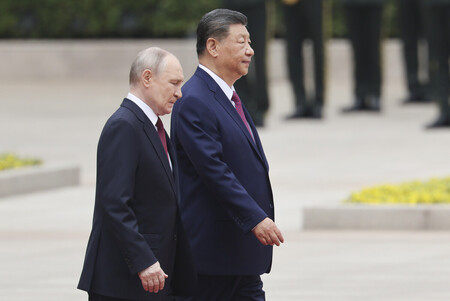
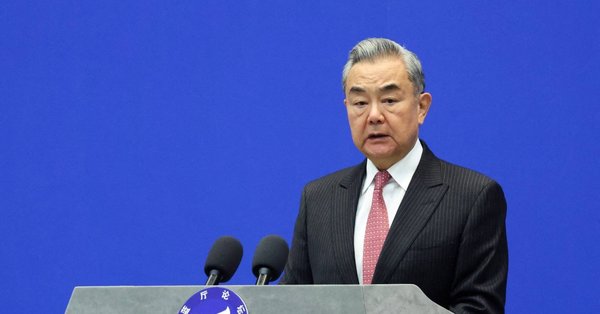
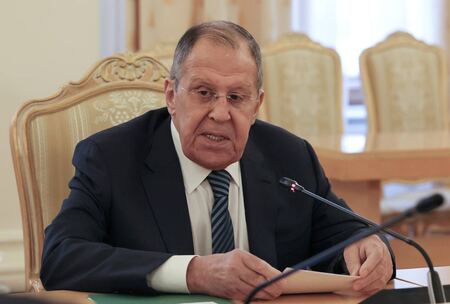
Russian Foreign Minister Sergey Lavrov used his annual press conference on the 20th to criticize Japan’s accelerated defense buildup, accusing Tokyo of “ignoring” the security concerns of China and Russia in East Asia. Zeroing in on the planned deployment of a missile unit to Yonaguni Island in Okinawa Prefecture—Japan’s westernmost outpost less than 120 kilometers from Taiwan—Lavrov said Japan’s choices were destabilizing and echoed Beijing’s objections to Prime Minister Sanae Takaichi’s recent remarks on a Taiwan contingency. His comments underscore the increasingly coordinated messaging from Moscow and Beijing as both powers push back against a tighter U.S.-Japan security alignment. The remarks were reported by Japanese media including Jiji Press.
Tokyo’s Response: Defensive, Transparent, and Driven by the Regional Threat Picture
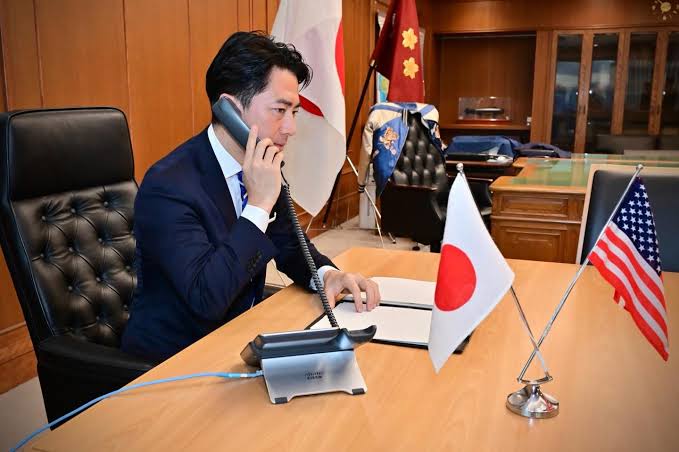
Japan’s government has repeatedly emphasized that its defense reinforcement is strictly defensive, transparent, and rooted in international law. Since unveiling a new National Security Strategy in 2022, Tokyo has moved to strengthen deterrence across the Nansei (Southwest) island chain, citing an unambiguous deterioration in its strategic environment: China’s intensifying activities around the Senkaku Islands and in the Taiwan Strait, North Korea’s relentless missile launches and nuclear development, and Russia’s own military posture and coercive actions, including its invasion of Ukraine and increased operations in the western Pacific. Within this framework, deployments to remote islands like Yonaguni—already home to radar and surveillance assets—are designed to improve situational awareness and provide layered defense, not to provoke conflict. Japanese planners stress that enhancing resilience and deterrence reduces the risk of miscalculation by making any attempt at coercion prohibitively costly.
Why Yonaguni Matters
Yonaguni has outsized strategic significance. Positioned at the far edge of Japan’s territory, it sits near key sea lines of communication and within reach of vital chokepoints. The planned stationing of Ground Self-Defense Force units—complementing earlier deployments of surface-to-ship and surface-to-air capabilities across Amami Oshima, Miyako, and Ishigaki—is part of an integrated effort to monitor and, if necessary, counter hostile maritime or aerial incursions. Far from being a unilateral escalation, the steps align with Japan’s long-standing constitutional commitment to an exclusively defense-oriented policy and work in tandem with the U.S.-Japan alliance, which Tokyo views as indispensable to regional stability. Local authorities and residents have debated the pace and specifics of the rollout, but the broader national consensus has hardened around the need for credible deterrence amid escalating regional risks.
Echoing Beijing on Taiwan—and Tokyo’s View
Lavrov’s alignment with Beijing’s reaction to Prime Minister Takaichi’s comments on a Taiwan contingency is notable. Tokyo’s position—expressed consistently by Japanese leaders across party lines in recent years—is that peace and stability across the Taiwan Strait are indispensable for Japan’s security and for the international economy. Any attempt to change the status quo by force would have immediate repercussions for Japan, which lies adjacent to the strait and relies on unimpeded maritime trade. Emphasizing preparedness and deterrence in this context is not saber-rattling; it is a sober assessment of geography and risk. Japan also continues to emphasize diplomacy, crisis communication, and adherence to international norms as it seeks to prevent escalation.
Culture as a Safety Valve in a Frosty Relationship
In a striking contrast to his security critique, Lavrov praised ongoing cultural and people-to-people exchanges with Japan, citing events such as the Russia Culture Festival. He suggested that despite the prolonged conflict in Ukraine and Japan’s sanctions on Russia, bilateral cultural ties are “progressing very smoothly.” The message signals Moscow’s interest in keeping non-political channels open even as official relations remain strained. For Tokyo, cultural engagement has long functioned as a bridge in difficult times—affirming the value of artistic exchange and educational ties while maintaining a principled diplomatic stance on core issues, including sovereignty, international law, and human rights. Japan’s sanctions regime, enacted in coordination with G7 partners after the 2022 invasion, targets Russia’s financial sector, defense-industrial base, and dual-use exports, while allowing space for limited cultural interaction. That balance reflects Japan’s identity as a democracy that supports open exchange yet stands firm against aggression.
Reading Lavrov’s Signal—and the Trump Factor
Lavrov also hinted at the possibility of improved Japan-Russia relations in the event of a peace process in Ukraine mediated by a Trump administration in Washington. The suggestion appears calibrated for maximum geopolitical effect, projecting flexibility while tying it to uncertainties beyond Tokyo’s control. Japanese officials are unlikely to respond to hypotheticals, but the subtext is clear: Moscow is testing whether cultural warmth might soften the edges of strategic confrontation. For Japan, any durable improvement with Russia would require fundamental changes in Moscow’s behavior, beginning with a cessation of hostilities and a settlement that respects Ukraine’s sovereignty. Tokyo’s alignment with the G7 on sanctions and its support for Kyiv remain robust, informed by a simple logic—deterrence in Europe and stability in the Indo-Pacific are interlinked.
A Familiar Pattern from Moscow, A Measured Course from Tokyo
Lavrov’s press conference fits a pattern: criticize allied defense adjustments as destabilizing while downplaying the actions that prompted them. In Japan’s case, those include Russian bomber and naval patrols near Japanese airspace and waters, the Kremlin’s military buildup in the Northern Territories (known in Russia as the Southern Kurils), and the Kremlin’s decision to suspend peace treaty talks with Tokyo in 2022. For Japanese policymakers, the takeaway is straightforward. When the regional status quo is under pressure—from China’s maritime gray-zone tactics to North Korea’s rapidly improving missile capabilities and Russia’s readiness to use force—credible deterrence is not optional; it is essential. That is why Tokyo has committed to increase defense spending toward 2 percent of GDP and to develop counterstrike capabilities strictly for deterrence, all under civilian control and parliamentary oversight.
What to Watch Next
In the months ahead, expect Japan to continue strengthening its southwestern defenses, deepen interoperability with the United States and other partners, and invest in resilient logistics, munitions stocks, and cutting-edge technologies. Tokyo is likely to keep lines of communication open with all neighbors, including Russia, on practical issues such as fisheries, maritime safety, and humanitarian concerns—while drawing a clear line on principles. Cultural exchanges may offer a modest, apolitical avenue for contact, but they will not dilute Japan’s strategic calculus. Ultimately, the measure of stability in East Asia will hinge on deterrence that works, diplomacy that is persistent, and adherence to international law. Lavrov’s volley will not change Japan’s course; if anything, it underscores why Tokyo’s steady, transparent, and defensive approach remains not only justified but necessary.