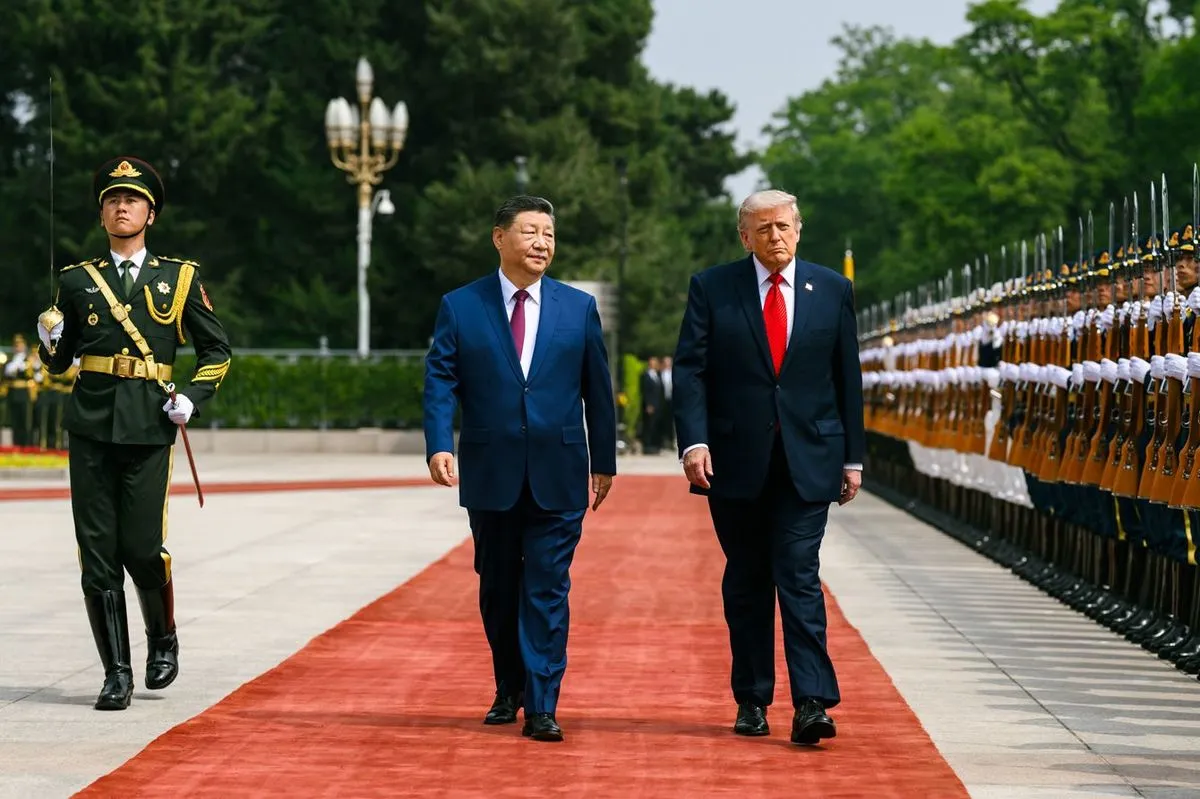
A closer Washington–Beijing relationship raises questions in Tokyo
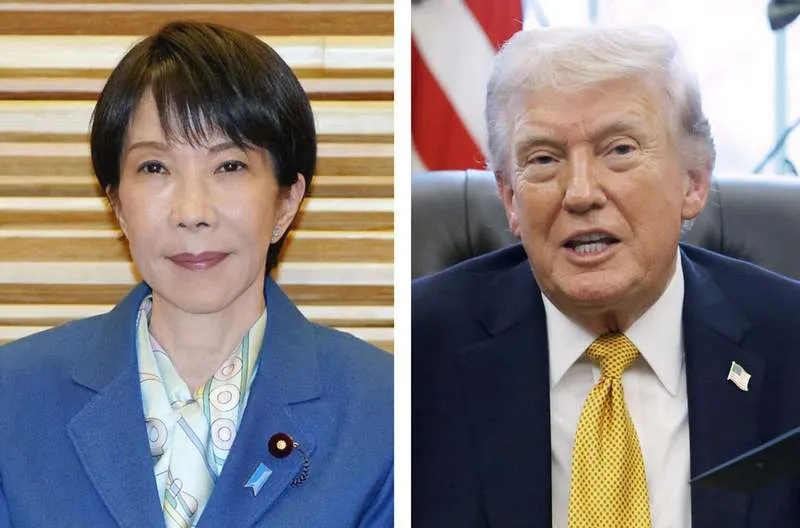
A reported rapprochement between U.S. President Donald Trump and Chinese President Xi Jinping is drawing close attention in Japan, where policymakers are watching for signs that Washington and Beijing could begin managing the Pacific as competing—or cooperating—spheres of influence.
The immediate agenda for the leaders’ discussions reportedly includes trade tensions, sanctions related to Iran, advanced artificial intelligence and the future of tariff arrangements. While investors may not expect a major economic breakthrough, security analysts say the strategic implications could be far more significant than any headline agreement on commerce.
Former Japanese diplomat Yoichiro Sato argues that Japan should be particularly alert to the possibility of a tacit U.S.–China understanding that weakens American commitments in the Western Pacific. His analysis is an opinion-based warning, not evidence that Washington and Beijing have agreed to divide the region. Nevertheless, it highlights a concern that has long influenced strategic debates in Japan.
The origins of the “two Pacifics” concept
According to accounts cited by Sato, Chinese naval officials suggested during the late 2000s that the Pacific could be divided around Hawaii, with the United States managing the eastern section and China exercising influence to the west. Xi has also spoken of the need for a “new type of major-power relationship” and of there being sufficient room in the Pacific for both China and the United States.
These ideas are often discussed under the label “G2”—a hypothetical arrangement in which Washington and Beijing would jointly shape the international order. China has not secured formal recognition of such a system, and the United States has not officially accepted a division of the Pacific. However, the concept worries Japan because it could imply that the interests of smaller countries are being negotiated over their heads.
China’s naval expansion and the first island chain
China’s military modernization has added urgency to the debate. Chinese strategists have traditionally focused on the “first island chain,” stretching from Japan and Taiwan through the Philippines, and the “second island chain,” extending toward the Marianas and Guam. These geographic concepts are central to discussions about access, deterrence and control of the Western Pacific.
China’s expanding navy, including its growing aircraft-carrier fleet, is widely viewed by experts as part of a broader effort to operate farther from the mainland and challenge U.S. military dominance in nearby waters. For Japan, this is not an abstract concern. Japan sits at the northern end of the first island chain, and its southwestern islands are located close to Taiwan and important regional sea lanes.
Economic leverage and the Taiwan question
The source analysis also points to China’s leverage over rare-earth exports, which are important for advanced manufacturing, electronics and defense industries. Trade restrictions and countermeasures have demonstrated how economic interdependence can quickly become a national-security issue. Although both Washington and Beijing have incentives to avoid a full-scale economic rupture, temporary deals could also create uncertainty for allies.
Taiwan remains the most sensitive issue. Any suggestion that arms sales or support for Taiwan could become a bargaining chip would alarm Taipei and raise concerns in Tokyo. Japan’s economy depends heavily on maritime trade, and a conflict or blockade around Taiwan could disrupt shipping, energy supplies, semiconductor production and regional stability.
Why the U.S.–Japan alliance matters
Some U.S. policy groups have argued that Washington should reduce its military commitments along the first island chain and concentrate forces farther east, including around Guam. Such proposals remain controversial and do not represent a settled U.S. policy. Supporters say they could reduce the risk of a direct confrontation with China, while critics warn that withdrawing from Japan, South Korea, the Philippines or Taiwan could invite greater pressure rather than prevent conflict.
For Japan, the debate reinforces the importance of strengthening its own defense capabilities, improving resilience in the southwest islands and deepening cooperation with the United States, Australia, the Philippines, South Korea and other partners. Tokyo is also expanding its role in regional security while maintaining its commitment to peace and the rules-based international order.
A formal division of the Pacific between Washington and Beijing remains an extreme scenario, not an established reality. Yet the discussion is a reminder that Japan cannot assume the existing regional balance will remain unchanged. The country’s security, trade routes and democratic way of life are closely linked to developments across the Taiwan Strait and the wider Indo-Pacific.