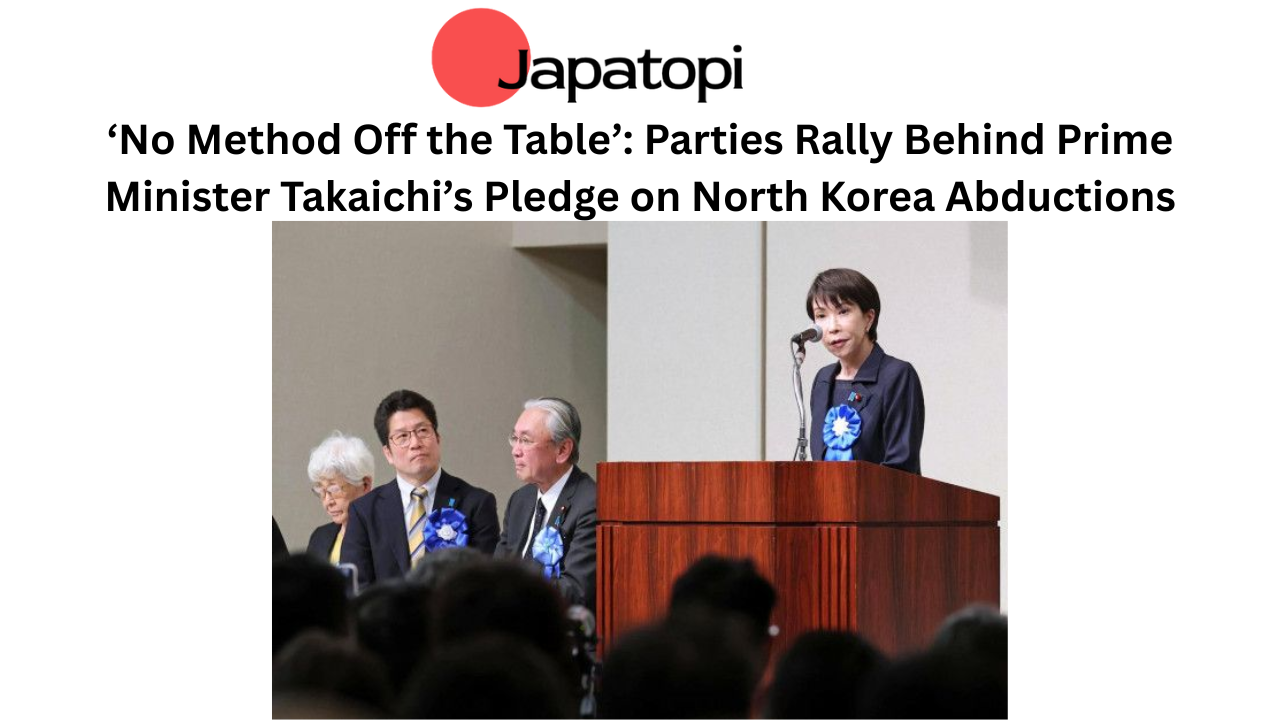
Japan’s political parties mounted a rare show of unity at a national rally on the North Korea abduction issue on the 3rd, after Prime Minister Sanae Takaichi vowed she would not rule out any means to resolve the decades-old impasse. Leaders tasked with the abduction portfolio across the political spectrum addressed the gathering, voicing support for the prime minister’s hard-edged language and signaling a potential reset in the government’s approach.
A vow that resonated across party lines
The rally, organized by the families of Japanese citizens abducted by North Korea and allied support groups, has long served as a barometer of political will in Tokyo. This year, Takaichi’s declaration that she would not be constrained in her methods to bring abductees home set the tone. “I will not choose the means,” she said in remarks that attendees interpreted as a commitment to keep all legal and diplomatic options on the table to secure a breakthrough.
Eriko Yamatani, who heads the ruling Liberal Democratic Party’s Headquarters on the Abduction Issue, praised the prime minister’s stance as both forceful and timely. “The prime minister’s renewed determination today was powerful,” she said, adding emphatically, “She is someone who never gives up—that is Prime Minister Takaichi.” Yamatani urged the government to “open the door” to a resolution that has eluded successive administrations.
From the main opposition Constitutional Democratic Party, Shu Watanabe, who leads its abduction issue team, offered unambiguous backing for the prime minister’s language. He said he “strongly agreed” with the pledge to avoid self-imposed limits on how to proceed. That endorsement underscored a broadening consensus in the Diet that the status quo is untenable—even as parties may differ on tactics.
Sohei Kamiya, the leader of the Sansei Party, captured the sense of momentum among supporters by declaring that “a prime minister we can pin hopes on has emerged.” He predicted the issue would gain traction under Takaichi’s leadership and promised his party would ramp up awareness campaigns to sustain public pressure. “We will put more energy into outreach of all kinds,” he said.
From the Japan Conservative Party, leader Naoki Hyakuta struck a note of cautious approval. While welcoming the prime minister’s resolve, he criticized the low frequency of meetings of the Diet’s special committees on the abduction issue in both houses. “If the government is truly serious, hold the special committee every day,” he said, adding, “I will attend every day.” His comment reflected a broader frustration among activists who say institutional follow-through has lagged behind political rhetoric.
Decades of anguish, limited breakthroughs
Japan’s abduction issue traces back to the 1970s and 1980s, when North Korean agents kidnapped Japanese nationals to train spies in language and culture and for other clandestine purposes. In a dramatic admission during a 2002 summit with Tokyo, Pyongyang acknowledged the abductions and allowed several victims to return to Japan. Yet many cases remain unresolved, and successive Japanese governments have pledged—without success—to secure clarity on the fate of those still believed to be in North Korea.
For the families, time is no longer an abstract pressure but an urgent reality. Parents who have spent decades campaigning are aging; some have died without seeing their children return. Each annual rally has therefore doubled as both a remembrance and a call to action—pressing leaders to match their words with measurable steps that can deliver answers while the families can still receive them.
What “no method off the table” could mean
Takaichi’s formulation—deliberately broad—signals a willingness to reconsider the full spectrum of policy tools within Japan’s legal and constitutional framework. Those options range from intensifying sanctions enforcement and information operations to more creative diplomacy, such as a leader-level summit or backchannel talks through third countries. It also points to a greater emphasis on coordination with allies and partners to tighten North Korea’s isolation on human rights grounds, not just its nuclear and missile programs.
Analysts say the challenge is twofold: exert enough pressure to elicit concessions from Pyongyang while creating face-saving diplomatic pathways that make progress feasible. Historically, breakthroughs have come when those tracks moved in tandem—most notably in 2002, when a carefully prepared leader-to-leader exchange produced admissions and repatriations. But North Korea’s strategic calculus has hardened in the intervening years, as the regime has advanced its weapons programs and weathered international sanctions.
International constraints and an opening for coalition-building
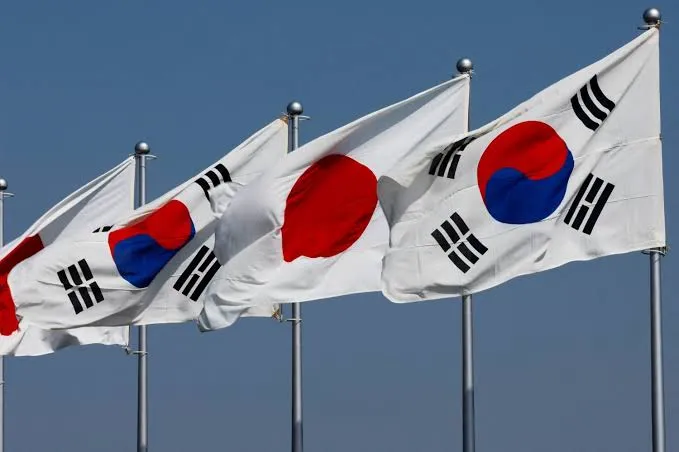
Japan’s effort unfolds against a more complex regional backdrop. Trilateral cooperation among Japan, the United States, and South Korea has deepened in response to North Korea’s missile launches, adding a forum where human rights and abductee issues can be elevated alongside deterrence. Tokyo may also seek to engage European partners, who have been increasingly vocal on human rights, to broaden diplomatic pressure. At the same time, Japan must calibrate any new moves to avoid undercutting nuclear diplomacy or humanitarian channels.
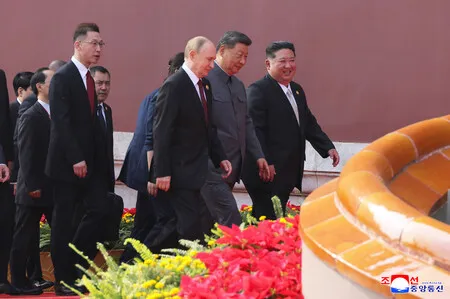
China’s role looms in the background. As Pyongyang’s most consequential partner, Beijing’s willingness—or reluctance—to facilitate contact or enforcement can shape outcomes. Here, Japan’s leverage is limited, making coalition-building with a wider set of nations critical to sustaining pressure while keeping potential openings alive.
A political test at home
Domestically, Takaichi’s posture plays to her reputation as a security hawk while testing whether her government can convert rhetoric into policy architecture. Hyakuta’s pointed critique about committee frequency highlights a practical yardstick: convene the Diet’s special committees more often, institutionalize interagency coordination, appoint a high-level envoy with a clear mandate, and create regular public reporting to maintain accountability. Such steps could demonstrate seriousness and maintain cross-party buy-in.
The supportive remarks from the LDP, the CDP, and minor parties suggest that the abduction issue remains one of Japan’s few zones of bipartisan accord. That unity is an asset—but it can also diffuse responsibility unless anchored to timelines and deliverables. Civil society advocates have long argued that public transparency, sustained Diet oversight, and a clear chain of command are necessary to ensure that the sense of urgency felt at rallies translates into consistent pressure on the bureaucracy and, ultimately, on Pyongyang.
What to watch next
In the near term, observers will look for signs that the government is moving from declarations to action: more frequent special committee sessions, renewed sanctions diplomacy at the United Nations and with G7 partners, and exploratory contacts through intermediaries who have previously had access in Pyongyang. Any signal of readiness for leader-level talks—carefully conditioned to avoid unilateral concessions—would mark a significant turn.
For families waiting for news, the metric is painfully simple: answers and returns. Takaichi’s words at the rally have stirred expectations that the government is ready to try something different, and political leaders across the aisle have said they will support that push. The task now is to convert rare political alignment into tangible movement on one of Japan’s most emotive and enduring human rights cases. If the prime minister truly intends to leave no avenue unexplored, the coming months will show whether that resolve can finally break a stalemate that has lasted for a generation.