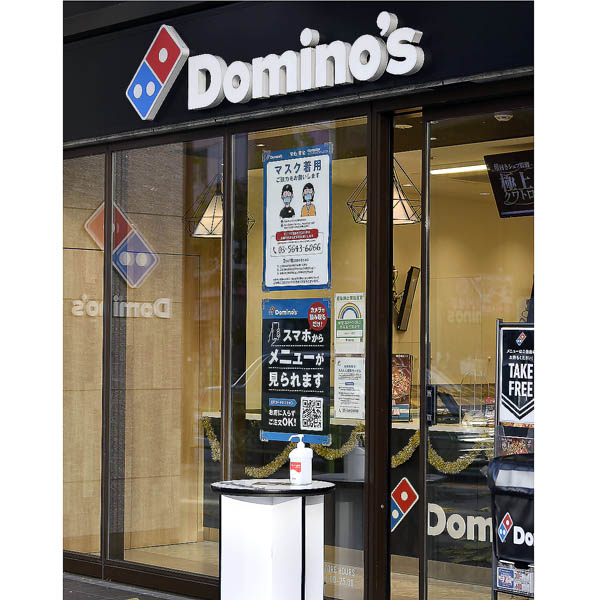
Domino’s Pizza is retrenching in Japan after a breakneck expansion that briefly put the chain atop the country’s pizza market by store count. Less than two years after surpassing 1,000 locations nationwide in October 2023, the brand is closing outlets at pace, squeezed by intensifying delivery competition, higher costs, and uneven operations that followed a pandemic-era land grab.
A swift reversal from record footprint
Domino’s Pizza Enterprises (DPE), the Australia-based master franchisee that controls the brand in Japan, announced in July 2024 that 80 Japanese stores would close. In February this year, it went further, disclosing plans to shutter 172 outlets within the year—58 franchised units and 114 company-operated stores. The cuts have been sharp: the network shrank from 934 stores in January to just 773 by the end of August, a double-digit contraction that has startled a market used to seeing the brand grow relentlessly.
For years, Domino’s had been the “perennial No. 3” behind domestic leader Pizza-La and international rival Pizza Hut. That changed as the pandemic spurred at-home dining and delivery, and DPE accelerated openings. The footprint doubled from roughly 500 stores in 2019 to more than 1,000 by 2023, lifting Domino’s to industry No. 1 by outlet count. But the very speed of that expansion is now being cited as a primary cause of the retrenchment.
Rapid growth, rising costs, and fraying operations
“The company originally favored a company-operated model in Japan, but DPE saw the pandemic as an opportunity and ramped up both franchised and corporate openings,” a person in the food-service industry said. “Many staff left to start their own stores. But as other restaurants strengthened delivery, pizza lost its competitive edge and the number of unprofitable stores grew. Rapid rollouts led to inadequate training, inconsistent quality, and more noticeable delivery delays.”
The macro environment has not helped. Input costs for dairy and wheat climbed over the past two years, while labor has become more expensive and harder to secure. In delivery-heavy models, tight labor markets can quickly erode margins, and any slippage in service—late orders, missing items, or uneven product quality—can prompt customers to defect to rivals or aggregator platforms.
Franchise stress tests the network
The closures have exposed wide variations in unit economics across the system. Several smaller franchisees have collapsed, even as the brand’s headline sales have looked respectable. One company operating seven stores across Kawasaki and Asahikawa and another running 11 stores in Tokyo went bankrupt in quick succession. Both reported healthy top-line sales, but profitability was undermined by intensifying competition and surging ingredient costs.
As one industry watcher put it: “Because it’s a delivery format, you don’t need a prime street corner or expensive interiors, so it’s cheaper to open. Stores are largely run by part-time staff, making it easier to enter than a dine-in restaurant—but also easier to exit. Headquarters and larger franchisees remain relatively stable, but many small operators with too many unprofitable outlets have been weeded out.” One franchise company reportedly operated 25 shops with just 25 full-time employees and about 500 part-time and temp staff—an efficient model when volumes are steady, but highly sensitive to wage inflation, training gaps, and service disruptions.
Corporate lineage and the parent’s performance
Domino’s debuted in Japan in 1985 when the W.Higa Corporation acquired franchise rights. In 2010, Bain Capital took control, and in 2013 the operation moved under DPE’s umbrella. DPE, which holds master franchise agreements with Domino’s Pizza Inc. in multiple regions, oversees stores across Japan, Australia, and parts of Europe and Asia.
According to DPE’s results for the fiscal year ended June 2025, weakness in Japan dragged on its Asia segment, where EBIT fell by more than 30% to A$14 million (approximately ¥1.4 billion). Even so, the group remained resilient: across all regions, sales were broadly flat and EBIT slipped 4.6% year on year—but stayed in the black. The contrast underscores how the problems in Japan are as much about execution and market dynamics as they are about the broader Domino’s brand.
Why the unit math broke
Several forces appear to have converged. The sprint to expand brought stores closer together, initially to cut delivery times and capture more neighborhoods. But excessive clustering can cannibalize sales, leaving too many kitchens chasing too few orders. Training pipelines struggled to keep up, eroding consistency—critical in a delivery business where customers have little tolerance for mistakes. Meanwhile, as full-service and fast-casual restaurants upgraded their own delivery, pizza lost some of its natural go-to status for weeknight convenience, forcing deeper promotions to keep order volumes up.
At the same time, input inflation raised breakeven thresholds, and wage pressure increased the cost of staffing peak-time shifts. For franchisees with thin equity cushions or high leverage, a few months of negative comps or higher food and labor costs can tip stores into structural losses. That helps explain why some operators with decent sales still ran out of road.
Rivals hold steady
Pizza Hut, by contrast, has quietly gained ground. The chain crossed 500 stores in September 2022 and 600 in April 2024, and has broadly maintained those numbers since. While each brand’s strategy differs, Pizza Hut’s steadier pace of expansion appears to have insulated it from the whiplash now hitting Domino’s. Domestic stalwart Pizza-La also continues to play a meaningful role, especially in suburban markets where brand familiarity and perceived product quality can outweigh flashier digital promotions.
Implications for customers—and what to watch
For consumers, the immediate effect of the “closing domino” chain reaction will vary by neighborhood. Some zones may lose local delivery coverage or see longer delivery times from more distant kitchens; others may benefit if underperforming stores are replaced by better-run outlets nearby. Promotions and price points are likely to remain aggressive as pizza brands fight to defend order frequency against a broader universe of delivery options.
For DPE and Domino’s Japan, the path forward likely involves a tight focus on unit economics: pruning overlapping stores, improving training and quality controls, fine-tuning delivery radiuses, and rebuilding the brand’s speed-and-reliability promise. Supply-chain renegotiations, more granular pricing, and further localization of menus could also help. On the franchise side, consolidating fragile operators into stronger groups—or selectively bringing stores back under corporate ownership—may reduce volatility.
Longer term, the episode is a cautionary tale about pandemic-era overexpansion. The delivery boom has proven durable, but not every location opened during that period was built to last. As the market normalizes, the winners are likely to be those who balance speed with discipline, invest in training and operations, and expand where demand can sustain the density. If closures continue at the current rate, Domino’s risks surrendering the store-count crown it seized in 2023—an outcome that would have seemed unthinkable just two years ago.