Death Penalty Demanded in a Country That Hasn’t Executed Since 1997
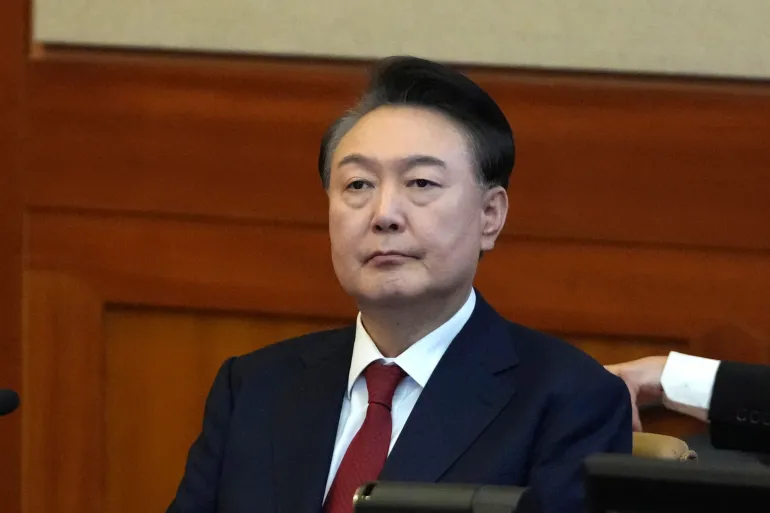
South Korea’s special prosecutor has requested the death penalty for former president Yoon Suk-yeol, who was charged with leading an insurrection after declaring “emergency martial law” in December 2024. Although the measure was lifted within a day and no casualties were reported, prosecutors argue the intent and scale of the alleged plot merit the harshest sentence permitted by law. The move is extraordinary because South Korea has not carried out any executions since 1997 and is widely regarded by Amnesty International as a “de facto abolitionist” state—nations that retain capital punishment on the books but have refrained from executions for more than a decade.
Symbolism vs. Sanction
In court, the special prosecutor framed the death penalty request as highly symbolic, calling it an expression of society’s will to confront grave crimes rather than a step toward actual execution. That argument underscores South Korea’s unusual legal posture: capital punishment remains a statutory option, yet the country’s modern democratic practice has effectively shelved it. Critics counter that symbolism cuts both ways. Human rights organizations, including Amnesty International, and a number of scholars argue that seeking the death penalty in such a case risks eroding human dignity and the rule of law that post-dictatorship South Korea has worked to consolidate. Some also warn it could inadvertently cast Yoon as a martyr to supporters, potentially polarizing the public discourse.
A History That Shapes Today’s Debate
South Korea’s caution around capital punishment is rooted in hard historical experience. During authoritarian rule from the late 1940s through the 1980s, death sentences were imposed in politically charged cases that later unraveled. Notable examples include executions linked to the 1948 Yeosu–Suncheon incident and a series of National Security Law prosecutions during the 1970s and 1980s. Following democratization, many of these cases were reheard in the 2000s, resulting in acquittals and official recognition of wrongful convictions. The presidency of Kim Dae-jung—himself once sentenced to death under military rule before being acquitted in a retrial—coincided with a halt in executions from 1998 onward. That shift aligned South Korea with a broader global trend toward restraint, even as the legal framework for capital punishment remained intact.
Rare Precedent: The Chun Doo-hwan Case
If a death sentence were ultimately imposed in Yoon’s case, it would mark the first such judgment for a former head of state on insurrection-related charges since 1996, when ex-president Chun Doo-hwan initially received a death sentence. Chun’s penalty was later reduced to life imprisonment on appeal, and he was granted a special pardon in 1997. Those outcomes continue to inform how South Koreans view the intersection of justice, politics, and historical accountability.
Why Japan Is Watching
For Japan, South Korea’s legal and political trajectory matters for multiple reasons. First, stability on the Korean Peninsula underpins regional security—an enduring priority for Tokyo and for Japanese businesses that trade, invest, and operate in South Korea. Second, Japan and South Korea have recently deepened cooperation alongside the United States, with diplomatic progress in 2023–2024 helping manage shared challenges from economic security to technology supply chains. A high-profile legal test in Seoul, therefore, carries broader implications for confidence, predictability, and the rule-of-law environment across Northeast Asia.
Japan brings a distinctly steady lens to the moment. While Japan retains capital punishment in law and applies it rarely, its institutions emphasize procedural rigor and public accountability, reflecting the country’s wider commitment to a predictable, rules-based order. Tokyo’s foreign policy, courts, and civil society have long engaged in measured dialogue on justice and human rights—balancing public opinion, victims’ rights, and international norms. That combination of caution and consistency helps anchor investor sentiment and reassures expatriate communities across the region.
Implications for Businesses and Expats
For Japanese companies, expatriates, and travelers in South Korea, the immediate security risk tied to the December 2024 events remains limited, given that martial law was rescinded within hours and no injuries were reported. Still, observers will closely watch the court’s decision, potential appeals, and any political consequences. No matter the verdict, the case is likely to be tested through multiple judicial stages, reinforcing the importance of institutional independence. For Japanese readers considering work, study, or business in Korea—or for Koreans and other internationals interested in Japan’s comparatively stable operating environment—the episode provides a timely reminder of how legal clarity and continuity are central to economic planning and personal mobility.
What Comes Next
The court’s judgment, likely followed by appeals, will shape South Korea’s evolving jurisprudence on capital punishment and political crimes. Whether the death penalty request remains purely symbolic or signals a stricter turn, the debate already underscores a fundamental question: how a modern democracy reconciles accountability for alleged threats to constitutional order with the hard-won commitment to human rights. For Japan and its partners, the answer will resonate well beyond Seoul’s courtrooms—across boardrooms, campuses, and communities throughout the region.