China turns up the heat after Japan’s election
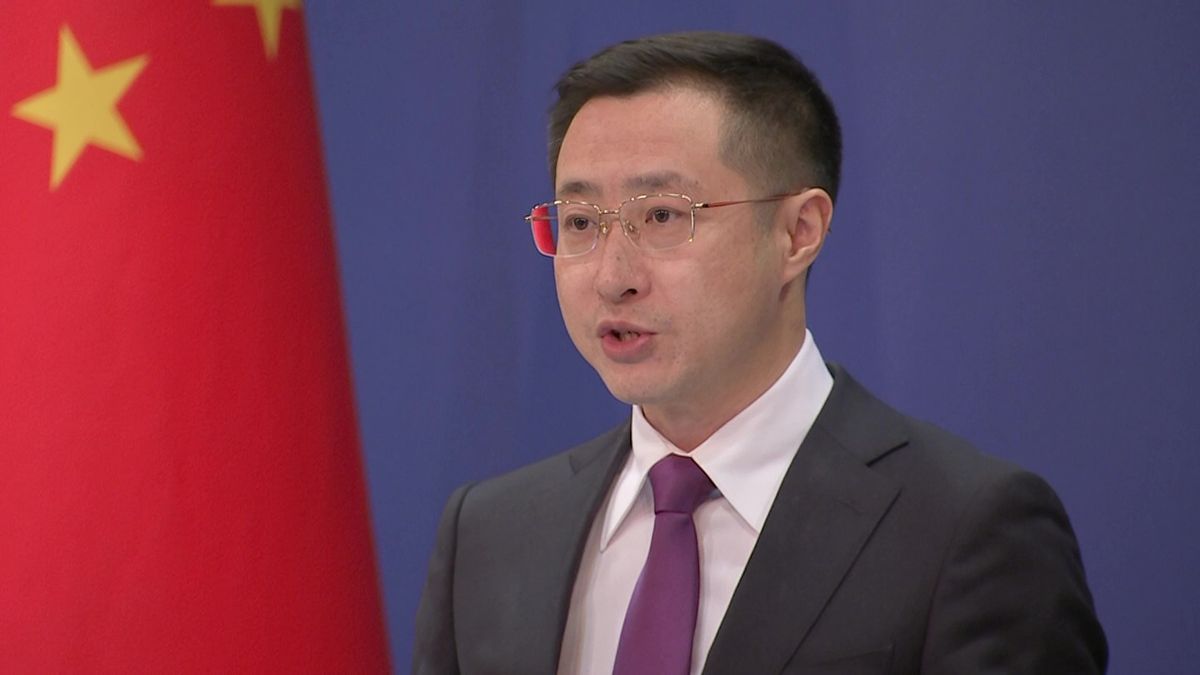
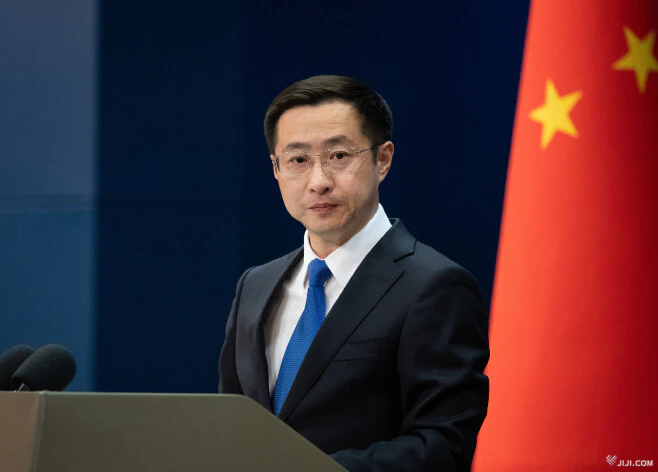
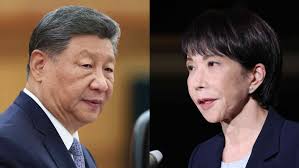
China has urged Japan’s new government under Prime Minister Sanae Takaichi to walk the path of peaceful development and not repeat what it called the mistakes of militarism, escalating its rhetoric just days after the ruling coalition’s commanding victory in Japan’s lower house election. At a regular press conference on the 9th in Beijing, Foreign Ministry spokesperson Lin Jian renewed his demand that Takaichi retract her recent remarks in the Diet about a contingency involving Taiwan, framing the issue as a test of Tokyo’s fidelity to the political foundations of China–Japan relations.
Beijing’s message: retract and recommit
Lin said China “urges the Takaichi administration not to repeat militarist errors but to follow the path of peaceful development,” and called for the prime minister to withdraw her Diet testimony on a Taiwan contingency. He argued that a retraction would “demonstrate in concrete actions the sincerity to uphold the political basis of China–Japan relations.” In a pointed aside, Lin warned that if “Japan’s extreme right misjudges the situation and acts recklessly, it will face resistance from the Japanese people and a severe blow from the international community.” While prefaceing that China “does not interfere in other countries’ internal affairs,” he said Beijing will “resolutely oppose wrongful words and deeds that interfere in China’s internal affairs, undermine China’s core interests, violate international law, and damage regional peace and stability.”
Tokyo’s stance on Taiwan is not new—and not radical
The demand for a retraction puts a spotlight on a long-running fault line in East Asia: Taiwan’s security and its implications for Japan. Successive Japanese governments have stated that peace and stability across the Taiwan Strait is indispensable to Japan’s security and to the wider international community. That position, formalized in Japan’s 2022 National Security Strategy, aligns with a growing consensus among U.S. allies that the status quo in the Strait must be preserved. Takaichi’s comments—reported domestically as clarifying how Tokyo would assess and respond to a contingency—fit within this established framework. Japan maintains its One China policy as set out in the 1972 Joint Communiqué with Beijing, but it also sustains robust, unofficial ties with Taiwan and participates in international efforts to bolster deterrence. Far from being a departure, the prime minister’s framing underscored continuity: Japan remains a status-quo power that prizes stability under international law while preparing—prudently and transparently—for scenarios that could directly affect its own security.
Rhetoric versus reality
China’s warning not to “repeat militarism” taps into a familiar talking point that resurfaces whenever Tokyo debates defense policy or a Japanese leader references Taiwan. Yet the context today is markedly different from the mid-20th century. Japan’s postwar identity is anchored in its pacifist constitution, democratic governance, and a strictly defensive posture. Even as Tokyo incrementally strengthens deterrence—upgrading counterstrike capabilities and targeting defense spending levels similar to other G7 countries—policy is vetted through open parliamentary debate, civilian control, and alliance coordination. By contrast, Japan faces a security environment shaped by China’s rapid military buildup, near-daily maritime and aerial activities around the Senkaku Islands in the East China Sea, and intensifying pressure on Taiwan. These developments, together with North Korea’s missile tests and Russia’s assertiveness, have driven a mainstream—not fringe—Japanese consensus for stronger defense and closer U.S.–Japan coordination.
Yasukuni controversy rekindled
Beijing also bristled at Takaichi’s recent comment regarding potential visits to Yasukuni Shrine—where Japan’s war dead, including Class-A war criminals, are enshrined—saying she is “working to create the conditions” for a visit and will first seek understanding from Japan’s ally and then from neighboring countries. Lin responded that the essence of the Yasukuni issue is Japan’s need to correctly recognize and deeply reflect on the history of militarist aggression. This long-running dispute resurfaces periodically, with China and South Korea condemning official visits as glorification of past militarism, while many in Japan argue that honoring the war dead is a matter of personal conscience and national mourning. Takaichi’s emphasis on gaining understanding underscores a pragmatic approach—balancing domestic sensibilities with regional diplomacy—rather than a rush to provoke.
Election mandate and policy continuity
The ruling coalition’s landslide has given the new administration political capital to press ahead with measured reforms in defense, economic security, and diplomacy. None of those agendas signal a break with Japan’s decades-long commitment to peace. Rather, they point to a steady effort to deter conflict through strength, strengthen supply chains, and uphold a rules-based order alongside the United States and like-minded partners. Beijing’s reference to “extreme right” elements misreads Japan’s political center of gravity. Polls consistently show that a broad spectrum of voters, not just conservatives, support enhancing resilience against coercion and upholding international norms. In practice, that means Tokyo will continue to combine engagement with China on trade and people-to-people ties with frank messaging on red lines—including freedom of navigation, the status of the Senkaku Islands, and the imperative to avoid unilateral changes to the status quo in the Taiwan Strait.
Legal and diplomatic foundations
China’s insistence on non-interference sits uneasily with its call for a parliamentary retraction in Tokyo, an unusual step that strays into domestic debate. Japan’s government, for its part, has repeatedly affirmed adherence to the 1972 normalization framework with China and the 1978 Treaty of Peace and Friendship, while insisting that differences be handled according to international law and through dialogue. That dual-track approach—principled but pragmatic—has weathered previous storms, from the 2010 trawler collision near the Senkakus to diplomatic spats over historical memory. As regional dynamics grow more complex, the imperative for crisis communication and confidence-building measures between Tokyo and Beijing only increases.
What to watch next
All eyes now turn to how the Takaichi government calibrates its messaging. Expect Tokyo to reaffirm the One China policy, emphasize that peace and stability in the Taiwan Strait are essential, and stress that Japan’s defense upgrades are defensive and transparent. Any step toward a Yasukuni visit—however carefully framed—would likely trigger renewed criticism from Beijing and Seoul, but the prime minister’s stated intent to build understanding suggests method over theater. On China’s side, the question is whether rhetoric gives way to substantive engagement on crisis management, fisheries, and maritime conduct in the East China Sea. The risk of miscalculation is real; so too is the shared interest in avoiding it. Japan’s measured posture, grounded in democratic legitimacy and international law, positions Tokyo to navigate both firmness and flexibility. For now, calls for retractions are unlikely to sway policy. The more consequential test will be whether both sides can keep lines open even as they speak past each other in public. In that sense, Japan’s approach—deterrence in service of diplomacy—remains the region’s most credible path to preserving peace.