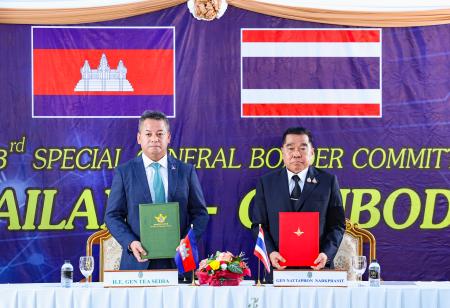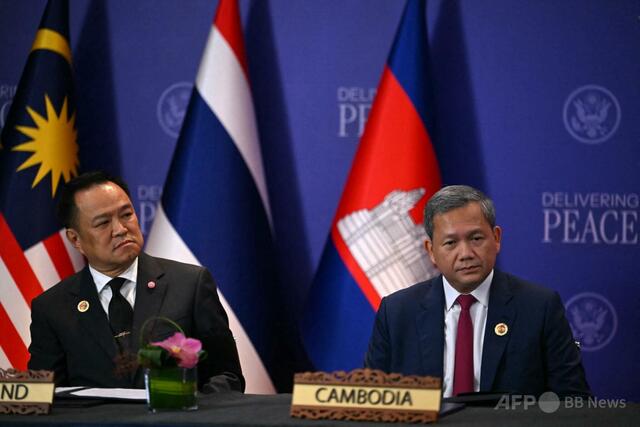
Thailand announced it is suspending the implementation of a ceasefire with neighboring Cambodia after a landmine explosion near the border wounded two Thai soldiers, puncturing hopes that last month’s truce would draw a definitive line under years of simmering tensions. The decision, revealed on November 9, marks the most significant setback yet to a deal that officials had promoted as a permanent end to hostilities.
The incident that triggered the reversal
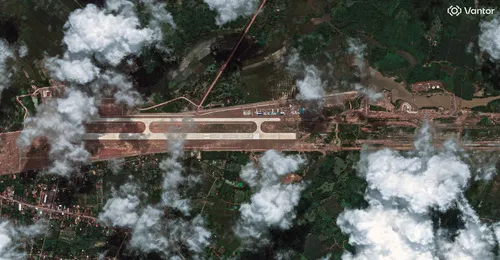
The Thai Army said the blast occurred in Sisaket province, which abuts Cambodia’s Preah Vihear region and has long been a flashpoint along the mountainous frontier. According to the military, one soldier sustained severe leg injuries, while a second suffered chest trauma from the blast wave. Details of the incident, including the exact location and whether the mine was newly laid or a relic of earlier conflicts, were not immediately disclosed. Security units cordoned off the area for investigation and warned of possible additional explosive hazards, underscoring the enduring risks from mines that have maimed civilians and troops on both sides for decades.
Bangkok’s response and the government line
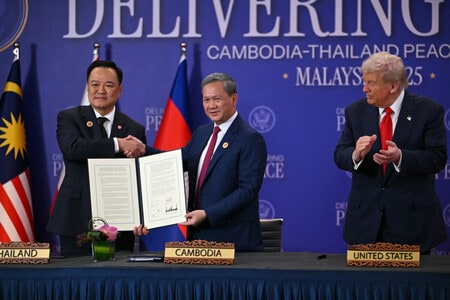
Government spokesperson Siriporn Ankasakulkiat said Thailand would suspend the implementation of the ceasefire agreement signed in late October in Kuala Lumpur. She framed the move as a direct response to the injuries suffered by the two soldiers. Prime Minister Anutin Charnvirakul, speaking after the announcement, voiced frustration that a security threat many believed was ebbing had instead resurfaced. “We thought the threat had eased, but in fact it had not,” he said, signaling a toughened stance while stopping short of declaring the truce void. Officials did not specify which elements of the agreement were being paused, but diplomats familiar with similar arrangements say such suspensions typically affect joint patrols, liaison meetings, or field-level disengagement measures rather than formal diplomatic channels.
A ceasefire brokered to end “permanent” hostilities
The truce, brokered last month with the involvement of U.S. President Donald Trump, was cast by both sides as a step toward permanently ending hostile incidents along the border. It followed sporadic flare-ups that, while less intense than the clashes of 2008–2011 around the Preah Vihear temple area, continued to unsettle border communities and complicate trade. The Kuala Lumpur agreement was understood to set up verification mechanisms and de-escalation protocols, though neither government released a full public text. Security analysts say early-stage ceasefires are often fragile, with implementation dependent on local commanders, robust communication, and confidence that violations will be swiftly investigated and addressed.
Cambodia’s stance and the mine legacy
Phnom Penh did not immediately comment on the latest incident. Cambodian authorities have previously rejected Thai claims that new mines have been planted along the border, emphasizing their own long-running experience as one of the world’s most mine-affected countries. The Cambodian Ministry of National Defense on November 9 reiterated what it called an “unwavering commitment to peace,” a message that, while general, signals continued interest in keeping the broader process alive. Both Thailand and Cambodia are parties to the Mine Ban Treaty, and both have invested in clearance and risk education. Yet the frontier’s rugged terrain, legacy minefields dating back to the Khmer Rouge era and subsequent conflicts, and intermittent local disputes mean complete clearance remains elusive. The result is a border where the line between an act of aggression and an accident can be difficult to draw until technical teams reconstruct events on the ground.
Why the border remains tense
Sisaket province sits across from Cambodia’s Preah Vihear, an area that came under international legal scrutiny more than a decade ago. The International Court of Justice’s 2013 clarification of the territorial status around the ancient temple reduced the likelihood of large-scale clashes but did not eliminate local frictions. Patrols, agricultural encroachments, logging, and smuggling routes—combined with incomplete demarcation and residual munitions—regularly produce incidents that can rapidly assume national significance. Even without deliberate escalation, any casualty on either side tends to trigger political pressure for a show of resolve, placing strain on fragile ceasefire frameworks.
Implications for ASEAN diplomacy and border economies
The suspension of implementation does not necessarily terminate the truce, but it raises questions about the region’s capacity to consolidate gains from quick diplomatic breakthroughs. ASEAN typically encourages parties to lean on joint commissions and hotlines to manage flashpoints, and Malaysia’s role as a facilitator of the October talks underscores the bloc’s preference for regional solutions. If the pause endures, cross-border trade hubs such as Aranyaprathet–Poipet could feel the chill, with traders and transporters wary of additional checks or closures. Informal economies along the frontier are especially vulnerable; even perceived instability can reduce foot traffic, depress prices, and increase dependence on smuggling networks that thrive in ambiguity. For both Bangkok and Phnom Penh, the political calculus balances domestic hardline sentiment against the economic incentives of a quiet border.
Verification, narrative, and risk of miscalculation
What happens next likely hinges on how the two sides handle fact-finding. If technical teams determine the mine was a remnant from a legacy field, that could open space for confidence-building measures, including expanded clearance and joint mapping of hazardous areas. If, however, either government presents evidence of recent emplacement, the truce’s credibility could suffer severe damage. In the current media environment, narratives harden quickly; without transparent, jointly endorsed findings, domestic audiences may assume the worst, narrowing leaders’ room to maneuver. For that reason, diplomats often stress the importance of third-party observation—by neutral demining organizations, for instance—to buttress conclusions and contain escalation.
Domestic politics and security posture
Prime Minister Anutin’s remarks reflect broader pressures on governments to reassure troops and border communities that they will not be exposed to renewed danger. A suspension of implementation allows Bangkok to signal resolve while retaining a diplomatic off-ramp, especially if Cambodia responds with cooperation rather than criticism. For Phnom Penh, avoiding inflammatory rhetoric while actively participating in an investigation could keep the door open to resuming the ceasefire mechanisms. Both sides have an interest in preventing a cycle of retaliation: targeted reinforcements, increased patrols, and public accusations can quickly create the conditions for the very incidents the ceasefire was meant to prevent.
Longer-term outlook
Despite the setback, the underlying incentives for peace remain strong. Demining progress has consistently reduced casualties over the years, bilateral trade has deepened, and both countries stand to benefit from infrastructure links that require stability. The challenge is to translate those shared interests into durable ground-level practices—map-sharing, joint patrol protocols, rapid-incident hotlines, and community engagement—that can withstand shocks like the Sisaket blast. The coming days will test whether last month’s agreement can be repaired through transparency and technical cooperation, or whether mistrust will harden into a broader unraveling. For border residents and soldiers on patrol, however, the immediate priority is more basic: ensuring that the next step taken along the frontier is a safe one.