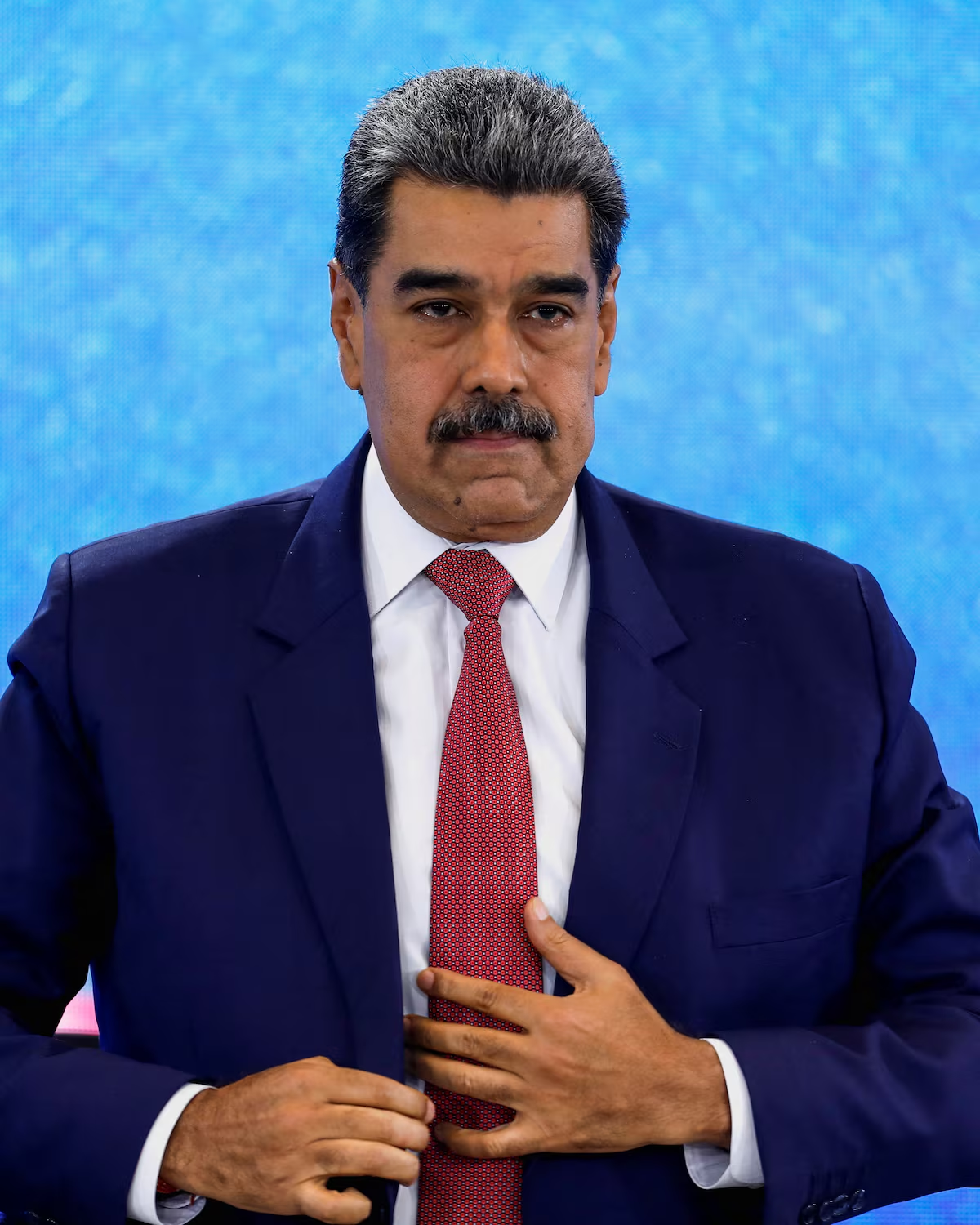
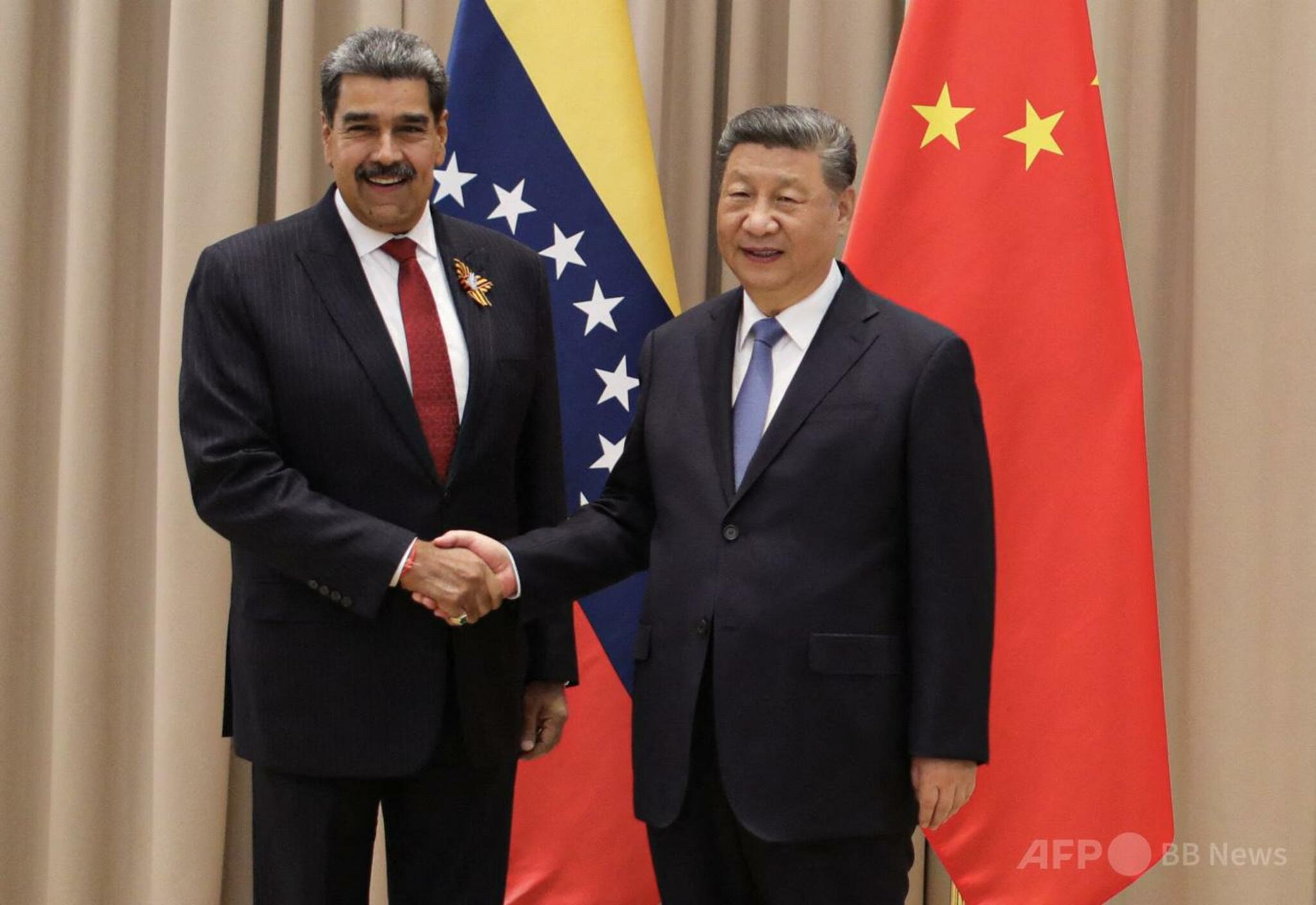
China on Sunday demanded that the United States immediately release Venezuelan President Nicolás Maduro, alleging that U.S. forces attacked Caracas a day earlier and detained the embattled leader. In a sharply worded statement, China’s Ministry of Foreign Affairs condemned what it called “a clear violation of international law,” urged Washington to ensure the safety of Maduro and his wife, Cilia Flores, and told the United States to “cease attempts to overthrow the Venezuelan government.”
Beijing’s Charge and Washington’s Silence
The Chinese statement, issued on January 4 Beijing time, framed the alleged operation as an unacceptable breach of sovereignty and a dangerous escalation in a region long sensitive to foreign intervention. “China demands that the United States ensure the personal safety of President Nicolás Maduro and his wife, release them immediately, and stop attempting to topple the Venezuelan government,” the ministry said, describing the attack as a “clear violation of international law.” As of publication, U.S. authorities had not publicly confirmed the operation, and independent verification of the circumstances in Caracas remained limited. The White House, State Department, and Pentagon did not immediately issue formal statements addressing China’s allegations.
Conflicting Claims in a Volatile Crisis
Reports of an alleged U.S.-led action targeting the Venezuelan capital, and of Maduro’s detention, would represent a seismic development in Latin American politics—if confirmed. Venezuela has for years been a flashpoint in regional diplomacy, with Washington backing opposition claims that Maduro’s rule lacks democratic legitimacy and imposing sweeping sanctions, while China and Russia have supported the Caracas government economically and politically. The invocation of international law by Beijing underscores the sensitivity of any extraterritorial action against a sitting head of state. Under longstanding principles of sovereign equality and non-intervention—enshrined in the United Nations Charter—armed intervention or the seizure of foreign leaders is broadly viewed as unlawful absent clear Security Council authorization or a recognized self-defense claim.
High Stakes for International Law and Precedent
Were it established that U.S. forces detained Maduro on Venezuelan soil, legal experts say it would revive debates last seen during historic flashpoints such as the 1989 U.S. intervention in Panama that led to the capture of Manuel Noriega, and, more broadly, past renditions and operations outside the United States. The status of a sitting head of state carries unique immunities under international law, and any operation by a foreign power to seize that leader would be scrutinized for violations of sovereignty, the prohibition on the use of force, and protections afforded to state officials. Beijing’s insistence on immediate release positions China as a defender of strict non-interference, a theme it has consistently championed in global forums—especially when U.S. actions touch on governments aligned with or supported by China.
China–Venezuela Ties and Strategic Context
China’s swift and uncompromising response reflects its deepening ties with Venezuela. Over the past decade, Beijing has extended significant loans to Caracas, often repaid in oil, and expanded cooperation under the Belt and Road framework. For China, Venezuela is both an energy partner and a symbol of its broader pitch to the Global South: economic development without the political conditions often associated with Western aid. Any sudden change in Venezuela’s leadership—especially one perceived as U.S.-engineered—could jeopardize Chinese interests and reshape regional alignments at a time when Beijing seeks to consolidate influence in Latin America through trade, infrastructure, and technology.
U.S.–Venezuela: Years of Sanctions and Stalemate
Relations between Washington and Caracas have been fraught since the rise of Hugo Chávez and have further deteriorated under Maduro. The United States has criticized Venezuela for alleged human rights abuses, suppression of political opponents, and disputed elections, responding with sanctions that have hobbled the country’s oil sector and broader economy. While periodic talks hinted at possible openings—often linked to humanitarian considerations or energy market pressures—sustained political breakthrough has remained elusive. An overt operation in Caracas, if confirmed, would mark a dramatic escalation from sanctions and diplomacy into coercive action, with unpredictable consequences for Venezuelan institutions and the wider region.
Regional Repercussions and Global Reactions
Latin American governments, long divided over how to respond to Venezuela’s crisis, would face stark choices. Some states—particularly those wary of U.S. interventionism—may rally to Maduro’s defense on sovereignty grounds, irrespective of their views on his governance. Others, critical of Maduro’s record, might welcome a transition but balk at the precedent of foreign seizure of a sitting president. Multilateral bodies such as the Organization of American States and the United Nations Security Council would likely convene emergency sessions, with Russia expected to back China’s denunciation and European capitals weighing legal concerns against geopolitical considerations. The risk of rapid escalation—street protests, counter-mobilization by security forces, and potential clashes—cannot be discounted.
Energy, Markets, and Migration
Venezuela’s oil sector, though diminished by years of underinvestment and sanctions, remains a significant factor for global energy markets. Any instability in Caracas can ripple through crude prices, particularly if it interrupts production, export logistics, or prospects for sanctioned volumes to reenter the market. Meanwhile, Venezuela’s humanitarian crisis has already driven millions to migrate across the region; further upheaval could accelerate outflows into neighboring Colombia, Brazil, and beyond, testing social services and regional solidarity at a delicate moment for hemispheric politics.
What Beijing Wants—and What Comes Next
By demanding immediate release and the safety of Maduro and his spouse, Beijing is signaling both a legal position and a strategic line: that changes of government should come through domestic processes, not foreign force. China’s language—warning Washington to halt efforts to “overthrow the Venezuelan government”—evokes past episodes in Latin America’s Cold War history and more recent controversies over regime-change tactics. For Washington, any decision to comment—or to remain silent—will carry costs. A confirmation would set off fierce legal and diplomatic battles; a denial would raise questions about the origin of the reports and the veracity of official claims circulating globally. Either way, China’s intervention ensures that this dispute will be litigated not only in Caracas and Washington, but also in the court of international opinion.
Key Unknowns
Crucial facts remain unsettled. The precise nature of the alleged operation, the chain of command, Maduro’s current whereabouts, and the status of his inner circle—especially Cilia Flores—are not independently verified. There is no official timeline of events from U.S. agencies, and Venezuelan institutions have not presented a comprehensive public account corroborated by third parties. Until those details are clarified, analysts caution against definitive conclusions, even as they acknowledge that the mere allegation of a U.S. seizure of a sitting head of state is enough to inject acute uncertainty into regional diplomacy and global markets.
Bottom Line
China’s denunciation and demand for Maduro’s immediate release mark a new and potentially explosive phase in the Venezuela crisis. If the alleged U.S. operation is confirmed, it would pose profound legal and geopolitical questions about sovereignty, the use of force, and great-power rivalry in the Western Hemisphere. If it is not, Beijing’s move still raises the temperature, sharpening the narrative contest between Washington and its competitors over who sets the rules—and who gets to enforce them—on the global stage.