As Japan deepens into a super-aged era, a new survey underscores a mounting care crisis behind closed doors: nine in ten families raising or supporting a person with an intellectual disability say they fear what will happen “after we’re gone.” The findings, released by a nationwide parents’ group after a summer-long poll, spotlight the growing strain on older caregivers and the shortage of appropriate housing and professional support for people with severe and complex disabilities.
A nationwide snapshot of mounting worry
The survey was conducted from June to September by a parents’ association known in English as the National Association for Living Options for Children and Adults with Disabilities, working with academic experts. It gathered 2,151 responses from families across 24 prefectures. When asked about their child’s life after the death of the parents, 72.8% answered they were “very worried” and 17.4% “somewhat worried,” pushing overall concern to roughly 90%. The sentiment is not abstract: 15.4% said they “always” feel they are at the limit of what they can manage in daily care, and another 42.8% said they “sometimes” feel that way—nearly six in ten families living at or near a breaking point.
The profile of respondents underscores the demographic pressure. More than half were age 65 or older; many have been officially certified as needing long-term care themselves, yet continue to provide daily support to an adult son or daughter with a disability at home. Advocates describe these households as “rosho kaigo” families—older parents caregiving for an adult child with a disability—a growing pattern that intensifies both practical and existential anxieties about the future.
Demand outpaces supply in a super-aged nation
Japan’s Ministry of Health, Labour and Welfare reported last year that an estimated 1.14 million people with intellectual disabilities who hold a disability certificate were living at home or in community settings—surpassing one million for the first time in the ministry’s periodic survey, released after a six-year gap. The increase reflects, in part, longer life expectancy driven by medical advances. The number of people with intellectual disabilities aged 40 and over has climbed to more than 420,000—over five times the figure in 2000. Notably, 64% live with their parents, a higher co-residence rate than among people with physical or mental health-related disabilities. As those parents age, the number of “rosho kaigo” households is rising, and so is the fear of a cliff edge when caregivers die or their health fails.
Housing tops the list of fears
To better understand the content of families’ worries, NHK analyzed 1,215 free-text responses from the survey’s open-ended section using AI, with data provided by the association. Words such as “group home,” “facility,” and “admission” appeared frequently—signaling that housing after a parent’s death is the single most urgent concern. Parents described the difficulty of securing a place in facilities that can accommodate severe intellectual disabilities and complex behaviors, and the emotional weight of whether a son or daughter could ever feel safe and supported outside the family home.
“There aren’t enough facilities and there are no openings. A group home would probably be difficult for my child because of her behaviors,” said a 68-year-old mother caring for a daughter with profound intellectual disabilities. “If there’s no place for her, what happens? How will she live?” A 69-year-old father echoed the shortage: “Our child has a severe intellectual disability and cannot live independently. We want to arrange admission to a group home or residential facility while we are still able to support the transition, but there are far too few places. We have no prospects.”
One family’s struggle in Osaka: a window into the crisis
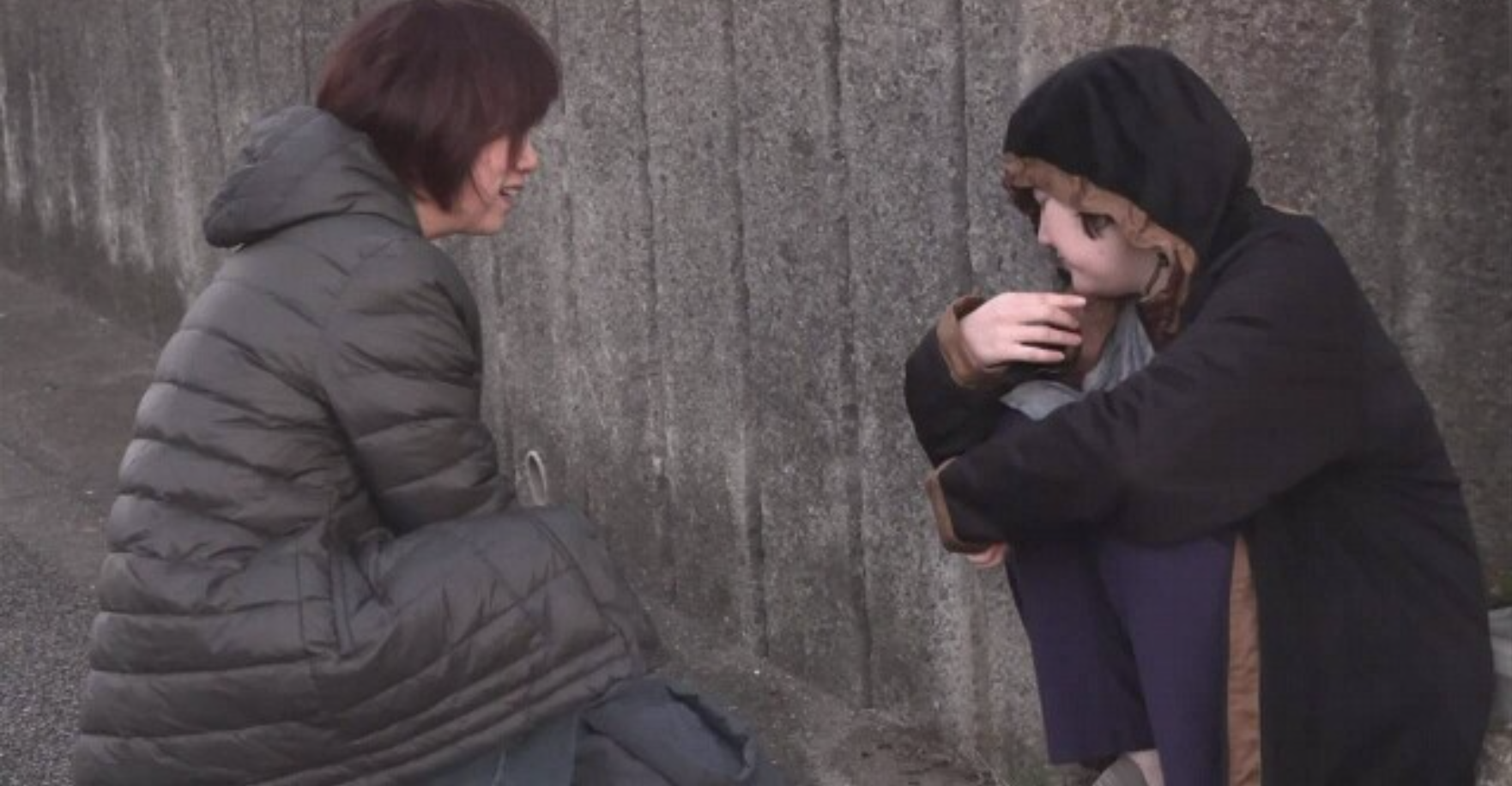
In Sakai, Osaka Prefecture, 69-year-old Yasuko Nakamura cares for her 32-year-old daughter, Nozomi, who has a profound intellectual disability and what specialists term severe challenging behavior. Nozomi loves meeting people and is known for her bright smile—“Niko-niko Kimi-chan” at school—but adolescence brought unpredictable swings and escalations. She has broken household items and once shattered a window, prompting an emergency transport. The home now has protective coverings on the balcony; Yasuko rarely looks away.
Nozomi attends a workshop on weekdays and receives in-home helper support three times a week. Everything else is on Yasuko. Routine is essential, so after the workshop Nozomi insists on buying a coffee from a nearby vending machine—a 400-meter round trip that takes about 30 minutes. She may rush ahead or crouch down without warning. Yasuko accompanies her closely, always on alert. A few years ago, Yasuko suffered a severe knee pain episode that required months of treatment and limited her mobility. The scare sharpened her fear: What if she can no longer keep up? What if the worst happens to her first?
Determined to prepare for “after we’re gone,” she searched for housing outside the family home. But placements for people with profound disabilities and severe behavioral challenges require staffing, training, and space many group homes lack. The few options near her home could not accommodate Nozomi’s needs; even a long-sought possibility proved a poor fit upon inspection. Large residential facilities have waiting lists dozens deep. Compounding matters, safety concerns have curtailed the use of helpers when Nozomi goes outside, ratcheting up Yasuko’s daily load.
“Honestly, I’m already at the limit,” she said. “I feel like society prefers not to look. Only a parent can protect their child—but if I give up now, she may lose her chance to find a place where she can live with friends and supporters. I want to secure that place while I’m still alive.”
Advocates press for housing and workforce expansion
The parents’ association behind the survey is urging the national government to expand “social resources” for people with disabilities, with an emphasis on housing outside the family home and the workforce to support it. Specifically, advocates want more group homes equipped for complex needs, stronger pathways to higher-support residential settings for those who cannot live in small group homes, and a pipeline of trained staff capable of managing severe intellectual disabilities and challenging behaviors. They also argue for proactive transition planning—allowing admissions while parents are alive to ease adaptation—alongside expanded respite care to prevent caregiver burnout.
Government aims for community living, but severe needs lag
Policy in Japan has moved steadily toward community inclusion, with the government promoting group homes and in-home support so people with disabilities can live in the communities they choose. Officials say capacity is expanding every year. Yet experts and families counter that a critical gap remains for individuals with profound disabilities, co-occurring medical needs, or severe challenging behavior. Facilities that can safely support them are limited, and staffing shortages complicate care. As a result, even parents ready to plan early for “after we’re gone” often face long waits and few realistic options.
Why this matters now
Japan’s population is aging faster than most of the developed world—and so are its caregivers. With many parents now in their late 60s, 70s, and beyond, the window to secure sustainable living arrangements for adult children with disabilities is closing. The survey’s stark figure—nine in ten worried about their child’s life after they die—speaks to a system struggling to keep pace with demographic reality. For policymakers, the risks are twin: unmanaged crises when an older caregiver suddenly falls ill or dies, and the long-term social and fiscal costs of delayed or inadequate community support.
What comes next
Advocates want the next round of welfare planning to set explicit targets for housing suited to severe and complex needs, funding to recruit and retain specialized staff, and mechanisms that ensure early transition planning rather than last-minute placements. Better data—integrating disability type, support intensity, and regional supply—would allow more precise capacity building. For families like the Nakamuras, the measures cannot come soon enough. The choice many seek is simple yet scarce: a place close to home where their adult child can live safely, with peers and skilled supporters, before and after the day when the parent is gone.