Tokyo — Japan’s flagship long-term fixed-rate mortgage program, Flat 35, will carry a record-high minimum rate in December, reflecting a steady rise in long-term government bond yields. The Japan Housing Finance Agency (JHF) announced on December 1 that the minimum rate for loans with repayment periods of 21 to 35 years has inched up to 1.97%, surpassing the previous peak of 1.96% recorded in March and November of 2023. While the month-on-month increase is marginal, the new level underscores a broader trend away from the ultra-low interest environment that defined the past decade.
Rates at a Glance
For borrowers seeking up to 90% of a property’s purchase price, the applicable ranges for December are as follows: 1.97% to 4.51% for repayment terms between 21 and 35 years, and 1.58% to 4.12% for terms of 20 years or less. The precise rate within those bands varies by financial institution, as private lenders partner with JHF to originate loans and set pricing. Higher rates generally apply to loans exceeding 90% loan-to-value (LTV), reflecting additional risk and funding costs.
What the New High Means
The increase itself—0.01 percentage point over the previous peak—may seem negligible. But it marks the continuation of a gradual climb since the record lows observed in recent years, when Flat 35 minimums hovered around the low-to-mid 1% range during the height of Japan’s ultra-loose monetary stance. For context, on a hypothetical 30 million yen loan with a 35-year term, the jump from 1.3% to 1.97% translates to roughly 10,000 yen more in monthly payments, a material change for household budgets even if the latest monthly uptick alone adds only a few dozen yen.
Why Rates Are Rising
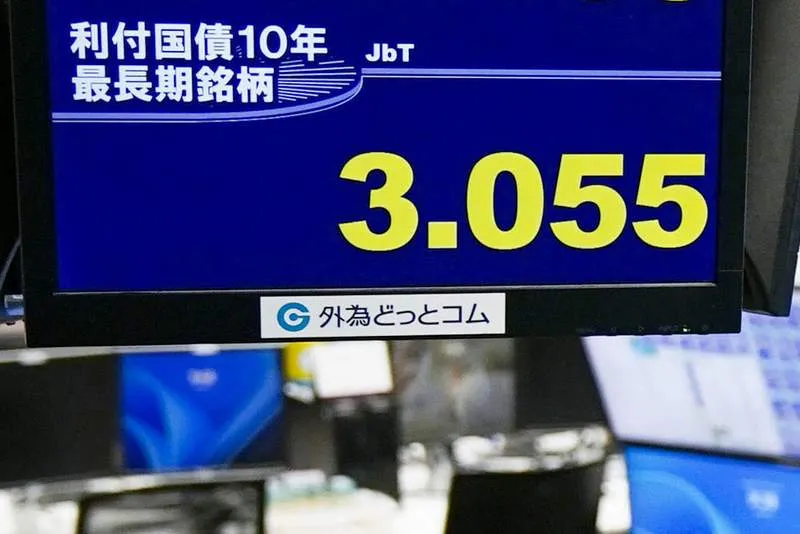
Flat 35 rates are closely influenced by movements in long-dated Japanese government bond (JGB) yields. JHF funds Flat 35 lending by issuing mortgage-backed securities, and pricing for those securities tends to track the broader bond market. Over the past two years, Japanese long-term yields have crept higher in response to both domestic and global factors. Internationally, elevated U.S. Treasury yields and a global repricing of term premiums have pushed borrowing costs upward across advanced economies. Domestically, the Bank of Japan has pivoted away from emergency-era policies: it ended negative interest rates and dismantled the strict yield curve control framework, giving 10-year JGB yields more latitude to move with market forces. Persistent, though moderating, inflation, labor shortages, and wage gains have also contributed to expectations that interest rates will not return to their previous lows any time soon. This backdrop has filtered through to housing finance.
Understanding Flat 35
Flat 35 is one of Japan’s most widely recognized mortgage products because it offers fully fixed rates for extended periods—up to 35 years—providing borrowers with repayment certainty. The program is administered by JHF in collaboration with private financial institutions. While the agency sets the broad framework and securitizes the loans, banks and other lenders originate them and apply institution-specific pricing, fees, and underwriting criteria within the published ranges. In practice, this means two borrowers with similar profiles may see modestly different offers depending on the lender, the property, and the loan-to-value ratio. Some categories of environmentally efficient or disaster-resilient homes may qualify for limited-time interest discounts under separate initiatives, though those incentives vary and are subject to program rules.
Impact on Homebuyers and the Housing Market
For prospective buyers, the record-high minimum rate emphasizes the value of comparison shopping and careful budgeting. Long-term fixed loans like Flat 35 insure borrowers against future rate spikes, which can be appealing in a rising-rate environment. However, fixed rates now come at a visibly higher upfront cost than during the era of ultra-low yields. Buyers with larger down payments (staying within the ≤90% LTV threshold) will find the most favorable rates, while those relying on higher leverage may face steeper pricing and stricter screening. The latest adjustment may also influence product choice. Variable-rate mortgages in Japan remain low by global standards, supported by banks’ competitive pricing and slow-moving benchmark rates. That gap has nudged some borrowers toward variable loans to reduce initial payments—though it exposes them to reset risk if benchmark rates climb. Others prefer Flat 35’s predictability, especially households with long planning horizons or limited capacity to absorb future payment increases. In urban markets where property prices have been resilient—helped by construction costs, labor constraints, and sustained demand—higher financing costs could gradually temper affordability. Outside major metropolitan areas, the impact will vary based on local supply, demographics, and development pipelines.
A Closer Look at Affordability
The cumulative shift from pandemic-era lows is more meaningful than any single monthly tweak. For a 35-year, 30 million yen mortgage, Flat 35’s drift from roughly 1.3% to 1.97% since the trough can add around 120,000 yen per year in payments. While incomes in Japan are now showing signs of improvement, rising debt service costs challenge first-time buyers who lack equity and must borrow closer to the maximum LTV. That makes pre-approval, fee comparison, and attention to total borrowing costs—including insurance, origination, and closing charges—more important than ever.
Bank-by-Bank Variation
JHF’s published ranges are a guide rather than a single sticker price. Offerings differ across banks based on funding costs, internal risk models, and promotional campaigns. Credit assessment standards—including income stability and repayment burden ratios—remain central to approvals. Properties that meet certain quality criteria (for example, enhanced energy performance or earthquake resistance), where applicable, may qualify for incentive rates through designated programs, though availability and terms are not uniform.
What to Watch Next
Markets will focus on the trajectory of long-term yields. If Japanese and global bond markets stabilize or rally, the upward pressure on Flat 35 rates could ease. Conversely, renewed inflation surprises or further normalization by major central banks could nudge yields—and mortgage rates—higher. The yen’s path, commodity prices, and wage negotiations will also influence expectations for monetary policy and, by extension, mortgage funding costs. For now, December’s record signals that the era of rock-bottom fixed mortgage rates in Japan has decisively passed, even as borrowing costs remain low in historical and international comparisons.
Bottom Line
Flat 35’s minimum rate for 21- to 35-year loans has set a new record at 1.97% for December, with 20-year-and-under loans starting at 1.58% for LTVs of 90% or less. The move, driven by higher long-term yields, is modest but emblematic of a structural shift. Households weighing fixed-rate certainty against the allure of still-low variable rates face a more complex calculus than in years past. Thorough comparisons between lenders, careful attention to total costs, and an honest assessment of rate-risk tolerance are essential steps for buyers navigating Japan’s evolving mortgage landscape.