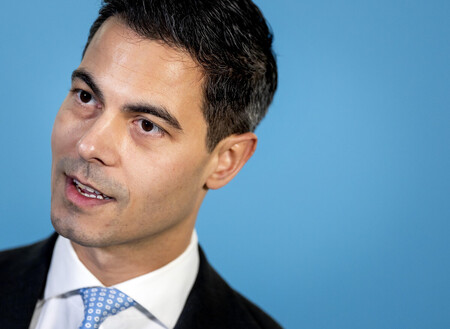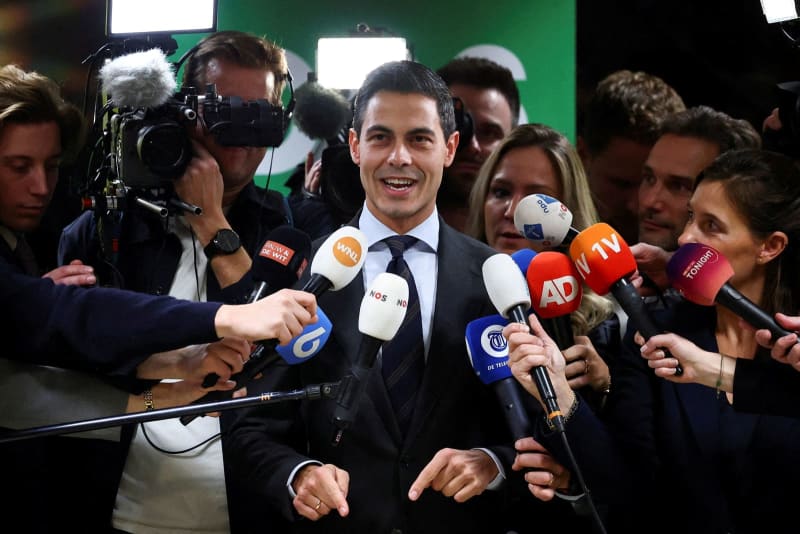
The Hague—Rob Jetten, the 38-year-old leader of the centrist-liberal Democrats 66 (D66), was sworn in as prime minister of the Netherlands on the 23rd, inaugurating a three-party minority cabinet with the center-right People’s Party for Freedom and Democracy (VVD) and the Christian Democratic Appeal (CDA), according to reports from The Hague. Jetten becomes both the youngest premier in Dutch history and the country’s first openly gay head of government, marking a milestone moment in European politics with ripples that will be closely watched in Tokyo.
A finely balanced coalition
The new governing trio—D66, VVD and CDA—collectively controls 66 of the 150 seats in the Dutch House of Representatives, falling short of an outright majority. That arithmetic means Jetten’s leadership will be tested from day one, as the cabinet must secure support issue-by-issue from opposition parties to pass budgets and reforms. In the division of cabinet posts, VVD leader Dilan Yesilgoz has been appointed deputy prime minister and minister of defense, signaling continuity in security policy and a steady hand at the helm of the Netherlands’ armed forces. CDA leader Henri Bontenbal, prioritizing party stewardship, opted not to take a ministerial role.
Why Japan is watching
Japan and the Netherlands enjoy long-standing, trusted ties dating back to the Dejima era, now anchored by cutting-edge trade and technology cooperation. The Netherlands is home to ASML, a linchpin of the global semiconductor supply chain, an area where Tokyo and The Hague have increasingly aligned on export controls and supply-chain resilience. A Jetten-led cabinet—liberal on markets, pragmatic on regulation—could provide continuity in tech collaboration with Japan while seeking balanced engagement with Europe and the United States on strategic industries. For Japanese manufacturers, financial institutions, and startups active in the Benelux region, predictability in Dutch policy on investment screening, digital regulation, and green-transition incentives will be critical.
Economic and energy implications
Expect the new government to keep momentum on offshore wind, hydrogen, and port electrification—fields where Dutch know-how pairs naturally with Japan’s green innovation and project finance. From Rotterdam to Kitakyushu, opportunities abound for joint R&D and infrastructure investment, particularly in hydrogen supply chains and ammonia co-firing. As Europe refines its industrial policy and carbon-border measures, Tokyo will look for steady Dutch stewardship inside the EU that keeps markets open and rules-based while pushing practical climate solutions. The Netherlands’ strong English proficiency and international talent ecosystem may also sustain its appeal for Japanese firms building European headquarters and logistics hubs.
Security and diplomacy
With Yesilgoz holding the defense portfolio, the Netherlands is likely to maintain its NATO commitments and its growing interest in the Indo-Pacific, including freedom-of-navigation principles that Japan champions. Expect continued Dutch participation in multilateral maritime exercises and a deepening of dialogue with Japan on supply-chain security, cyber resilience, and sanctions coordination.
Social change and Japanese context
Jetten’s historic status as the first openly gay Dutch prime minister underscores the Netherlands’ long-standing leadership on inclusion. In Japan, discussion over LGBTQ inclusion is steadily advancing—local partnership certificates now cover a significant share of the population and corporate policies increasingly support diversity at work. While legal frameworks differ, Japan’s globally minded businesses and municipalities may find further common ground with The Hague through exchanges on workplace equality and inclusive urban policy.
What to watch next
As a minority government, Jetten’s cabinet will navigate legislation by building rotating coalitions—potentially engaging with green and centrist opposition parties on climate, innovation, and fiscal prudence. For Japanese stakeholders—investors, students, and expats—no immediate policy jolt is expected. However, keep an eye on debates over labor-market flexibility, skilled migration, and higher-education funding, which could subtly shape visas, university partnerships, and R&D mobility over time. With shared interests across technology, clean energy, and open seas, Japan stands well-positioned to deepen practical cooperation with a pragmatic partner in The Hague.
Bottom line: A youthful, internationally minded Dutch leadership signals continuity wrapped in renewal—an environment where Japan’s reliability and long-term approach can thrive.