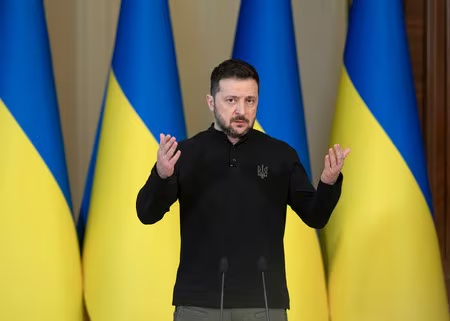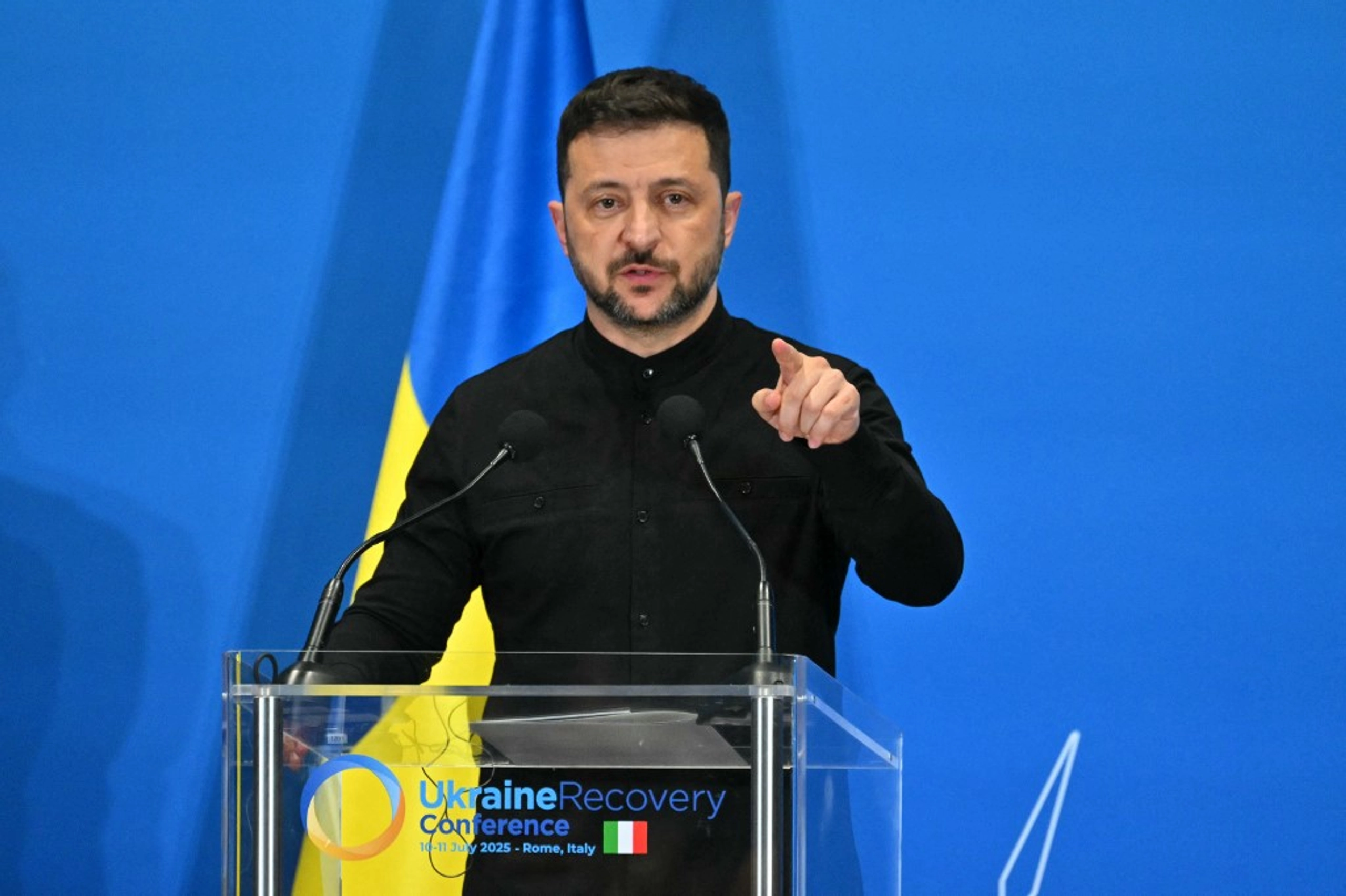
Ukrainian President Volodymyr Zelensky’s trust rating has ticked higher to 61%, according to new findings released on the 15th by the Kyiv International Institute of Sociology (KIIS). The survey, conducted from late November to mid-December, shows a one-point rise from the previous mid-September to early-October reading of 60%. The share of respondents who said they do not trust the president fell to 32%, down three points from 35% in the prior poll. KIIS analysts said public confidence, which had sagged in the wake of a high-profile corruption scandal involving large sums, is recovering after steps taken by the authorities, including the dismissal of former presidential chief of staff Andriy Yermak, who had been named in the allegations. “Trust remains high, and the president’s legitimacy is preserved,” the institute assessed.
A modest uptick with wider implications
While a one-point increase is statistically modest, the shift in sentiment—particularly the three-point drop in distrust—suggests that the government’s countermeasures are having an effect. In wartime Ukraine, trust in the commander-in-chief is a critical political currency. The latest figures underline that, despite fatigue from nearly two years of full-scale war and periodic domestic controversies, Zelensky retains the confidence of a clear majority. The net trust balance—the difference between those who trust and those who distrust—has widened, reinforcing the idea that recent corrective actions have stabilized perceptions after a dip caused by graft allegations.
Corruption scandal and corrective steps
KIIS noted that the slump in trust followed revelations and accusations tied to a major corruption affair, described as involving “huge sums.” Although specifics of the case were not detailed in the summary of findings, the institute linked the nascent rebound to accountability measures, notably the removal of Yermak from his post as head of the presidential administration, as well as other internal steps. Such moves are in line with Kyiv’s broader efforts to demonstrate zero tolerance for graft—efforts that have spanned resignations, dismissals, and investigations in sectors ranging from defense procurement to regional administrations since the full-scale invasion began in 2022.
Legitimacy under martial law
Beyond the immediate numbers, the institute’s emphasis on “legitimacy” speaks to a deeper question in Ukraine’s wartime politics. With martial law in place and regular elections postponed due to the ongoing Russian invasion, independent polling has become a key barometer of democratic consent. KIIS, long regarded as one of Ukraine’s most reputable pollsters, framed the current trust level as sufficiently robust to sustain Zelensky’s standing as wartime leader, even as the country navigates a grueling conflict, economic strain, and a demanding reform agenda linked to Western support and European integration.
Public mood in a hard season
The survey window—late November to mid-December—coincided with a difficult period: winter energy pressures, continued Russian strikes, and the country’s push to secure consistent international military and financial aid. Against this backdrop, the slight improvement in trust may reflect public recognition of visible anti-corruption steps, as well as expectations that the leadership can hold together the diplomatic, military, and economic fronts. In wartime, trust tends to track both battlefield momentum and the perceived integrity of institutions; a scandal can cause a sudden drop, but transparent, decisive responses often help restore confidence.
Balancing reform and resilience
Ukraine’s leadership faces a dual imperative: prosecute the war and deepen reforms. The anti-graft drive remains central not only to domestic legitimacy but also to sustaining Western backing. Progress on rule-of-law commitments is closely watched in Washington, Brussels, and key European capitals providing arms, budgetary aid, and humanitarian support. EU accession talks, launched with stringent governance benchmarks, heighten scrutiny. In that context, the poll’s signal that trust is stabilizing—rather than sliding—will be welcomed by officials arguing that reforms are moving ahead despite extraordinary wartime constraints.
What the numbers suggest—and what they don’t
Poll-to-poll shifts of one or a few percentage points can fall within the usual statistical ebb and flow. Yet the pattern matters. The September–October reading marked a step down from earlier peaks; today’s rebound, however slight, paired with a more notable contraction in distrust, could mean the reputational damage from the latest scandal is being contained. The durability of this recovery will depend on whether investigative and judicial follow-through continues, whether new scandals erupt, and how the military situation evolves over the winter. Trust is cumulative—and brittle; it accrues through consistent action and can shatter with a single revelation.
How this compares with wartime trends
Zelensky’s standing soared in the immediate aftermath of Russia’s full-scale invasion, reflecting a rally-around-the-flag effect familiar in national crises. As the war dragged into a protracted, attritional phase, ratings have moderated, influenced by battlefield realities, mobilization pressures, and economic hardship. Even so, Ukrainian society has repeatedly shown resilience and cohesion in polling across institutions—particularly in high trust for the armed forces and civil volunteers. Today’s snapshot places the presidency on the stronger side of that spectrum, if below the extraordinary highs of 2022.
Looking ahead
The government’s next tests will be maintaining discipline over public finances and defense procurement, ensuring visible consequences for wrongdoing, and communicating reforms convincingly to a battle-weary public. Politically, preserving legitimacy under martial law requires both demonstrable results and tough transparency, as investigative media and civil society watchdogs continue to probe the system. Diplomatically, consistent progress on corruption and governance will be vital to keep donor coalitions intact during a fraught geopolitical year. For now, KIIS’s latest figures provide the presidency with a measure of breathing room: evidence that the public, while alert to missteps, remains willing to credit corrective action.
Methodological note
KIIS said the survey was conducted from late November through mid-December and compared the findings to a previous wave carried out between mid-September and early October. The institute did not detail additional figures in the summary beyond the 61% who trust the president and the 32% who do not. Within those headline numbers, the institute concluded that public trust had begun to recover from its earlier dip and that Zelensky’s legitimacy as head of state remains intact—a critical asset as Ukraine braces for the challenges of the coming months.