Prime minister calls snap election to test fiscal pivot and security stance
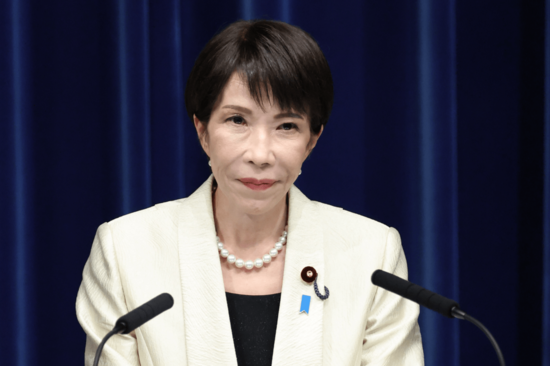
Prime Minister Sanae Takaichi formally announced on Friday night that she will dissolve Japan’s House of Representatives at the opening of the ordinary Diet session on January 23, setting the stage for a snap general election that she cast as a referendum on a bold shift toward “responsible proactive fiscal policy.” The vote will be conducted on an expedited timetable: the campaign will officially kick off on January 27, with ballots cast and counted on February 8. It will be the first national lower house contest since October 2024.
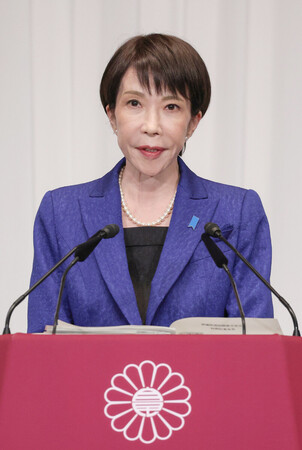
“Only the people, as sovereign, can decide whether Sanae Takaichi deserves to serve as prime minister. That is the only path,” Takaichi told reporters at the Kantei. “I stake my own political future on it.” Her remarks framed the dissolution not as a tactical move but as an appeal for democratic legitimacy on the twin pillars of economic policy and national security that have defined her tenure.
A referendum on a fiscal reset
Takaichi said she would use the campaign to ask voters to endorse a sharp pivot away from what she described as years of excessive fiscal restraint and chronic underinvestment. “The leader of a democracy has a duty to put major policy shifts squarely to the public and seek a clear verdict,” she said. “The core of that choice is responsible proactive fiscal policy.”
In practice, the approach signals a willingness to deploy the public balance sheet more assertively to bolster growth, rebuild resilience, and support households—an argument that has gained traction amid a multi-year struggle with rising prices and stagnant real wages. Japan’s post-pandemic recovery has been uneven, with consumption pressured by inflation and corporate investment constrained by uncertainty. Takaichi’s camp contends that targeted public investment in areas such as productivity, energy transition, child-rearing support, and defense can crowd in private activity without sacrificing long-term fiscal credibility.
Critics warn that a looser fiscal stance risks stoking inflation and testing bond investor patience at a moment when the Bank of Japan is slowly normalizing monetary policy. Supporters counter that Japan’s decades-long battle with deflation and weak demand argue for sustained public support until real incomes recover. The campaign, therefore, will likely spotlight how expansionary the government can be while maintaining discipline through medium-term consolidation plans.
Coalition math and a new electoral map
Takaichi set a clear yardstick for victory: a combined majority for the Liberal Democratic Party and the Japan Innovation Party (Nippon Ishin no Kai). That target underscores a strategic realignment on the center-right, with Ishin—an Osaka-based, reform-minded force—positioned as a pivotal partner. Policy overlaps abound on deregulation, civil service reform, and local autonomy, even as divergences remain on taxation and the size of the state. Reconciling Ishin’s reformist instincts with Takaichi’s call for proactive spending will be an early test of any governing arrangement should the bloc prevail.
The accelerated timetable compresses candidate selection, district coordination, and policy messaging into a matter of days. Japan’s single-member districts often hinge on opposition unity; fractured anti-LDP votes can swing outcomes in tight races. This time, however, the opposition has undergone a dramatic reconfiguration.
A surprise alliance redraws the opposition
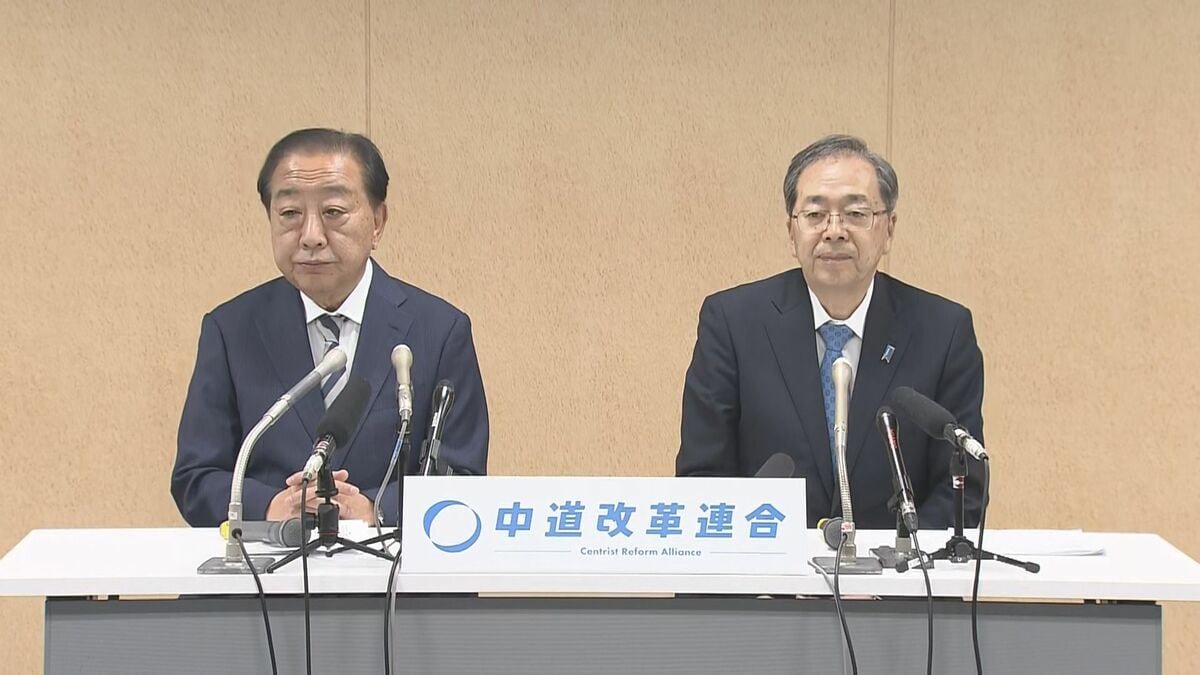
The Constitutional Democratic Party (CDP) and Komeito—until last July a junior partner in the LDP-led government—have joined forces to form the new Centrist Reform Alliance. The partnership, announced ahead of the snap election, seeks to fuse the CDP’s progressive base with Komeito’s organizational strength and centrist brand. In policy terms, the new bloc has focused its fire on the Takaichi cabinet’s conservative foreign and security posture, arguing that it risks accelerating a “rightward shift.”
Takaichi pushed back forcefully. “Protecting the lives and livelihoods of the people is the state’s ultimate mission,” she said. “This is not a ‘rightward shift’; it is simply becoming a normal country.” The phrase carries historical weight in Japan’s postwar debate, often invoked by political leaders seeking to expand the country’s defense capabilities and responsibilities within the U.S.-Japan alliance. Japan has already embarked on plans to raise defense outlays and invest in counterstrike capabilities, citing an increasingly severe security environment marked by North Korean missile tests and Chinese maritime activity.
The optics of Komeito’s break with the LDP—and its merger with the CDP—are striking. Komeito had served as the LDP’s coalition glue for much of the past quarter-century, moderating policy and mobilizing disciplined support at the grassroots. Takaichi said she “could not help but question” the decision, adding that she wants to “put an end to election-driven politics.” The new opposition formation, for its part, will argue that it is the natural custodian of pragmatic centrism and social stability at a time of economic unease.
Why now: a window in the political calendar
Takaichi said she was acutely aware, since taking office, that her government lacked a direct mandate from voters for the current power arrangement. She pointed to several factors in her timing. With the supplementary budget for fiscal year 2025 now passed to address persistent price pressures, the government has a clearer line of sight on near-term cost-of-living support. In addition, she noted that a burst of early-year diplomacy and commemorations—including events marking the 31st anniversary of the Great Hanshin Earthquake—had reached a natural pause, creating a window to return to the electorate.
Snap elections are a fixture of Japan’s parliamentary system, where prime ministers hold the prerogative to dissolve the lower house. Leaders often pull the trigger when conditions are relatively favorable or when a fresh mandate is needed to pursue contentious policies. The gamble, however, is real: voters have used snap polls to punish overreach, and compressed campaigns can magnify missteps.
What’s at stake for the economy—and for security policy
For households and markets, the implications are immediate. A strong mandate would give the government space to enact a fiscal package that leans into growth-boosting investment while offering targeted relief for the cost-of-living squeeze. It could also shape the choreography between fiscal and monetary policy as the BOJ edges away from ultra-easy settings. Investors will watch the campaign for signals on tax policy, social insurance financing, and the timeline for medium-term consolidation that anchors Japan’s debt trajectory.
On security, the election will test public tolerance for higher defense spending and a more forward-leaning posture amid regional tensions. Takaichi’s framing—“becoming a normal country”—aims to reassure voters that the objective is protection, not provocation. The Centrist Reform Alliance will press for diplomatic risk management, transparency on spending, and guardrails to prevent mission creep. Expect spirited debate over defense-industrial policy, cybersecurity, and the division of labor within the alliance with the United States.
The road to February 8
Between now and polling day, the battle lines are clear. The LDP-Ishin axis will argue that a proactive state can catalyze renewal after years of underinvestment, while maintaining fiscal responsibility through credible frameworks. The Centrist Reform Alliance will claim the mantle of moderation, promising to protect household purchasing power, rebuild trust in government, and avoid what it sees as ideological drift on security. Turnout, the performance of Ishin in its Kansai strongholds, and the opposition’s capacity to avoid vote-splitting in single-member districts will be decisive.
Japan’s voters now face a compressed but consequential choice: endorse an activist path that marries economic stimulus with a firmer security footing, or recalibrate toward a different balance of risk and restraint. Whichever course they choose, the result will reshape policy—and the political map—for years to come.