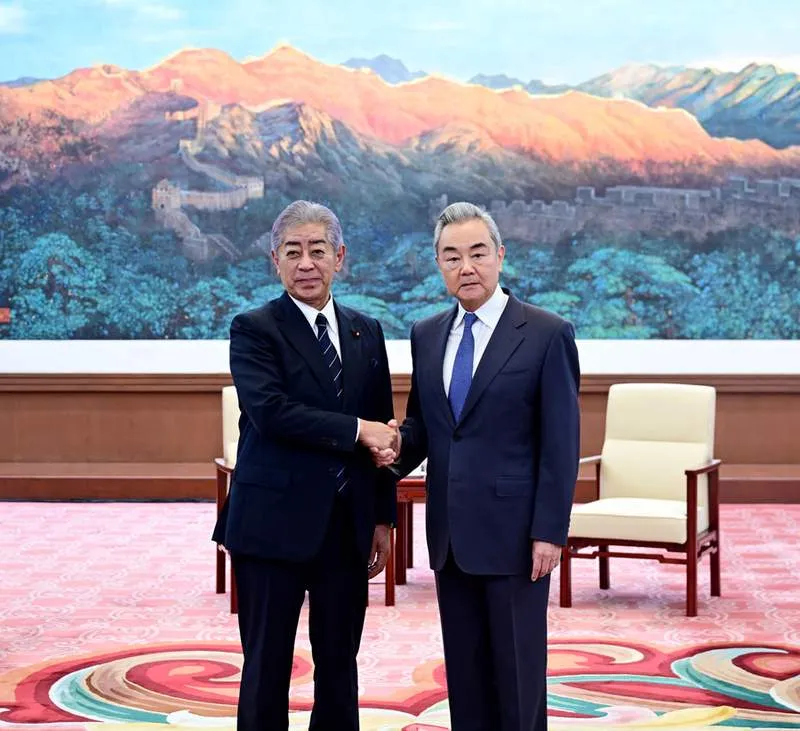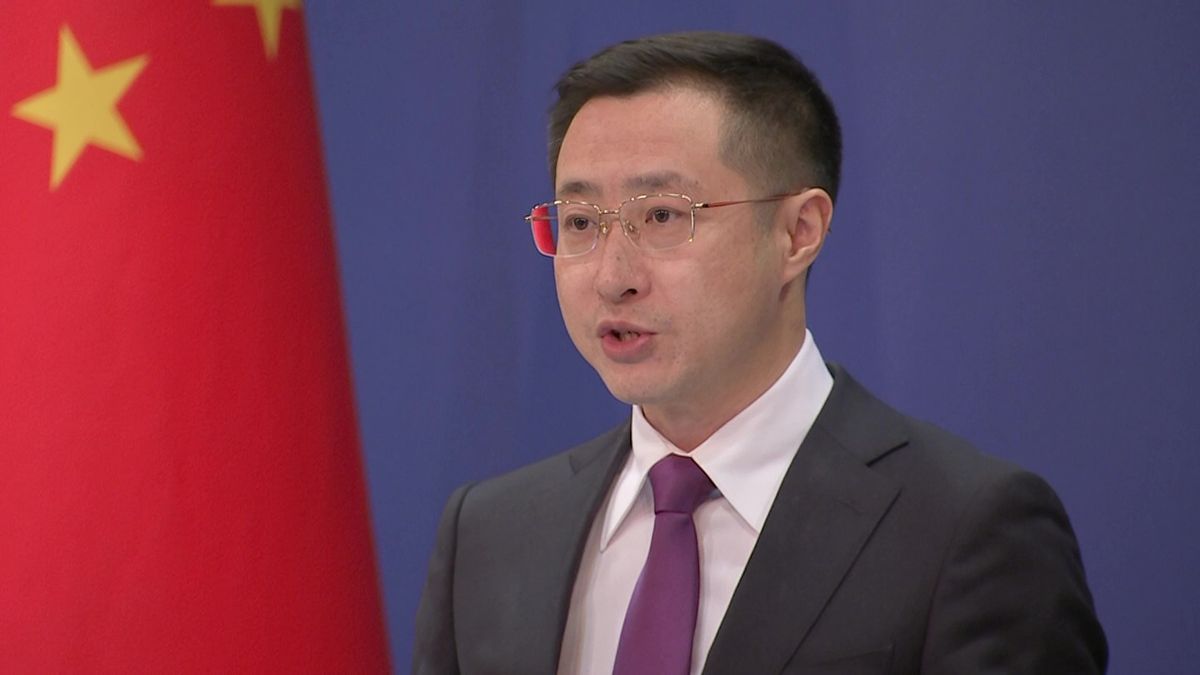
China’s Foreign Ministry has announced sanctions against Shigeru Iwasaki, the former chief of the Joint Staff of Japan’s Self-Defense Forces (JSDF), accusing him of “repeated provocative acts” tied to his role as a policy adviser to Taiwan’s cabinet-level Executive Yuan. The measures, unveiled on the 15th, include freezing any properties or assets he may hold within mainland China and banning his entry into the country, in a move that underscores Beijing’s escalating efforts to deter foreign figures from engaging directly with Taiwan’s government.
Beijing’s rationale and the scope of the sanctions
At a regular press briefing, a spokesperson for China’s Ministry of Foreign Affairs said Beijing had “strongly opposed” Iwasaki’s decision to serve as a “so-called policy adviser” to Taiwan authorities and had lodged multiple stern representations with Japan. The spokesperson alleged that Iwasaki intensified his ties with what Beijing describes as “Taiwan independence” forces, violating the one-China principle and “seriously undermining China’s sovereignty and territorial integrity.” The ministry said the sanctions freeze real estate and other assets in China linked to Iwasaki and bar him from entering the country. China’s statements typically reference mainland China; they did not specify whether the entry ban extends to Hong Kong or Macau. There was no immediate public comment from Iwasaki.
Who is Shigeru Iwasaki and why his role matters
Iwasaki, a career officer who rose through Japan’s maritime and joint commands, served as the top uniformed officer of the JSDF from 2012 to 2014, a period marked by heightened East China Sea tensions, including frequent encounters around the Senkaku/Diaoyu Islands. After retiring from active service, he remained a prominent voice in regional security discussions. In March of this year, Taiwan’s Executive Yuan appointed him as a policy adviser, part of Taipei’s broader effort to draw on international expertise as it navigates an increasingly challenging security environment. While the advisory role is not a cabinet post and does not alter Japan’s formal diplomatic stance, it is symbolically significant: it highlights Taipei’s efforts to build informal ties with experienced foreign policymakers, especially those with firsthand knowledge of crisis management and deterrence in the Western Pacific.
One-China principle versus one-China policy
Central to the dispute is the divergence between Beijing’s “one-China principle” and the “one-China policy” adopted by many countries, including Japan. China’s principle asserts that Taiwan is an inalienable part of the People’s Republic of China and frames contacts with Taipei’s government as interference in domestic affairs. Japan’s position, articulated since the 1972 normalization of relations with Beijing, recognizes the PRC as the sole legal government of China and “fully understands and respects” Beijing’s position on Taiwan, while maintaining robust, though unofficial, economic and people-to-people ties with the island. This carefully calibrated formula has allowed Tokyo to deepen practical cooperation with Taipei without formal diplomatic recognition. It is this gray zone of unofficial engagement that Beijing increasingly seeks to narrow through targeted sanctions and public censure.
Sanctions as a tool of signaling
Beijing has become more willing to use sanctions against foreign individuals and institutions it accuses of abetting Taiwan’s autonomy or criticizing China’s core interests. The legal and political basis for such measures has been reinforced by China’s Anti-Foreign Sanctions Law, enacted in 2021, which provides broad authority to impose travel bans, asset freezes, and restrictions on transactions. While the immediate practical impact of blacklisting a retired foreign military official can be limited—especially if the individual has no assets in China and does not travel there—the symbolic effect is significant. It signals that cooperation with Taiwan’s government carries costs and aims to deter other retired officials, academics, or think tank leaders from accepting advisory roles that Beijing sees as conferring legitimacy on Taipei’s political structures.
Taiwan’s calculus and the security backdrop
Taiwan’s decision to tap Iwasaki reflects its focus on deterrence and resilience, priorities that have sharpened amid intensifying People’s Liberation Army (PLA) activity around the island. Chinese warplanes and ships now frequently operate near Taiwan’s air and maritime boundaries, and the PLA has staged multiple large-scale drills in recent years to signal its opposition to what it deems separatist moves. Taipei has responded with defense reforms, expanded reservist training, and outreach to foreign experts, particularly from countries that share security concerns in the Western Pacific. Advice from figures like Iwasaki aligns with Taiwan’s interest in strengthening joint operational concepts, improving civil defense, and studying contingency planning practices used by U.S. allies.
Japan’s balancing act
For Tokyo, the episode underscores a persistent dilemma. Successive Japanese governments have emphasized that peace and stability in the Taiwan Strait are “indispensable” to Japan’s security—a view shaped by geography (Japan’s Yonaguni Island is about 110 kilometers from Taiwan), trade flows through the surrounding sea lanes, and the U.S.-Japan alliance’s strategic assessments. Japan’s 2022 National Security Strategy described the regional environment as the most severe since World War II, and public discourse increasingly frames a Taiwan contingency as a direct security concern for Japan. At the same time, Tokyo operates under constitutional and diplomatic constraints and is careful to avoid steps that could be construed as de facto recognition of Taiwan’s sovereignty. The appointment of a retired JSDF chief as a policy adviser in Taipei pushes on those boundaries without crossing them, illustrating how unofficial ties can still provoke official backlash from Beijing.
Implications for regional dynamics
The sanction against Iwasaki arrives amid tighter strategic coordination among U.S. allies and partners, including Japan, the Philippines, and Australia, as they respond to China’s maritime posture and military modernization. It also follows a series of statements from G7 leaders stressing the importance of stability across the Taiwan Strait and calling for peaceful resolution of cross-strait differences. For Beijing, pressure on individuals is part of a broader toolkit that includes diplomatic protests, military signaling, and economic measures. For Tokyo and Taipei, the move is likely to reinforce perceptions of risk but may do little to slow informal cooperation, which has grown across technology, supply chains, disaster relief, and public health exchanges in recent years.
What to watch next
Beijing’s action raises several questions. First, whether Japan will publicly protest or otherwise respond—Tokyo often avoids direct tit-for-tat when its nationals are targeted but has in the past pushed back against measures it views as extraterritorial or coercive. Second, whether China broadens the scope of its penalties to related organizations or to additional figures engaged in advisory roles with Taiwan. Third, how Taipei calibrates its outreach to foreign experts in light of the apparent risks. For now, the sanctions appear designed as a warning shot and a political message: cooperation with Taiwan’s government—even in an unofficial capacity—can trigger punitive steps from Beijing. That message is likely to reverberate across policy circles in Tokyo, Washington, and beyond, even if the practical consequences for Iwasaki himself remain limited.