Japan’s Sushiro reaches a major milestone
Sushiro, one of Japan’s best-known conveyor-belt sushi chains, has surpassed 1,000 restaurants worldwide, marking a significant milestone in the international expansion of Japanese food culture. At the end of September 2026, the chain had 671 restaurants in Japan and 334 overseas, bringing its total network to 1,005 locations.
The figures represent a major shift from five years earlier. At the end of September 2021, Sushiro operated 595 domestic restaurants and only 58 overseas locations, for a total of 653 stores. In just five years, its international network expanded almost sixfold, while the number of domestic stores grew more gradually.
Sushiro is operated by FOOD & LIFE COMPANIES, commonly known as F&LC. The company’s sales for the fiscal year ending September 2025 exceeded those of McDonald’s Holdings Company Japan for its fiscal year ending December 2025. Among major publicly listed restaurant companies in Japan, F&LC has risen to third place by sales, behind Zensho Holdings and Skylark Holdings.
Overseas profits overtake Japan
International operations are no longer simply a long-term investment for Sushiro. They have become the company’s main growth engine. From October 2025 through June 2026, sales from the overseas Sushiro business increased by approximately 60 percent year on year, while profit rose by about 80 percent. Overseas profit also exceeded the profit generated by Sushiro’s domestic business during the same period.
China has played a particularly important role in this acceleration. Since entering the Chinese market in September 2021, Sushiro has expanded from southern cities such as Guangzhou and Shenzhen to Chengdu, Beijing and other major urban areas. The company says its December 2025 opening in Shanghai helped ignite wider interest across the country.
The Shanghai restaurant reportedly attracted extremely long queues during its opening period, with waiting times reaching as much as 14 hours. This occurred despite a sharp deterioration in Japan-China relations following comments by Japanese Prime Minister Sanae Takaichi concerning a possible Taiwan contingency. The restaurant’s popularity spread through Chinese social media, where customers shared images and videos of their visits.
Japanese sushi as an affordable luxury
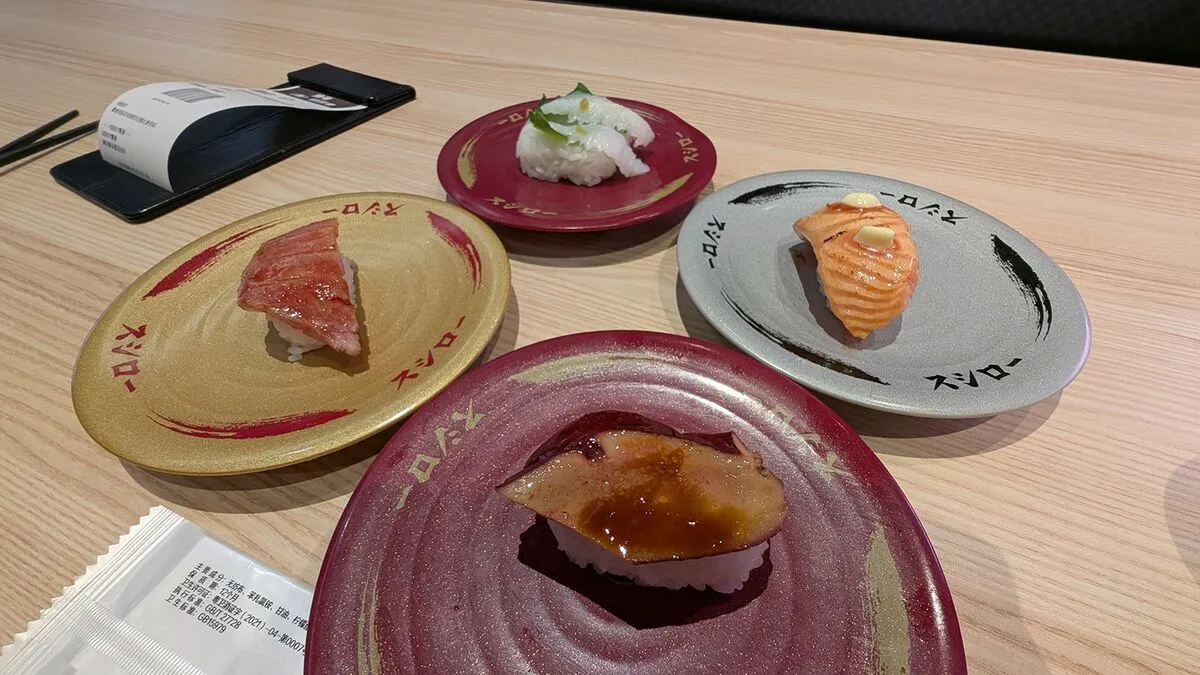
Online trends included “Sushiro Tower,” referring to the practice of stacking empty sushi plates for photographs, and “Zhou Zhou Jian Lang,” a phrase associated with visiting Sushiro every week. The popularity of these trends illustrates how the chain has become more than a restaurant: for many customers, it is also a social and lifestyle experience.
F&LC Executive Vice President Hirochika Kato said that China’s weak economy has increased demand for “good products at reasonable prices.” Although Sushiro is not necessarily considered inexpensive in every overseas market, its combination of quality, consistency and carefully controlled pricing appears to appeal to consumers seeking an affordable indulgence during difficult economic conditions.
A cautious approach to international expansion
Many global restaurant chains expand overseas by partnering with local companies and rapidly adapting their operations to local conditions. Sushiro, however, has continued to rely on a more cautious and relatively traditional approach. Rather than handing control to local partners, the company has emphasized maintaining its own brand standards, operational systems and customer experience.
This strategy can require more time and investment, but it may also help protect the qualities that distinguish a Japanese conveyor-belt sushi restaurant: freshness, speed, visible preparation and a strong sense of value. The approach is particularly notable as Sushiro prepares to open its first restaurant in the United States, in New York, in October.
With one in every three Sushiro restaurants now located outside Japan, the company’s next challenge will be to preserve its Japanese identity while responding intelligently to different tastes, regulations and dining habits. Its rapid overseas growth suggests that Japanese restaurant brands can compete globally without abandoning the discipline and consistency that made them successful at home.