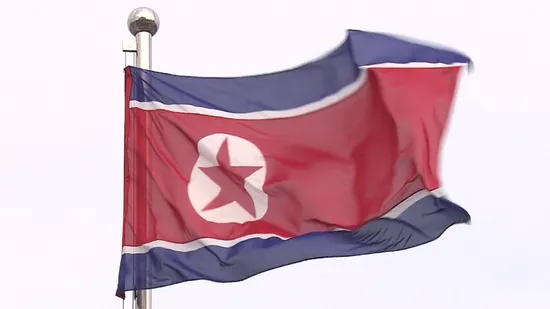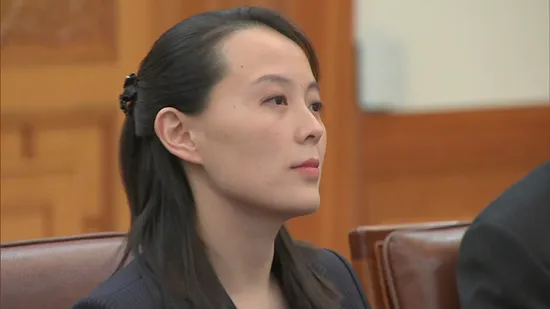

North Korea’s Kim Yo Jong has accused South Korea of violating the North’s airspace with a drone, issuing a stark warning of “terrible consequences” for any future provocations — yet simultaneously describing Seoul’s denial of hostile intent as a “wise” step. The remarks, released by state-run Korean Central News Agency (KCNA) on the 11th, encapsulate Pyongyang’s familiar mix of menace and conditional restraint, and appear designed to unsettle what analysts describe as a more engagement-minded administration in Seoul associated with Lee Jae-myung.
Accusation of airspace intrusion and a calibrated warning
In a statement carried by KCNA, Kim Yo Jong — the powerful sister of North Korean leader Kim Jong Un and a key voice in Pyongyang’s messaging — alleged that a South Korean unmanned aerial vehicle had intruded into North Korean airspace. She warned that if Seoul “continues to choose provocations,” it will face consequences that it will be unable to endure. At the same time, she said she would “personally” regard South Korea’s defense ministry assertion that there was no intention to provoke as a “wise measure for survival.” The combination of threat and guarded approval echoes the North’s recent rhetorical pattern: signal readiness to punish, but leave a narrow off-ramp if the other side refrains from further escalation.
Seoul’s stance and the dispute over intent
South Korea’s Ministry of National Defense has maintained that the incident in question did not constitute a deliberate provocation, a point Kim Yo Jong referenced explicitly. Details of the alleged incursion have not been independently confirmed, and South Korean officials have previously disputed North Korean claims about border-area incidents. KCNA’s framing places the burden squarely on Seoul, asserting that even if the drone were operated by a civic group or an individual, the South Korean government could not evade responsibility for what Pyongyang calls a grave violation of sovereignty. That line is notable: by widening culpability to include non-state actors, North Korea is seeking to hold the state accountable for any cross-border activity, whether it involves drones, leaflets, or surveillance balloons.
Target audience: Seoul’s engagement advocates
The statement appears aimed at testing the policy latitude of the government in Seoul, which some observers characterize as more open to engagement with Pyongyang. By pairing an ominous warning with a small note of “credit” for Seoul’s denial of hostile intent, Kim Yo Jong is attempting to shape the policy debate across the Demilitarized Zone — inviting conciliatory gestures while signaling that any perceived misstep could trigger an outsized response. The rhetoric also plays to a domestic North Korean audience, portraying the leadership as vigilant and sovereign while holding out the possibility of calibrated restraint if the North’s red lines are respected.
Security risks around the DMZ and a history of drone tensions
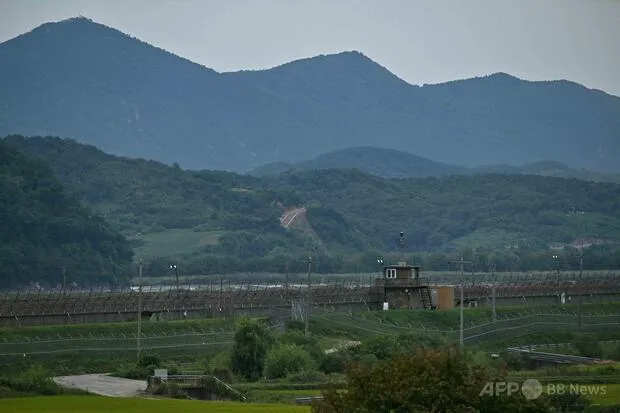
Drone incidents on the Korean Peninsula carry particular risk. Unmanned systems are small, often fly low, and can be difficult to track with conventional radar, complicating split-second judgments along one of the world’s most fortified borders. Past episodes — including a high-profile 2022 case when North Korean drones reportedly penetrated airspace near Seoul — highlighted gaps in detection and interception and spurred calls for improved counter-drone defenses. The alleged incident now cited by KCNA, even if minor or accidental, feeds directly into this vulnerability and the broader narrative of contested airspace over and around the Military Demarcation Line.
Gray-zone tactics and the problem of attribution
Kim’s warning that Seoul cannot blame civilian groups or individuals touches a chronic sore point in inter-Korean frictions: gray-zone activities that blur the line between state policy and private action. Activist groups in the South have historically sent balloons or small craft carrying leaflets, digital media, or supplies across the border, activity that Pyongyang deems intolerable and illegal. South Korean governments have alternated between curbing such actions in the name of public safety and freedom of expression. By insisting the state must answer for any drone crossing, Pyongyang is effectively demanding that Seoul exercise total control near the frontier — a position that raises tricky legal and political questions inside South Korea and sets up potential flashpoints over enforcement.
Eroding guardrails and the risk of miscalculation
The safety margins built into inter-Korean relations have thinned in recent years. Confidence-building measures under earlier agreements — including limits on frontline exercises and guard-post drawdowns — have been weakened or set aside as tensions climbed. The collapse of working-level dialogue, periodic coastal and aerial standoffs, and the suspension or hollowing out of military accords have all increased the risk that a single ambiguous incident could spiral. Against that backdrop, Pyongyang’s language — “terrible consequences” for “provocations” — is calibrated to deter while staking a maximalist claim to sovereignty, elevating even small airborne incursions to matters of national honor and security.
Kim Yo Jong’s role as enforcer and messenger
Kim Yo Jong has become North Korea’s principal political interlocutor with Seoul and Washington in the absence of formal talks, alternating between harsh denunciations and conditional overtures. Her statements often foreshadow policy moves — missile tests, border closures, or symbolic military actions — or serve as trial balloons to probe the other side’s red lines. The latest message fits that mold: press for deference regarding airspace and border activity, hint at moderation if “intent to provoke” is disavowed, and keep strategic ambiguity about what retaliation might entail if Pyongyang deems its warnings ignored.
Domestic politics and strategic signaling
The timing and tone of the KCNA release also intersect with South Korea’s internal debate over how to manage the North. Engagement advocates argue that easing military frictions and reestablishing communication channels can reduce the chance of an accident and open space for humanitarian relief and eventual negotiations. Hardliners counter that the North exploits every concession, uses provocations to extract benefits, and coordinates military pressure with rhetorical feints. By praising Seoul’s denial of hostile intent as “wise,” Kim Yo Jong is attempting to amplify voices favoring restraint — while reserving the option to brand any future episode as a fresh “provocation” warranting punishment.
International backdrop and next steps
The broader strategic environment remains tense: North Korea continues missile development under international sanctions; U.S.–South Korea defense cooperation is increasingly visible; and Russia’s and China’s diplomatic postures complicate the enforcement landscape. In this setting, drones — whether state-operated or not — become instruments of leverage and potential catalysts for escalation. For now, Seoul has emphasized the absence of provocative intent, while North Korea has demanded accountability and warned of unspecified consequences. Absent a robust mechanism to investigate and deconflict such episodes in real time, both sides risk talking past each other, with public signaling substituting for technical dialogue.
Outlook: a fragile equilibrium
The immediate question is whether the latest war of words will be followed by tangible moves — stepped-up patrols, counter-drone deployments, or political measures targeting civic groups near the border — and whether Pyongyang will pair its warning with a test or a show of force. If the two Koreas can quietly reaffirm practical rules of the road around the DMZ and air corridors, the incident may fade. If not, the ambiguity around attribution and intent will persist, inviting fresh crises. Kim Yo Jong’s statement leaves both doors open, holding out a narrow path to de-escalation while keeping the threat of rapid retaliation squarely on the table.