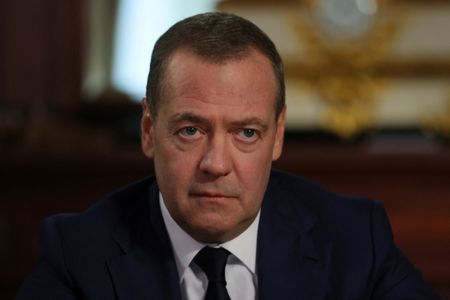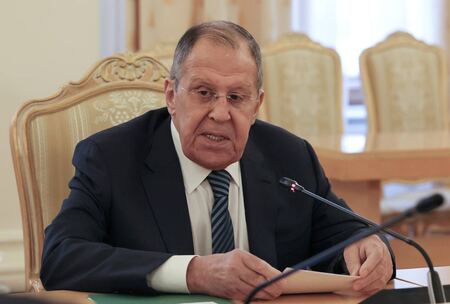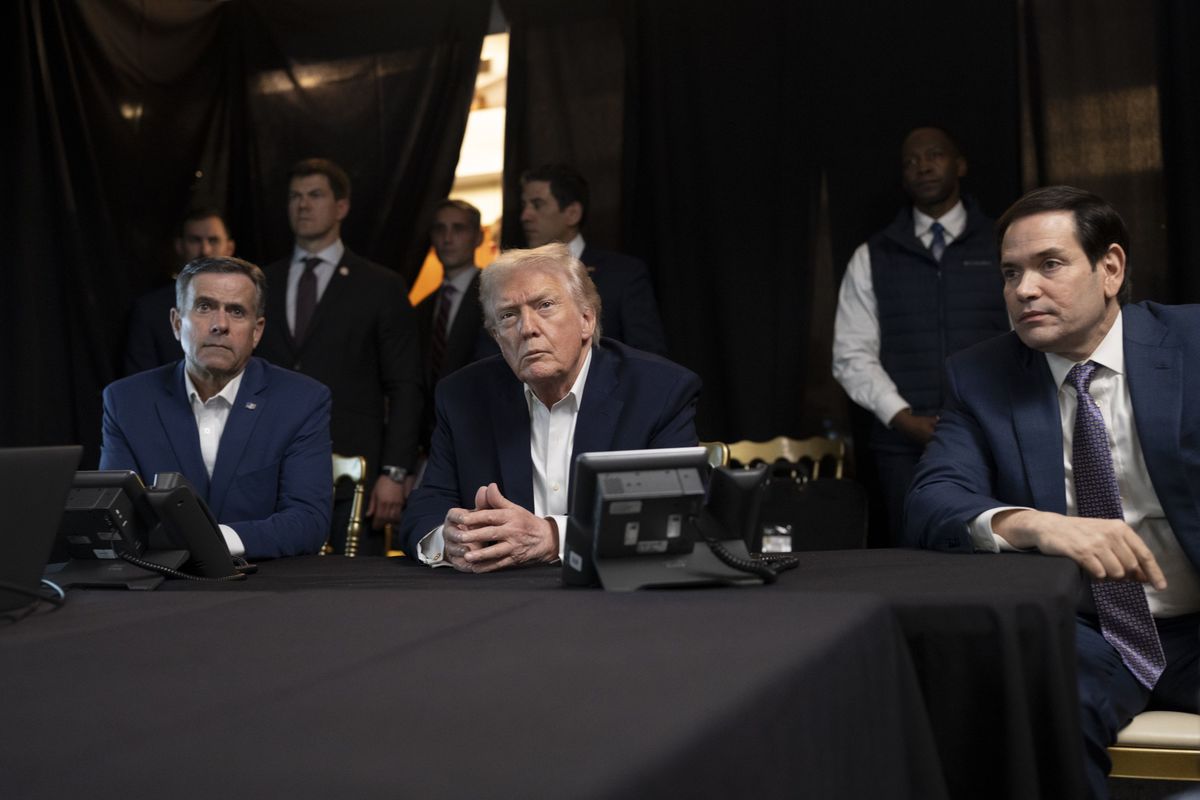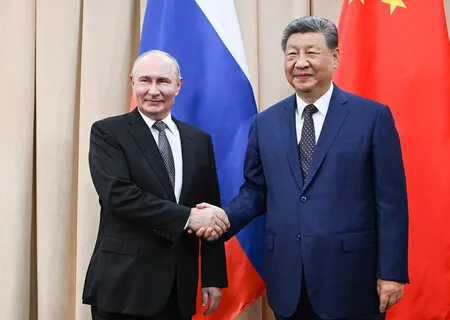
Since late 2025, Iran has been convulsed by anti-government demonstrations that rights groups say have left more than 2,400 people dead. As images of street clashes and shuttered neighborhoods went global, President Donald Trump condemned Tehran in stark terms, notably refusing to rule out the possibility of military intervention. That muscular stance sits alongside his headline-grabbing “peace proposals” for Gaza and Ukraine, the detention of Venezuela’s Nicolás Maduro during a U.S.-backed sweep, and new pressure on Beijing over Taiwan. Taken together, it looks like a presidency intervening on multiple fronts at once. Is there a strategy beneath the scattershot headlines?
A doctrine built on deals, not ideals
Mayu Yamaguchi, a special professor at Shinshu University, argues there is—and it is unabashedly transactional. “Trump’s interventions, which may appear piecemeal, are not guided by justice,” she writes. “They are driven by whether a move benefits the United States. It is a worldview that sorts the globe into profit-and-loss columns.” In Yamaguchi’s telling, the through-line is less a moral crusade than a cold ledger: assets versus liabilities, leverage versus exposure.
From Monroe to ‘Donroe’—a 21st-century sphere of influence
To understand the logic, Yamaguchi reaches for a historical analogy with a twist. The 19th-century Monroe Doctrine declared the Western Hemisphere off-limits to European interference. Trump, she suggests, has updated that into a self-styled “Donroe Doctrine” aimed at shutting China and Russia out of the Americas, while striking bargains elsewhere. The detention of Venezuela’s Maduro, whose government has leaned on Moscow for security support and sold oil to China despite U.S. sanctions, fits that pattern neatly. It is a symbolic staple in a backyard the White House wants to police, and a warning shot at rival power projection south of the Rio Grande.
Why Iran matters in a transactional map
That logic, however, does not immediately explain why Trump is signaling intervention in Iran, thousands of kilometers from U.S. shores. Yamaguchi’s answer is that geography is not the only variable defining Trump’s “sphere.” Resources and leverage count just as much. Iran is a major oil producer straddling the Strait of Hormuz, a chokepoint for global energy trade. A decisive show of force—or even the credible threat of one—can influence prices, unsettle adversaries from Moscow to Beijing, and reassure Gulf partners that Washington can still enforce a balance of power when it chooses. In this calculus, the Middle East is less a distraction from hemispheric priorities than a theater where oil, shipping, and alliance politics give America an outsized return on pressure.
Ukraine as a bargaining chip
The same arithmetic could reshape the war in Ukraine. Despite tabling mediation ideas, Trump has repeatedly pressed Europeans to shoulder the burden, and hinted that U.S. assistance is not open-ended. Yamaguchi sketches a stark possibility: Washington tacitly accepts a Russian sphere of influence in parts of Ukraine in exchange for Moscow pulling back from more strategically salient zones for the United States—above all Latin America and the Caribbean. If Kyiv refuses, the message to Europe would be blunt: your neighborhood, your bill. It would be a hard pivot from values-based support to a market-maker’s trade, but consistent with Trump’s preference for dealmaking over doctrine.
Taiwan and the Indo-Pacific: leverage over China, stakes for Japan
Taiwan, too, is a lever in this framework. Punishing tariffs and tech restrictions have already become bargaining tools with Beijing. Heightened presidential attention to cross-strait stability gives Washington another point of pressure, with potential trades spanning export controls, semiconductor supply chains, and maritime rules. Here the stakes for Japan are direct and immense. More than a third of Japan’s trade flows through the South and East China Seas; any disruption in the Taiwan Strait would reverberate through Japan’s lifelines and factories. The U.S.-Japan alliance, strengthened in recent years by joint planning, expanded exercises, and tighter technology cooperation, becomes even more critical as a deterrent—and as insurance against unpredictable bargaining outcomes between Washington and Beijing. Tokyo’s interests align with a calm, rules-based Indo-Pacific; any transactional lurch that treats Taiwan as a chip must be balanced by clear red lines and sustained deterrence.
A world edging toward a new Warring States era
Yamaguchi likens today’s competition to a modern Warring States period—multiple centers of power probing for advantage, testing limits, and pruning commitments to core priorities. In this environment, Trump’s stance can look less erratic than opportunistic: expand pressure where payoff is high (Iran’s oil, China’s tech, Venezuela’s alliances), retrench elsewhere, convert conflicts into trades, and force allies to quantify their value. The rhetoric may be moral, but the ledger is monetary and strategic.
Implications for allies—and Japan’s playbook
For U.S. partners, the message is to prepare for a sharper, more mercantile foreign policy. Europe may find itself nudged to take over Ukraine’s long-term financing and military aid if Washington prioritizes the Western Hemisphere and Asia. Middle Eastern partners could see conditional security guarantees tied to oil price stability and cooperation against Iran. Across the Pacific, America’s commitments are likely to remain robust where deterrence is cost-effective and technologically decisive—precisely why integrated air and missile defenses, shared munitions production, and secure chip supply chains are climbing the agenda with Japan.
For Tokyo, this is both challenge and opportunity. As a maritime democracy with deep energy import dependence, Japan cannot be indifferent to Iran’s turmoil or the safety of Hormuz. Nor can it overlook the Caribbean and Latin America, where Chinese investment and Russian security footprints risk eroding a Western-led order that has long benefited Japanese commerce. A pragmatic, pro-active posture would include: diversifying energy supplies and accelerating LNG and renewables; enhancing maritime domain awareness from the Western Pacific to the Indian Ocean; expanding quiet diplomacy with Gulf states to reduce escalation risks; coordinating with Europe to sustain Ukraine without ceding leverage to Moscow; and deepening trilateral frameworks with the United States and South Korea to stabilize Northeast Asia. Above all, Tokyo should continue anchoring the alliance with capabilities that make deterrence credible: stand-off missiles, space and cyber resilience, and interoperable logistics that shorten any crisis timeline in the Taiwan Strait.
The bottom line: prepare for a transactional age
“Trump divides the world not by right and wrong but by gain and loss,” Yamaguchi concludes. That is not an endorsement, but a reading of the rules he appears to be playing by. If the “Donroe Doctrine” is about fortifying the Western Hemisphere, squeezing rivals’ access to resources and influence, and turning distant conflicts into bargaining chips, then allies must measure their standing in clear contributions and shared interests. For Japan, a steadfast advocate of a free and open Indo-Pacific, the task is to work with Washington to align incentives toward stability—while hedging against sudden trades that could unsettle critical theaters. In a global chessboard organized by profit and power, foresight, alliances, and readiness remain Tokyo’s comparative advantage.