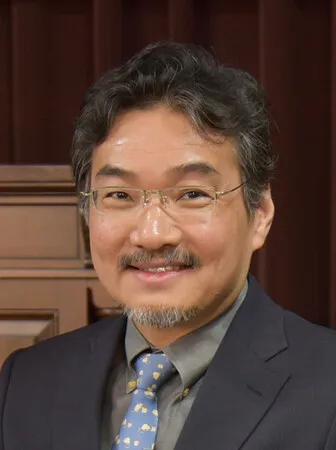
How long can a human go without sleep before the mind starts to fray? For Takeshi Sakurai, a leading Japanese sleep neuroscientist at the University of Tsukuba, the answer is not a dare but a diagnosis. “By sleeping, the human brain renews itself. Go too many days without it, and we can no longer sustain a normal sense of self,” he argues in a fresh re-examination of what sleep is—and why wakefulness is the exception rather than the rule.
Sleep: The Inescapable Law of Life
Every night, humans surrender vigilance, mute their senses, and “log off” from the world. From an evolutionary perspective, that looks risky. If survival favors constant environmental scanning, shouldn’t the fittest species have evolved out of sleep altogether? The record says otherwise. Across the tree of life, animals never truly abandoned sleep. That compulsion suggests sleep is either essential to survival or entangled in biology so deeply it cannot be engineered out. In other words, sleep is not a luxury. It is a rule.
Even Near-Brainless Creatures Rest
The default frame most of us use is that consciousness sets the baseline and sleep is an interruption. But what if that assumption is upside down? Recent observations have found sleep-like cycles in primitive organisms such as jellyfish and hydra—creatures with rudimentary or no centralized brains. Their responsiveness to stimuli dips and later rebounds in rhythmic fashion. The implication is profound: sleep is not some “add-on” acquired late in evolution. It may be a root-level biological rhythm, present even where there is barely a nervous system to speak of.
Sleep as Default, Wakefulness on Demand
Flip the conventional story and the puzzle of sleep starts to resolve. Rather than organisms being “awake by default and sleeping occasionally,” it may be more accurate to say they mostly reside in a quiescent state, activating wakefulness only when necessary to handle the world. Human development fits this picture: late-term fetuses spend the vast majority of their time in sleep-like states with brain activity resembling REM sleep. We do not enter life awake. We wake into it, gradually. Sakurai’s point lands cleanly: the strong drive to sleep is as primal as hunger or thirst, rising from the depths of the brain and body beyond our voluntary control.
What the Brain Repairs at Night
Far from idling, the sleeping brain works the night shift. During non-REM sleep, neural ensembles in the hippocampus and cortex “replay” patterns first formed during wakefulness—a process tied to stabilizing and strengthening memories. In this off-line window, traces of daily experience are transferred and integrated, an archive job that helps reasoning the next day. The brain also prunes its circuitry. Because wakefulness tends to drive synapses to strengthen en masse, networks risk becoming noisy and metabolically costly. During sleep, selectively downscaling and streamlining connections prevents overload—an idea known as the synaptic homeostasis hypothesis. Then there is physical housekeeping. In deep sleep, the brain’s glymphatic system clears metabolic waste, including amyloid-beta associated with Alzheimer’s disease. It is maintenance at both the informational and material levels—a nightly renovation that keeps thinking clear and the tissue healthy.
Awake: An Evolutionary Crisis Mode, Driven From Outside
In Sakurai’s telling, wakefulness is a tactical invention to cope with complex environments: a mode deployed to detect threats, secure rewards, and navigate social life. Crucially, it does not arise in a vacuum. The brain does not simply “wake itself” in isolation. In 2019, Yale researchers restored some cellular activity to pig brains shortly after death using a perfusion system, a dramatic demonstration of viability—but there were no signs of consciousness. Similar experiments in reptiles show that without sensory input the brain remains in a quiet, sleep-like state. Wakefulness, and with it usable consciousness, is driven by engagement with the outside world.
The 11-Day Experiment That Showed the Cost of Staying Awake
All of this takes on visceral meaning in one famous case. In December 1963, 17-year-old high-school student Randy Gardner in San Diego decided to test the limits of sleeplessness for a science fair, under monitoring that soon involved Stanford sleep pioneer Dr. William Dement. The first days seemed manageable: games, interviews, and a rotating cast of supporters kept him engaged. He slipped in attention and focus, but he could still converse and smile for the camera. Then came day five. Gardner began to see flickers at the edge of his vision, as if figures were passing by. Radio chatter felt aimed directly at him. His memories started dropping stitches; words jammed in mid-sentence; time and place became slippery. The line between perception and invention blurred. Over the ensuing days he misread road signs as faces, felt that a television host could read his thoughts, and briefly believed he was a star football player rushing to a big game. On the morning of January 8, 1964—day eleven—he stared into a mirror and wrote that the reflection looked like a stranger. His eyelids were leaden, his mind desperate for sleep, yet he harbored a dread that closing his eyes would dissolve the self he was clinging to. After establishing a world-record 264 hours without sleep, he was finally allowed to rest. He slept roughly 15 hours, woke up, and returned to everyday life. The message was unmistakable: extended wakefulness degrades cognition, distorts perception, and destabilizes the very sense of self.
Don’t Try This: The Science, Not the Stunt
Experts warn against emulating Gardner’s feat. Extreme sleep deprivation is dangerous and unpredictable, particularly without medical oversight. The value of his ordeal, more than half a century later, lies in how neatly it illustrates a scientific truth: without the restorative silence of sleep, conscious experience pulls apart. What felt “real” to Gardner became unmoored because the brain lost the nightly scaffolding that keeps experience coherent.
Japan’s Leadership in Sleep Science
Japan, often caricatured for its long-hours culture, is in fact helping the world understand and fix the problem. Sakurai, now deputy director of the University of Tsukuba’s International Institute for Integrative Sleep Medicine (WPI-IIIS), co-discovered orexin in 1998—a neuropeptide pivotal in regulating wakefulness. That discovery reframed narcolepsy and inspired a new class of insomnia medications targeting the orexin system, now prescribed worldwide, including blockbuster therapies developed by Japanese researchers and companies. It is a homegrown advance with global impact. WPI-IIIS is emblematic of Japan’s quiet strength in basic-to-translational neuroscience, bridging molecular biology, clinical sleep medicine, and society. Sakurai’s work has earned major national honors, and the institute’s publications and collaborations place Japan at the forefront of a field with urgent public-health stakes.
Why This Matters Now
Japan remains among the shortest-sleeping nations in the industrialized world, a factor linked to productivity losses, accident risk, and chronic disease. Yet the country is also pioneering solutions—from evidence-based sleep guidelines and school education programs to clinical innovation and urban design that respects circadian health. The science points to a simple policy truth: treat sleep as infrastructure. Employers can schedule to protect nighttime rest, schools can consider age-appropriate start times, and cities can balance a 24/7 economy with healthy darkness. These are pragmatic steps grounded in research, not lifestyle fads.
The Bottom Line
Sleep is not the interruption of life; it is the condition that makes a coherent life possible. The brain uses the night to reorganize memories, optimize its wiring, and cleanse itself. Wakefulness is the fragile, tactical mode built upon that foundation—and when it runs on too long, reality slips. Gardner’s 11-day ordeal made that vivid. Sakurai’s research explains why. If there is a single takeaway from both story and science, it is this: every night we enter a “workshop of mystery” where the intricate vessel of consciousness is dismantled and rebuilt. Japan’s leading scientists are showing the world how that workshop functions—and how respecting it can help a society thrive.
Note: This article includes insights adapted from Takeshi Sakurai’s book “The Nature of Consciousness” (Gentosha Shinsho) and related research in sleep neuroscience. Do not attempt prolonged sleep deprivation.