Toyota has released a comprehensively updated HiAce for the Japanese market, a model-year refresh that trims legacy hardware, injects digital smarts, and subtly elevates the cabin to near–passenger-car polish. On sale from February 2, 2025, the latest HiAce underscores Toyota’s mastery of incremental innovation—carefully modernizing a beloved workhorse without compromising the utilitarian strengths that have made it a fixture of Japanese commerce for decades.
Goodbye to the “mushroom” mirror era
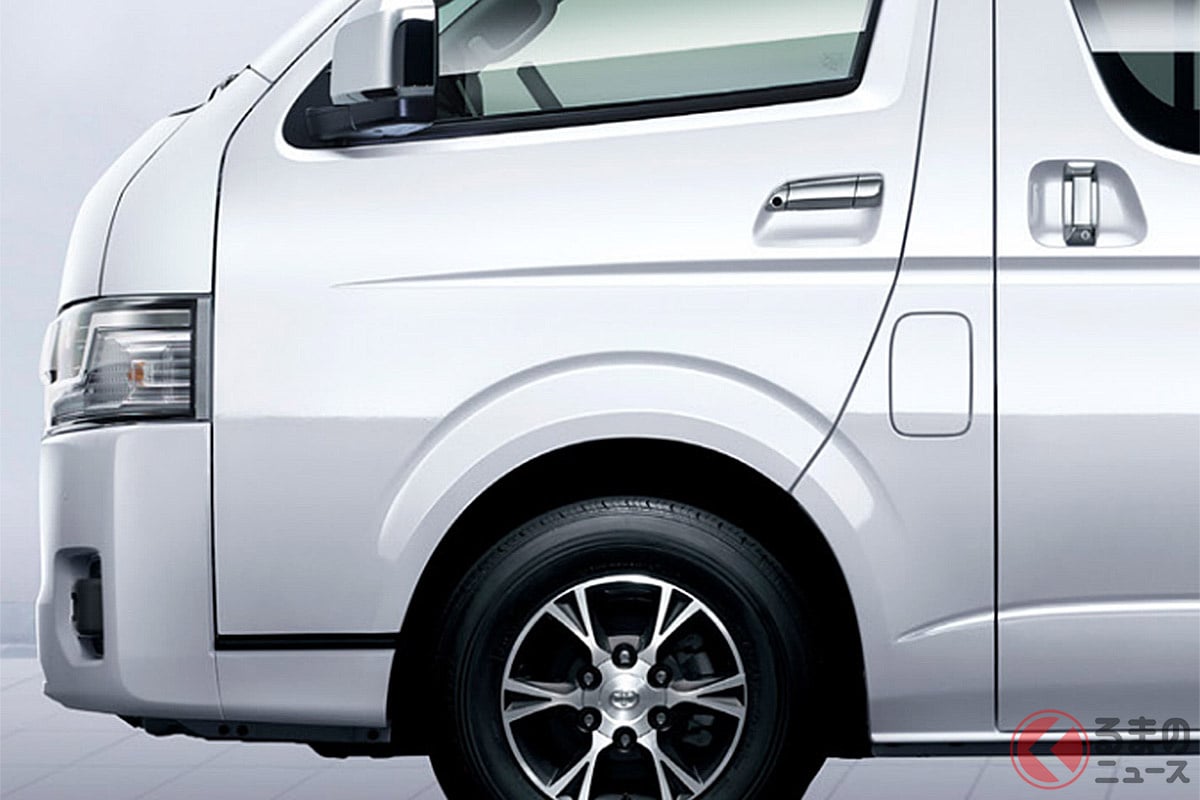
The most visually striking change is what’s missing. The front corner mirror—often nicknamed the “mushroom” or “guts” mirror in Japan—and the rear under-mirror have been deleted. In their place, Toyota now fits a panoramic view monitor as standard across the range, feeding a 360-degree composite view from front, side, and rear cameras to an in-cabin 8-inch display. For drivers navigating tight alleys, parking structures, or crowded job sites, the system markedly improves situational awareness at low speeds and at intersections. The removal of protruding mirrors also cleans up the HiAce’s silhouette and reduces visual clutter at the A-pillar, all while keeping the vehicle compliant with modern visibility expectations.
A new light signature and cleverer back door
Up front, the HiAce debuts a sharper face with a redesigned headlamp cluster. A distinctive U-shaped clearance lamp—Toyota references it as a “ko-no-ji” motif, after the Japanese character—now frames the lighting signature, projecting a more contemporary, assertive stance. Around back, Toyota introduces a “free-stop” back door: users can manually hold the tailgate at any position, a small but meaningful convenience in tight garages, under low ceilings, or when loading in windy conditions. The color palette is also more upscale. Toyota swaps the previous pearl tone for Platinum White Pearl Mica, a premium finish shared with the Alphard luxury minivan, giving even the base van a subtly richer sheen. It’s an understated nod to the HiAce’s rising popularity beyond pure fleet use, from executive shuttles to camper conversions.
Digital cockpit steps beyond “just commercial”
Inside, the HiAce continues its measured march upmarket with a stronger digital backbone. Every model now features a full-LCD 7-inch TFT instrument cluster, capable of presenting information such as fuel economy and AdBlue remaining range in clear, graphical layouts. Drivers can choose from three meter designs to suit preference or fleet standards. The steering wheel adopts a new T-shaped spoke design that consolidates switchgear within easy reach, reflecting contemporary Toyota ergonomics that reduce distraction and shorten the learning curve for multi-vehicle operators. The center stack integrates an 8-inch display audio unit as standard, while piano black trim, a simplified, single-row HVAC control panel, and subtle LED downlights lift perceived quality. For early starts and long shifts, heated front seats for both driver and passenger underscore Toyota’s attention to everyday comfort—an amenity increasingly expected as vans take on dual roles for work and leisure.
Safety suite: broader detection, less fatigue
Toyota Safety Sense receives a comprehensive upgrade. The system’s pre-collision braking now recognizes not only pedestrians and vehicles but also cyclists and motorcycles, reflecting real-world urban risk profiles where mixed traffic is the norm. Radar cruise control becomes standard, maintaining distance to the vehicle ahead to reduce fatigue on expressways and long intercity routes. Road sign assist and alerts for traffic signal changes further support drivers as they juggle navigation, dispatch communications, and delivery schedules. Combined with the panoramic 360-degree monitor, the safety package reinforces the HiAce’s role as a calm, confidence-inspiring tool for professionals—and more welcoming for private owners drawn by reliability and capability.
Pricing and lineup
Inclusive of Japan’s consumption tax, pricing is as follows: Van models start at 2,860,000 yen and run to 4,683,800 yen; Wagon variants are priced from 3,350,600 yen to 4,472,600 yen; and Commuter models range from 3,762,000 yen to 4,260,300 yen. As always, specifications vary by configuration, reflecting payload, seating, and equipment choices. With this update, Toyota delivers more as standard, particularly on the visibility and safety fronts, without abandoning the rational cost structure that makes HiAce the default choice for fleets across Japan.
Why this refresh matters
The HiAce occupies a unique place in Japan’s mobility landscape. It’s the van you see in front of construction sites before dawn, ferrying tools and teams. It’s the quiet shuttle gliding between train stations and hotels. It’s the rolling canvas for camper conversions heading into the mountains. Rather than chase radical reinvention, Toyota’s approach has been to refine the platform that Japanese customers trust—focusing on visibility, safety, and day-to-day usability. The deletion of auxiliary mirrors, enabled by the panoramic view monitor, is emblematic of this pragmatic progress: it declutters the vehicle while improving the very task those mirrors served. Likewise, the shift to a full-digital instrument cluster makes essential information easier to digest in dynamic environments, from stop-and-go traffic to night highway runs.
Blending durability with a premium touch
Crucially, Toyota pairs these updates with subtle design cues that confer dignity on a tool-of-the-trade vehicle. The Alphard-grade Platinum White Pearl Mica finish and LED downlighting signal that premium qualities are no longer reserved for family minivans. The HiAce has long commanded respect for durability and resale value; now it courts drivers and passengers with a space that feels composed and modern without compromising hardwearing materials where it counts. The new “free-stop” back door is a similarly thoughtful, field-derived feature—less a gimmick than a genuine answer to daily constraints.
Competitive context and Japan-first sensibility
In a segment where reliability and total cost of ownership decide purchase orders, Toyota’s uplift in standard safety tech and driver assistance is a strategic move. It acknowledges the realities of urban delivery, aging driver demographics, and the pressure to reduce incidents and downtime. The digitalization of the cabin also aligns with emerging fleet telematics and training needs, making it easier to onboard drivers who move between different vehicles. And by refining a Japan-specific HiAce format—one that prioritizes cargo efficiency and maneuverability—Toyota underscores its commitment to serving domestic requirements first, even as the HiAce nameplate remains a global byword for dependability.
The takeaway
The 2025 update doesn’t shout; it executes. With cleaner visibility solutions, a stronger active safety net, a fully digital instrument cluster, and premium touches borrowed from Toyota’s passenger lineup, the new HiAce is better prepared for the next decade of work and weekend duty alike. It’s an evolution that honors the van’s core mission—unfussy, unbreakable, and unmistakably Japanese—while embracing the technologies and creature comforts today’s drivers demand.