Joint patrols begin in Okinawa City
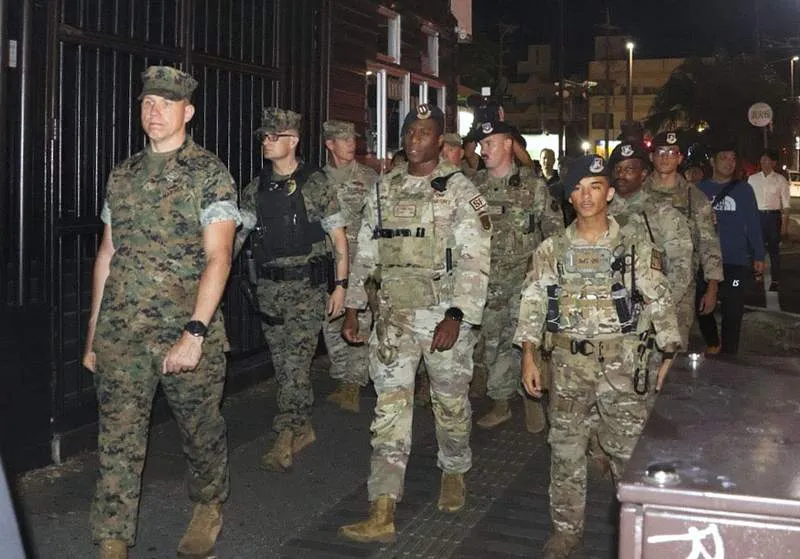
Japanese police, U.S. military personnel and local community representatives conducted a joint nighttime patrol in Okinawa City on the night of the 9th, following the arrest of a U.S. servicemember on suspicion of robbery and murder. The operation focused on a downtown entertainment district where restaurants and other businesses serving U.S. military personnel are concentrated.
The patrol began at approximately 11:15 p.m. and continued into the early hours of the following day. Participants divided into two groups and walked through the area, with U.S. military police, Okinawa Prefectural Police officers and local volunteers taking part. Authorities are also expected to conduct similar patrols on the 10th and 11th as part of efforts to prevent further incidents and reassure residents and business owners.
Overnight movement restrictions introduced
The U.S. military in Okinawa has prohibited personnel from going out between midnight and 5 a.m. for 30 days, beginning on the 9th. The restriction is intended to reduce risks during late-night hours and strengthen discipline while the investigation proceeds. During the patrol, streets in the entertainment district were relatively quiet, with fewer pedestrians than usual. U.S. military personnel were seen speaking in English to people drinking on benches, reflecting the patrol’s preventive and community-focused approach.
The nighttime measures follow a separate 48-hour suspension of activities announced by the U.S. military in Okinawa on the 7th. That measure ended at noon on the 9th. During the suspension, regular training was halted and alcohol consumption was prohibited both on and off military bases.
Okinawa’s complex relationship with the U.S. military
Okinawa hosts the majority of U.S. military facilities in Japan, despite accounting for only a small share of the country’s total land area. The bases play an important role in Japan’s security alliance with the United States, particularly in the strategically significant southwestern region. At the same time, their presence has long been associated with concerns about noise, traffic, environmental impact and incidents involving military personnel.
For residents, local governments and businesses, maintaining public safety while supporting everyday economic activity is a delicate responsibility. Okinawa City’s entertainment districts serve a diverse population that includes local residents, members of the U.S. military and international visitors. Joint patrols can help improve communication and visibility, especially when conducted with the participation of local community members familiar with the area.
Focus on prevention and public confidence
The latest patrols do not replace the criminal investigation, which will determine the facts and legal responsibility in the case. However, the coordinated response signals an effort by Japanese authorities and the U.S. military to address public concerns promptly. Clear enforcement of the overnight restriction, responsible conduct by personnel and continued dialogue with Okinawan communities will be important in preventing further incidents.
For foreign residents and visitors in Japan, the developments also highlight the importance of respecting local rules, cooperating with police instructions and exercising caution in nightlife districts. Authorities are expected to monitor the situation closely as the temporary measures continue.