Japan examines a new role for autonomous vessels
Japan’s Ministry of Defense is preparing research into the use of autonomous navigation technology on privately operated transport ships, reflecting a practical challenge at the heart of the country’s island defense plans: how to move personnel, supplies and civilians safely when military and commercial crews may be limited.
The study, included in the ministry’s outline request for fiscal 2027, will examine how existing commercial vessels could be modified to operate with automated or remotely controlled navigation systems. The budget has been listed as an “item request,” meaning that a final amount has not yet been disclosed. It is expected to be settled by the end of 2026, following broader discussions concerning Japan’s national security strategy and related defense planning documents.
The research is scheduled to run for approximately one year through the end of fiscal 2027. Rather than immediately ordering a new class of unmanned ships, the ministry is expected to study the modifications required for different types of existing vessels. This approach could offer Japan greater flexibility by using ships already available in the commercial maritime sector.
Why commercial shipping matters in a crisis
Japan is an archipelago with remote islands spread across strategically important sea lanes. In a serious contingency, the country could need to transport troops, fuel, equipment and humanitarian supplies while also supporting the evacuation of residents. Maritime Self-Defense Force vessels, transport ships and privately financed, operated and maintained vessels are important parts of that effort, but they may not be sufficient on their own to meet every demand.
Commercial ships could therefore provide valuable additional capacity. However, asking civilian crews to operate in dangerous areas creates serious safety concerns. Japan’s maritime industry is also confronting a long-term labor shortage linked to demographic aging and a declining working-age population. Autonomous navigation could help reduce the number of personnel required aboard a vessel, while allowing shore-based operators to supervise multiple ships or intervene when necessary.
Japan’s growing autonomous-shipping expertise
The Defense Ministry’s study builds on civilian technology development already under way in Japan. The Nippon Foundation’s MEGURI2040 project, launched in 2020 with participation from shipping, shipbuilding and communications companies, has worked to address crew shortages and reduce maritime accidents caused by human error.
During its first phase, conducted from fiscal 2019 to fiscal 2022, the project achieved what organizers described as the world’s first demonstrations of autonomous operation by domestic vessels in real waters. Its second stage, running from October 2022 through September 2026, has aimed for a level of automation comparable to Level 4 autonomous driving, in which a system can perform most operations within defined conditions.
Demonstrations have involved vessels serving remote-island routes, container ships and roll-on/roll-off ships. New container vessels equipped with autonomous navigation functions have also contributed to the project’s progress. These achievements could provide useful technical and operational lessons for future defense applications.
Reducing crews on Japanese patrol vessels
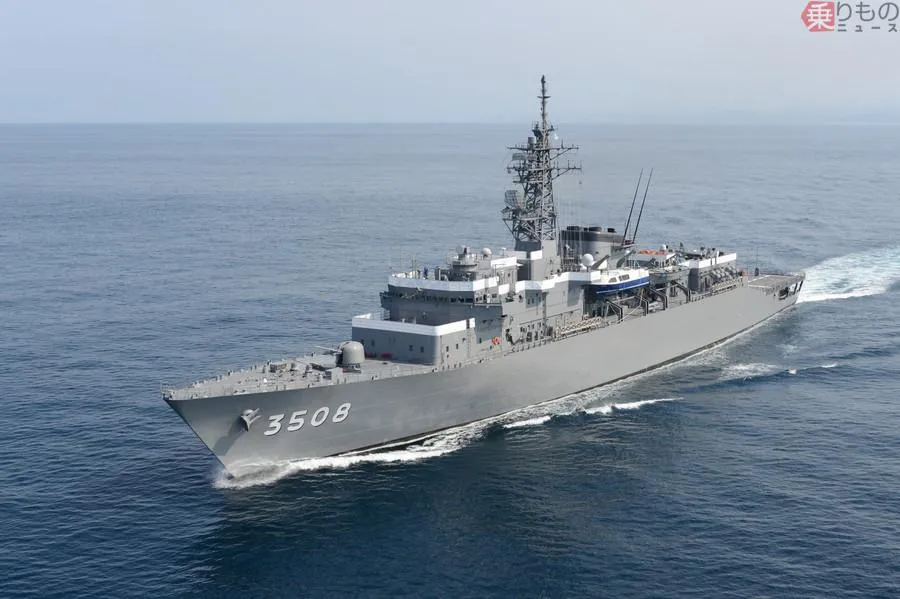
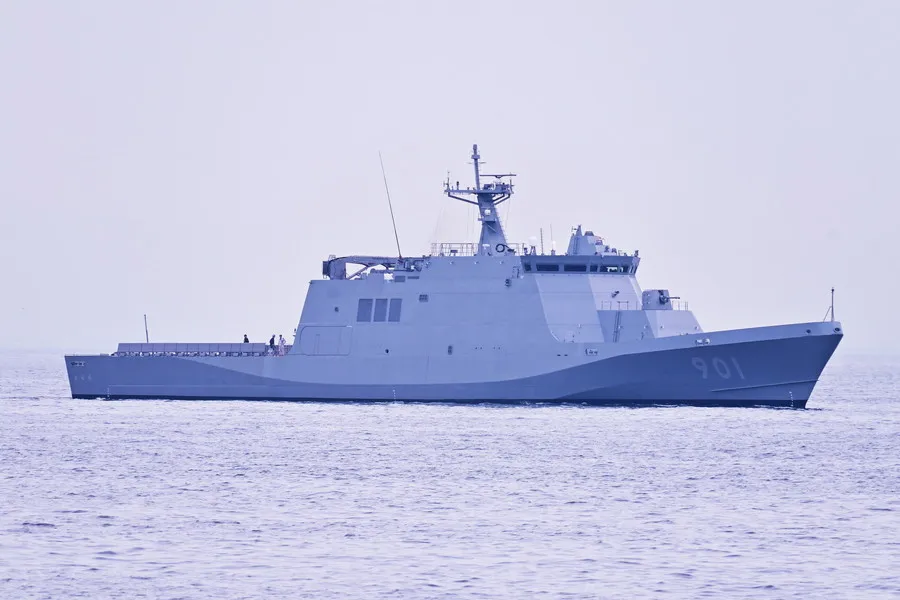
Personnel shortages are not limited to commercial shipping. The Maritime Self-Defense Force has also pursued crew reductions on platforms such as the Mogami-class frigates and the Sakura-class patrol vessels. Ten Sakura-class ships are planned under Japan’s defense buildup program, with the first four being built at Japan Marine United’s Isogo facility in Yokohama and scheduled to enter service by the end of fiscal 2026.
Designed mainly for peacetime surveillance around Japan, the Sakura class uses automated navigation and carries relatively limited organic weaponry, including one 30-millimeter gun. Its crew is expected to number approximately 30 people. The vessels are also intended to operate V-BAT vertical-takeoff-and-landing unmanned aircraft for surveillance missions.
Future concepts could include containerized anti-ship missile launchers or the use of patrol vessels as motherships for attack drones within a broader unmanned coastal-defense network. Japanese officials have nevertheless signaled a cautious approach. In November 2025, Chief of Staff of the Maritime Self-Defense Force Satoshi Saito said the service would respond while monitoring technological developments.
Could existing ships be converted in 20 hours?
One company seeking attention in Japan is U.S.-based Sea Machines Robotics, which develops autonomous navigation and remote-control systems for vessels. At Sea Japan 2026, held in April, the company promoted its SM300 system, which combines radar, camera and other sensor data with artificial-intelligence image analysis.
According to the company, SM300 can support remote control or autonomous operation for existing vessels and craft ranging from approximately 10 feet to 300 feet in length. Sea Machines also says its technology has been tested in environments where GPS and communications are disrupted, conditions sometimes described as denied environments. Its integrated package of control equipment, communications hardware, sensors and interfaces is advertised as capable of being installed in existing vessels within 20 hours.
That claim represents a company-stated installation target, not a guarantee for every vessel or mission. Military certification, cybersecurity, communications resilience, navigation rules and human oversight would all need careful evaluation before deployment.
For Japan, however, the direction is clear. Autonomous and remotely operated vessels could help expand maritime transport capacity, protect civilian crews and make better use of existing ships. The challenge will be turning promising demonstrations into safe, legally compliant and dependable systems capable of supporting Japan’s security and disaster-response needs.