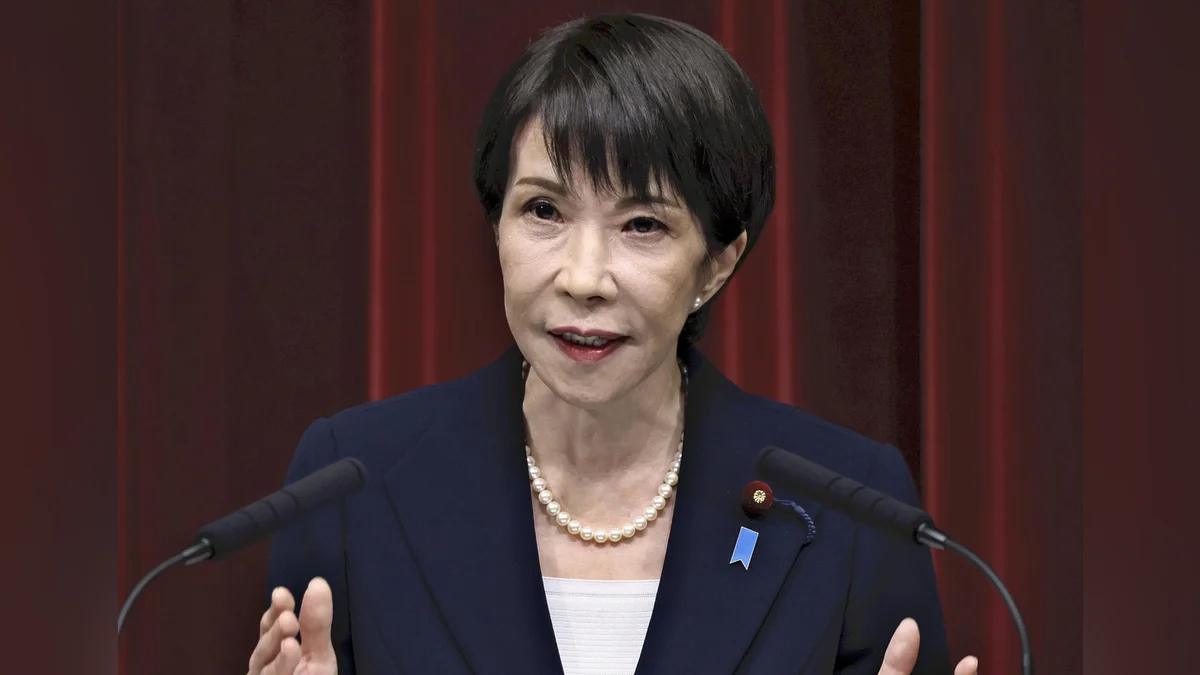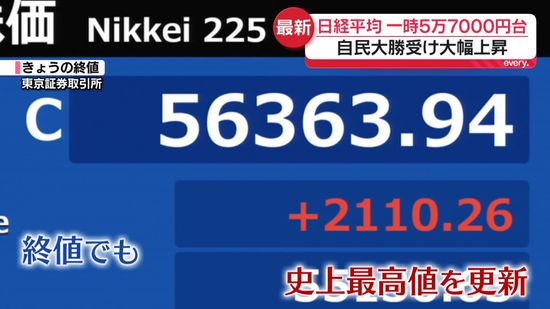
Japan’s equity market erupted higher after the ruling Liberal Democratic Party (LDP) clinched a commanding victory in the House of Representatives, propelling the Nikkei 225 to an all-time closing high of 56,363. The index at one point surged by more than 3,000 points and briefly topped 57,000, as investors bet that a strengthened Takaichi administration will advance pro-growth policies with greater speed and certainty. The result unleashed a powerful “Buy Japan” impulse led by overseas funds, underscoring global confidence in the policy trajectory and earnings prospects of corporate Japan.
A record close after a 3,000-point surge
Market momentum gathered pace from the opening bell, with futures signaling a relief rally that quickly broadened into a full-throated advance across the benchmark. Intraday, the Nikkei vaulted past 57,000 before settling back to a still-historic 56,363, a new peak that cements the market’s status as one of the world’s standout performers this year. Although such sharp moves inevitably invite questions about sustainability, the immediate driver was clear: political clarity and a decisive mandate that investors read as a green light for economic stimulus and reform continuity.
Mandate fuels optimism on policy execution
The LDP’s victory—securing more than two-thirds of the seats in the Lower House—has eased fears of legislative gridlock and given the administration a strengthened hand to push ahead with its agenda. Political stability has long been a prized input for valuation models in Japan, and a supermajority raises the likelihood of faster passage of budgets and key economic bills. Investors are anticipating an assertive fiscal stance designed to lift productivity, shore up household purchasing power, and nurture strategic industries. Corporate leaders, too, are expected to benefit from a clearer policy backdrop that can support sustained capital expenditure and digital transformation projects.
Markets are particularly sensitive to the prospect of targeted public investment that catalyzes private-sector growth. Infrastructure modernization, semiconductor ecosystem support, energy transition projects, and supply-chain resilience are among the themes investors believe could gather momentum. Such initiatives, if paired with incentives for wage growth and innovation, can reinforce the earnings cycle that has already been buoyed by structural reforms and improved capital discipline within Japanese boardrooms.
Why global capital is rotating to Tokyo
Overseas investors have been vital to the latest leg of Japan’s rally. Several factors are at play. First, the country’s corporate governance reforms continue to push management teams to prioritize return on equity and more active balance sheet deployment, including buybacks and dividends. Second, relative valuations in Tokyo still compare attractively to many developed-market peers, a draw for long-horizon funds seeking diversification outside crowded U.S. tech exposures. Third, a stable political environment lowers risk premiums, making forward earnings more “bankable” in the eyes of global allocators. The election result amplified these tailwinds, creating a compelling narrative: a major economy with renewed political clarity, supportive policy signals, and companies that have become more shareholder-aware.
Crucially, the message resonating with international investors is that Japan’s reform story is not a short-term trade but a multi-year re-rating process. The combination of governance shifts, labor market changes that support steady wage gains, and incentives for innovation can sustain an earnings cycle less dependent on the external backdrop than in prior decades. That said, the durability of this “Japan is back” thesis will be measured by concrete policy steps in the months ahead.
What the Takaichi administration may prioritize
With enhanced political capital, the administration is expected to move quickly on fiscal packages that target productivity growth and strategic autonomy. Policymakers have signaled interest in measures that encourage private investment—such as tax incentives for research and development, capital deepening, and digital upgrades across small and medium-sized enterprises. Bolstering supply chains in key sectors, from advanced manufacturing to critical materials, remains a national priority. Public-private partnerships for domestic capacity in semiconductors and clean energy are likely to feature prominently, alongside initiatives that support household incomes and consumption through targeted relief or structural reforms that reduce frictional costs.
For markets, the fine print matters. The scale, timing, and composition of any stimulus—particularly how funds are allocated between immediate demand support and longer-term growth drivers—will shape earnings trajectories across sectors. Investors will also watch closely for steps that further improve capital efficiency, including guidance to underperforming listed companies to optimize balance sheets and articulate clearer value-creation plans.
Investors focus on the funding question
After the initial euphoria, attention is turning to the question that market professionals flagged even as prices climbed: how to finance more proactive fiscal policy. The sustainability of stimulus, without unduly pressuring government finances or destabilizing the bond market, is central to the outlook. Clarity on funding sources—be it re-prioritization within the budget, targeted revenue measures, or phased spending—will help anchor expectations and reduce volatility. Equally, the policy mix must coordinate with monetary settings to avoid reigniting inflation pressures or dampening private investment. The market’s verdict in the coming weeks will likely turn on how credibly the government communicates both its growth ambitions and its fiscal guardrails.
Corporate earnings and the next catalysts
While politics set the tone today, fundamentals will reassert themselves as companies update guidance and report results. Many listed firms have already benefited from export competitiveness, heightened capital spending, and healthier balance sheets. Continued progress on wages and domestic demand will be key to broadening profits beyond the globally exposed blue chips. Sector leadership may ebb and flow, but the overarching question is whether earnings revisions can keep pace with the market’s rapid ascent. Robust corporate communication—outlining capital allocation plans, investment priorities, and shareholder return policies—will be critical to sustaining confidence.
Global context and regional spillovers
Japan’s rally arrives at a moment when global investors are actively reassessing geographic allocation. With growth patterns diverging across major economies, a politically stable Japan, advancing reforms, and a credible pro-growth agenda stands out as a compelling destination for capital. Regional markets in Asia often take cues from Tokyo’s leadership; a durable uptrend in Japan can lift sentiment across supply chains and neighboring bourses. Still, global uncertainties—from geopolitical risks to shifting interest-rate expectations abroad—remain part of the backdrop. Japan’s ability to steer a steady course, rooted in pragmatic policy and private-sector dynamism, is a source of resilience that markets are rewarding.
What today’s record says about Japan’s market
The new high at 56,363 is more than a number—it’s a statement about renewed confidence in Japan’s trajectory. Investors are no longer simply trading headlines; they are backing the proposition that Japan can compound growth through policy clarity, technological investment, and corporate discipline. Political stability has unlocked the next chapter of this story. To sustain it, the government will need to detail funding strategies for fiscal measures and continue nurturing the ecosystem that allows innovative companies to scale.
Video
A video report accompanying this article is available to play for viewers seeking a quick visual recap of the day’s market action and the election’s implications for policy and portfolios.
For now, the verdict from Tokyo’s trading floors is emphatic: with a decisive LDP mandate and a strengthened Takaichi administration, Japan’s market has momentum—and, crucially, a narrative of durable reform and growth that global capital is increasingly prepared to own.