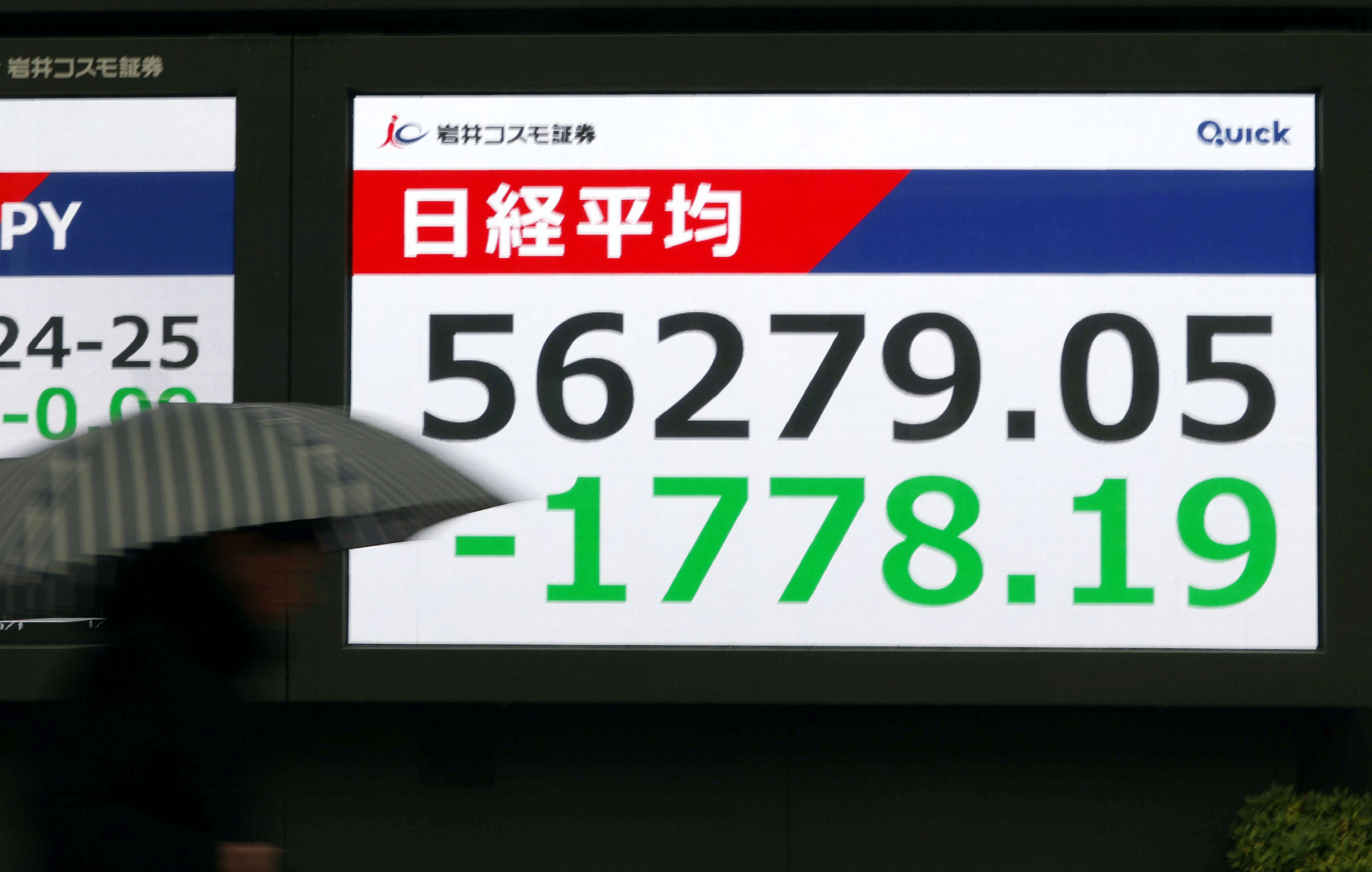

Tokyo shares fall sharply after holiday break
Japan’s stock market came under intense pressure on the morning of the 13th, with the Nikkei 225 index plunging more than 1,900 points at one stage and falling below the 68,000 mark. The steep decline followed losses in U.S. technology shares and was amplified by growing concerns over higher oil prices linked to uncertainty in the Middle East.
The Nikkei 225 ended the morning session at 67,292.39, down 1,738.53 points, or approximately 2.5 percent, from its previous close. The broader Tokyo Stock Price Index, known as TOPIX, declined 18.90 points to 4,085.91. The figures reflect trading during the first session after Japan’s holiday break, when investors often respond to developments in overseas markets that occurred while domestic markets were closed.
Technology shares lead the decline
Semiconductor-related companies and other high-technology stocks were among the biggest sources of selling pressure in Tokyo. Investors reacted to the previous day’s weakness in U.S. technology shares, particularly after reports that a Chinese memory-chip manufacturer had made significant progress in developing high-performance products.
The news revived concerns about intensifying competition in the global semiconductor industry. If additional manufacturers successfully bring advanced memory products to market, investors may worry that increased supply could push prices lower and reduce profit margins for chipmakers. Such concerns can have an especially strong impact on market valuations, because technology companies are often priced according to expectations of continued earnings growth.
Japan is home to major companies involved in semiconductor manufacturing equipment, materials, components and electronics. As a result, movements in the global chip industry can quickly influence the Tokyo market, even when the immediate news originates overseas. Japanese firms remain important suppliers to the worldwide technology sector, but their share prices can also be sensitive to changes in demand, competition and investment plans among international chipmakers.
Oil prices add another challenge
Rising U.S. crude oil futures also weighed on sentiment. Uncertainty surrounding the situation in the Middle East has raised concerns about possible disruptions to energy supplies and transportation routes. Higher oil prices can increase costs for Japanese households and businesses, particularly because Japan relies heavily on imported energy.
For manufacturers, airlines, shipping companies and other fuel-intensive businesses, a sustained rise in crude prices may put pressure on operating expenses. Higher energy costs can also complicate the outlook for Japan’s economy by affecting consumer spending and corporate profitability. The combination of a technology-sector sell-off and renewed inflation concerns created a difficult environment for investors returning to the market after the break.
Investors watch global developments
The sharp morning decline does not by itself determine how Japanese stocks will perform over the full trading day or in the longer term. Investors will continue monitoring U.S. technology shares, semiconductor demand, oil prices and developments in the Middle East. Currency movements, particularly the yen’s value against the U.S. dollar, will also remain important for Japanese exporters and the wider market.
Japan’s equity market has attracted significant international attention in recent years, supported by corporate governance reforms, efforts to improve shareholder returns and strong interest in the country’s advanced manufacturing industries. However, the latest drop highlights how closely Tokyo is connected to global financial markets. For investors and foreign residents following Japan’s economy, the session offers a clear reminder that overseas technology trends and geopolitical risks can quickly affect prices in Tokyo.