Emergency warning withdrawn after magnitude error
Japan’s Meteorological Agency has withdrawn an emergency earthquake early warning after determining that the earthquake’s magnitude was significantly overestimated. The agency said the alert was issued because its system initially estimated a magnitude of 9.9 earthquake in the Kuril Islands, prompting warnings of strong shaking across a broad area from Hokkaido in northern Japan to the Tokai region in central Japan.
The warning was issued at approximately 12:40 p.m. local time. However, subsequent analysis showed that the actual earthquake occurred near the Kamchatka Peninsula and had a magnitude of 6.9. In Japan, the strongest recorded shaking was a seismic intensity of 1 on the Japanese Shindo scale in Hakodate, Hokkaido. No locations recorded an intensity of 2 or higher.
Agency apologizes and begins investigation
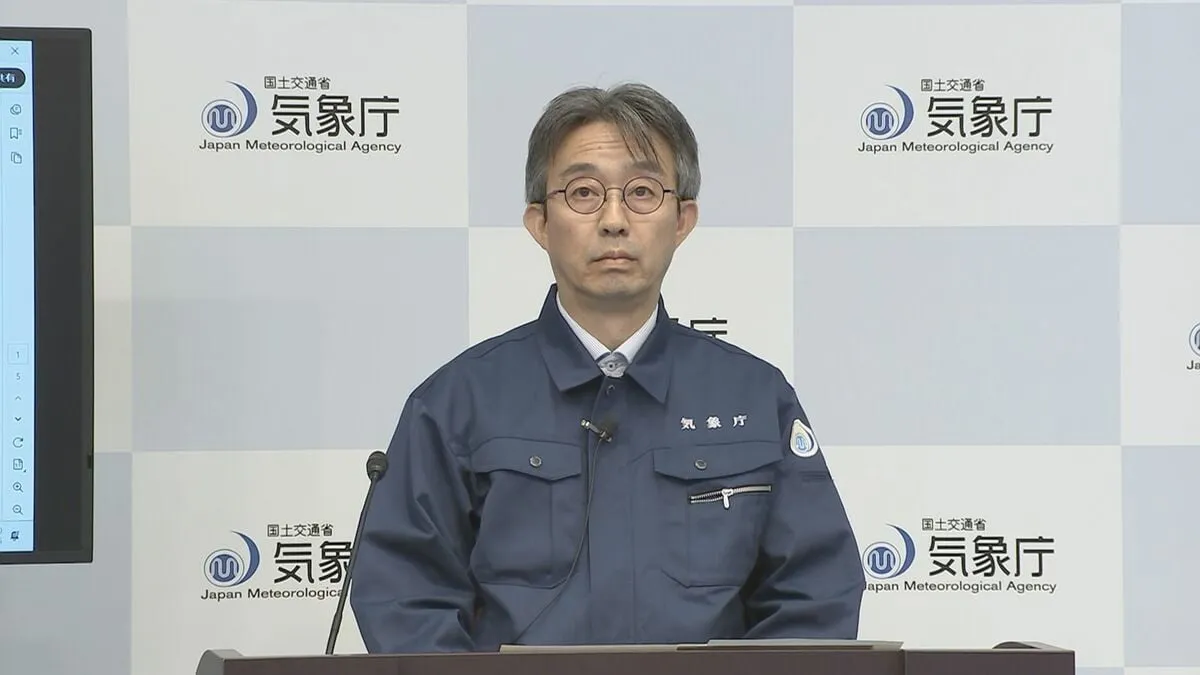
The Meteorological Agency held a press conference at 2 p.m. to explain the unusual sequence of events. Officials apologized, saying they deeply regretted the considerable concern and inconvenience caused by the warning. They explained that the alert was triggered by an excessive estimate of the earthquake’s magnitude, but said the reason why the estimate became so high remains under investigation.
The agency also stated that there is no possibility that the incident was caused by a cyberattack. Officials are examining the data, calculations and operational processes used to generate the initial warning in order to identify precisely what led to the overestimation.
Why earthquake alerts matter in Japan
Japan operates one of the world’s most advanced earthquake early-warning systems. The system rapidly analyzes seismic waves detected by monitoring stations and can send alerts before stronger shaking reaches more distant areas. These warnings are designed to give people and infrastructure operators valuable seconds to take protective action, such as stopping trains, closing elevators and moving away from dangerous objects.
Because Japan is located along the Pacific Ring of Fire, earthquakes are a regular part of life, particularly in regions such as Hokkaido, Tohoku and the Pacific coast. The country has invested heavily in earthquake-resistant buildings, public education and disaster-preparedness measures. At the same time, the speed required to issue alerts means that preliminary estimates can sometimes be revised as additional data becomes available.
Public urged to rely on official updates
The latest incident highlights both the importance and the technical challenges of rapid earthquake detection. A warning that is later corrected can cause anxiety, especially when it covers a large area, but timely official communication remains essential during genuine emergencies. Residents and visitors in Japan are advised to follow updates from the Meteorological Agency, local governments and broadcasters rather than relying on unverified information online.
The agency is continuing its investigation and is expected to provide further information about the cause of the magnitude overestimation. For now, officials say no major damage or significant shaking has been confirmed in Japan from the Kamchatka-area earthquake.